By Didier Lauras and Stuart Williams
PARIS, France - Iran has vowed "severe revenge" against the United States for killing top commander Qasem Soleimani and will likely use its experience of asymmetric warfare to strike back at its arch foe.
All options however carry the risk of rapid escalation and Iran's clerical leadership will want to carefully weigh the dangers to a regime that has been in place since the ousting of the pro-American shah in 1979.
"We can't predict what direction Iran will choose to go in. But what we do know is that Iran acts in a calculated manner and takes very deliberate steps," said Ariane Tabatabai, associate political scientist at the Rand Corporation, a policy think tank in California.
"I expect they will take the time they need to get the response right," she told AFP.
Iran learned the merits of asymmetric warfare -- fighting a power with greater military might than your own -- in the deadly 1980-1988 war against Iraq. Its strong influence in Iraq, Syria Lebanon and beyond means it has possible levers against the US presence in the region.
Here are the main options Iran might consider to avenge the death of a man who was commander of the Quds Force of the Revolutionary Guards and masterminded its operations across the Middle East.
Proxies sow trouble
Throughout the region, Iran backs forces with the potential to cause havoc, from Huthi rebels in Yemen and Shia militias in Iraq to Hezbollah in Lebanon.
Iraq is set to be the key battleground. Pro-Iranian Shia militias could work to drive US forces out of Iraq and also destabilize the Iraqi government to create a new domestic political crisis.
"I suspect there will be a lot of pressure on the US military presence now in Iraq," said Alex Vatanka of the Washington-based Middle East Institute, adding a pullout would be a "major strategic loss for the United States in the Middle East."
Hezbollah could also stir up trouble in Lebanon, already in political and financial turmoil, while a new blow could be dealt to hopes of peace in Yemen.
"Whatever specific actions Tehran undertakes, it is likely that conflict with the United States is going to expand throughout the region," the Soufan Center in New York said in a statement.
Cyber attack
A more subtle step would be for Iran to launch a cyber attack.
Analysts believe Tehran has stepped up its capacity to attack key Western cyber infrastructure and has even built up a so-called "cyber army" that pledges allegiance to the Islamic Republic.
Loic Guezo, head of French information security group Clusif, said Iran's cyber attacks above all sought to hurt industrial targets such as dams or power stations.
"What is feared here is the impact on society -- electricity cuts, poisoning, gas leaks, explosions, transport chaos and hospitals," he told AFP.
Oil blockade
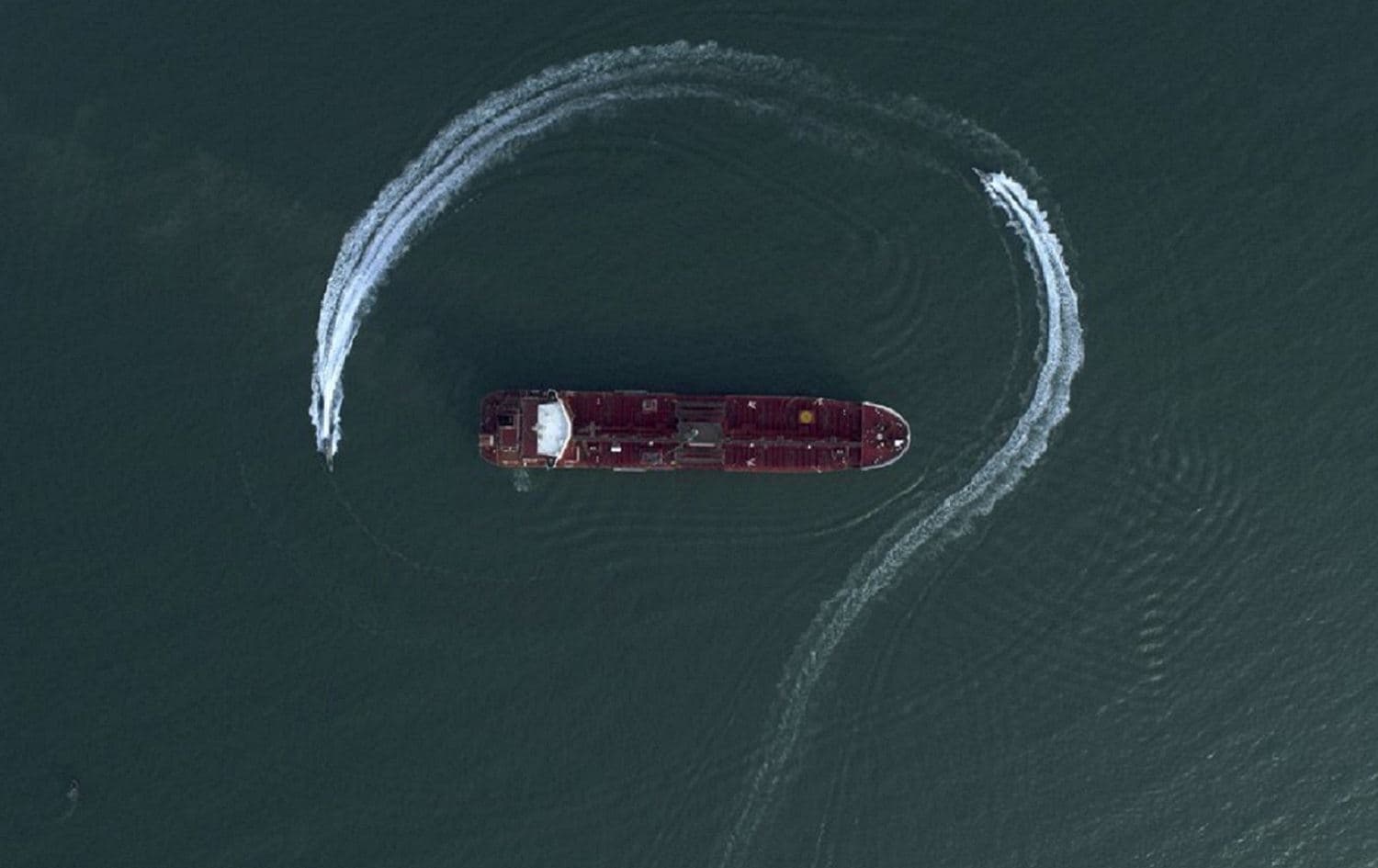
Oil prices initially soared more than four percent on fears that the killing could lead to disruption of oil supplies from the Middle East. A major fear is that Iran could block shipping in the Strait of Hormuz, one of the world's most congested transit points.
Its Western foes have accused Iran of being behind a major attack on Saudi oil installations and Iran has in recent months also repeatedly seized tankers operating in the Gulf.
"Iran has shown that it can hit ships and block ships," said Jean Charles Brisard, head of the Centre for Analysis of Terrorism in France. "But is a blockade conceivable?" he asked.
Military strike
The most apocalyptic scenario would be a military strike by Iran using its ballistic missile arsenal against US, Israeli or Saudi interests in the region, a move that would risk prompting an all-out regional conflict.
But analysts say other options are far more likely.
"The basic assumption still is that both the US and Iran want the other to back down rather than direct war," said Heiko Wimmen, project director of the International Crisis Group (ICG) for Iraq, Syria and Lebanon.
"We can't know whether the Iranians will decide that a drastic escalation and retaliation is the best tactic, or whether they go for a measured, perhaps even non-violent response," he told AFP.
Vatanka said the Iranian leadership was "opportunistic" not "suicidal", adding: "If there's an opportunity that they can take advantage of, they will."