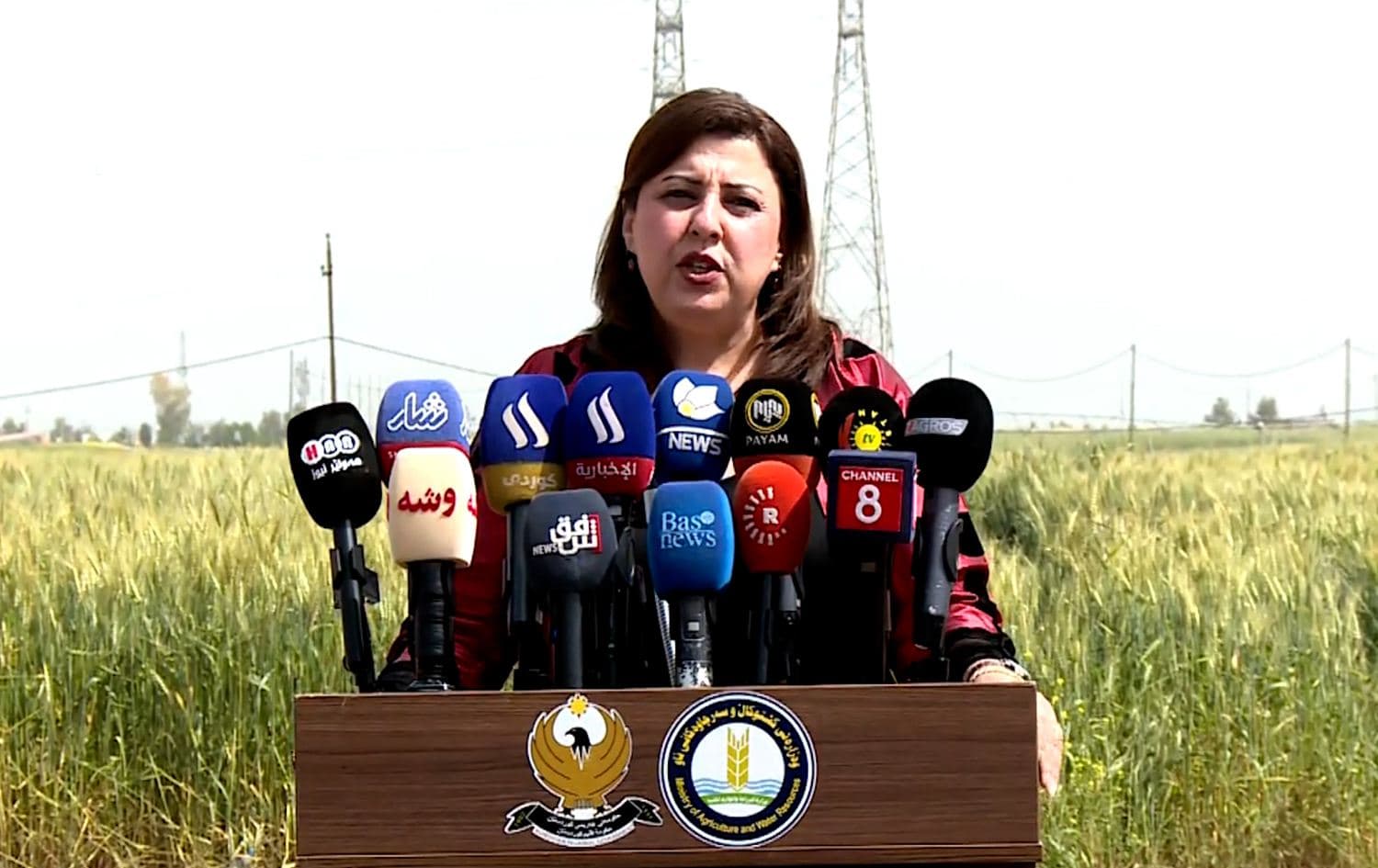

ERBIL, Kurdistan Region - Baghdad is acting “unequally” and discriminating between farmers in the Kurdistan Region and those in other parts of Iraq, Erbil’s Agriculture Minister Begard Talabani said Tuesday, criticizing the quota allocated for purchases from the Region, which she said would effectively translate to only “a few kilograms of wheat” per farmer despite expectations of a bumper harvest.
“Iraq is implementing a policy that falls outside any framework of mutual coordination, as it discriminates between farmers in the Kurdistan Region and those in other parts of the country,” the minister said, adding that Baghdad has decided to receive only 292,000 tons of wheat from farmers in the Region this year - “an amount we will not accept,” Talabani stressed.
The Kurdish agriculture minister added that after dividing the set quota, the Iraqi government would be purchasing “no more than a few kilograms of wheat” from farmers in the Kurdistan Region, whereas farmers in other parts of Iraq would receive payments for “hundreds of kilograms.”
Talabani noted that her ministry has sent “formal letters of petition” to the Iraqi President Nizar Amedi, outgoing Prime Minister Mohammed Shia' al-Sudani, and relevant authorities in Baghdad, “rejecting the allocated wheat procurement quota for the Kurdistan Region as a violation of farmers’ rights.”
The Iraqi decision comes despite the Kurdistan Region experiencing a wetter season in 2026 compared with previous years.
Erbil’s agriculture ministry in late April reported that rainfall and melting snow have caused 22 of the Region’s 25 dams to overflow, improving irrigation supplies and supporting rain-fed farming.
“This year’s wheat harvest will likely yield 15 to 20 times the seed planted, considering the size of the grain heads,” a Kurdish farmer, Mahmood Karim, told Rudaw around the same time.
Talabani on Tuesday stated that her ministry “has provided farmers with 11,000 tons of seeds at a subsidized price,” noting that the move reflects efforts to ensure the Kurdistan Region can “produce enough seeds to fully meet domestic demand.”
Wheat is considered a strategic crop in Iraq, where authorities have sought to increase domestic production and reduce reliance on imports amid climate pressures and regional instability.
The latest quota continues a downward trend in federal wheat purchases from the Kurdistan Region as Baghdad bought 700,000 tons from Kurdish farmers in 2024, reduced the amount to 400,000 tons in 2025, and cut it again to 290,000 tons this year.
Disputes between Erbil and Baghdad over budget transfers, oil exports, and agricultural coordination have repeatedly affected trade and procurement policies in recent years, prompting Kurdish officials to urge that farmers in the Region be treated equally under Iraq’s national support programs.