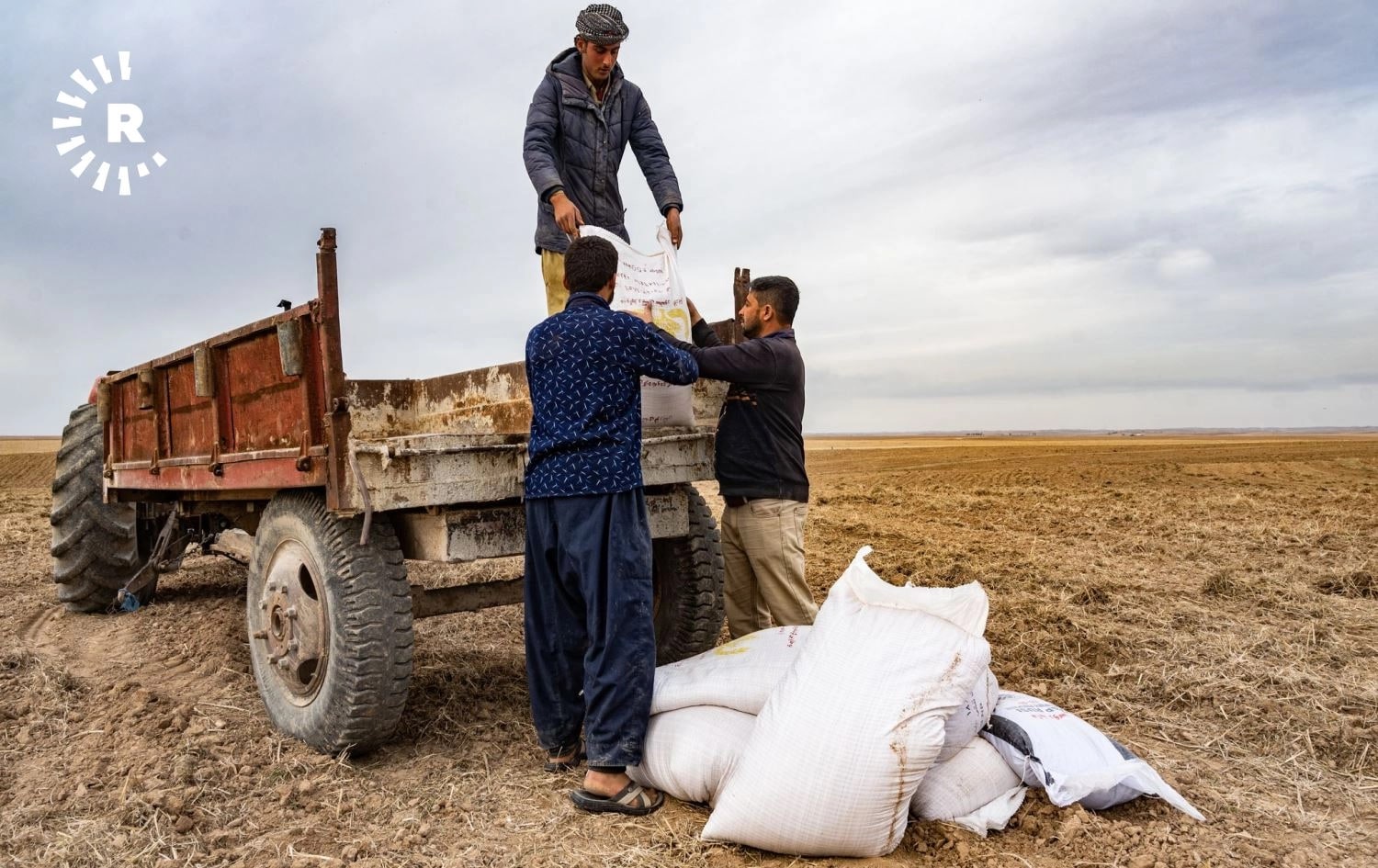

ERBIL, Kurdistan Region – An increase in fertilizer prices has affected wheat production in the Kurdistan Region, farmers told Rudaw on Wednesday. This comes a month after the government announced the removal of customs fees on importing the product.
“We planted two tons of wheat. I’ve bought a ton for 700,000 [IQD] ... If it continues like this, it will bring an end to farming. They [the government] don’t keep any promises [...] Farmers planted 200 dunams before, now they can’t even deal with 50 dunams,” Khalis Mohammed, a farmer in Soran, told Rudaw.
Kawa Muhammad, a farmer told Rudaw last month that fertilizer used to cost 17,000 IQDs in January per sack, which is 50 kilograms. It then increased to 25,000 in April and is now 40,000 IQDs.
“If it stays like this, not even 30 out of 100 farmers will plant wheat, because the costs are high. Everything costs a lot – agricultural products will run out,” Najat Mahmoud, another farmer said.
“Two companies are allowed to bring fertilizers into the Kurdistan Region. They might put whatever price they want on it, because no one else is allowed to bring it in,” farmer Kaka Sida Hamad said. “The government doesn’t follow up with these companies I don’t know why, and farmers have to pay the large price.”
The Ministry of Agriculture and Water Resources on October 12 issued a statement saying they will “pardon customs fees on importing chemical fertilizers, pesticides and seeds to reduce the costs of planting grain, especially wheat and barley.”
The ministry in August said the reason for the price increase is the devaluation of the dinar against the US dollar, the coronavirus pandemic, and the “global” increase of prices for fertilizers, denying it was because of custom fees.
Wheat production has decreased all over Iraq due to drought. In 2020, 927,000 tonnes of wheat was harvested in Nineveh province alone, but production plunged to 89,000 tonnes this year, AFP quoted an official as saying.
The water crisis in the Kurdistan Region has also decreased rice production in Duhok province’s Akre threefold this year.
Additional reporting: Bakhtiyar Qadir, Jutiar Qaraman