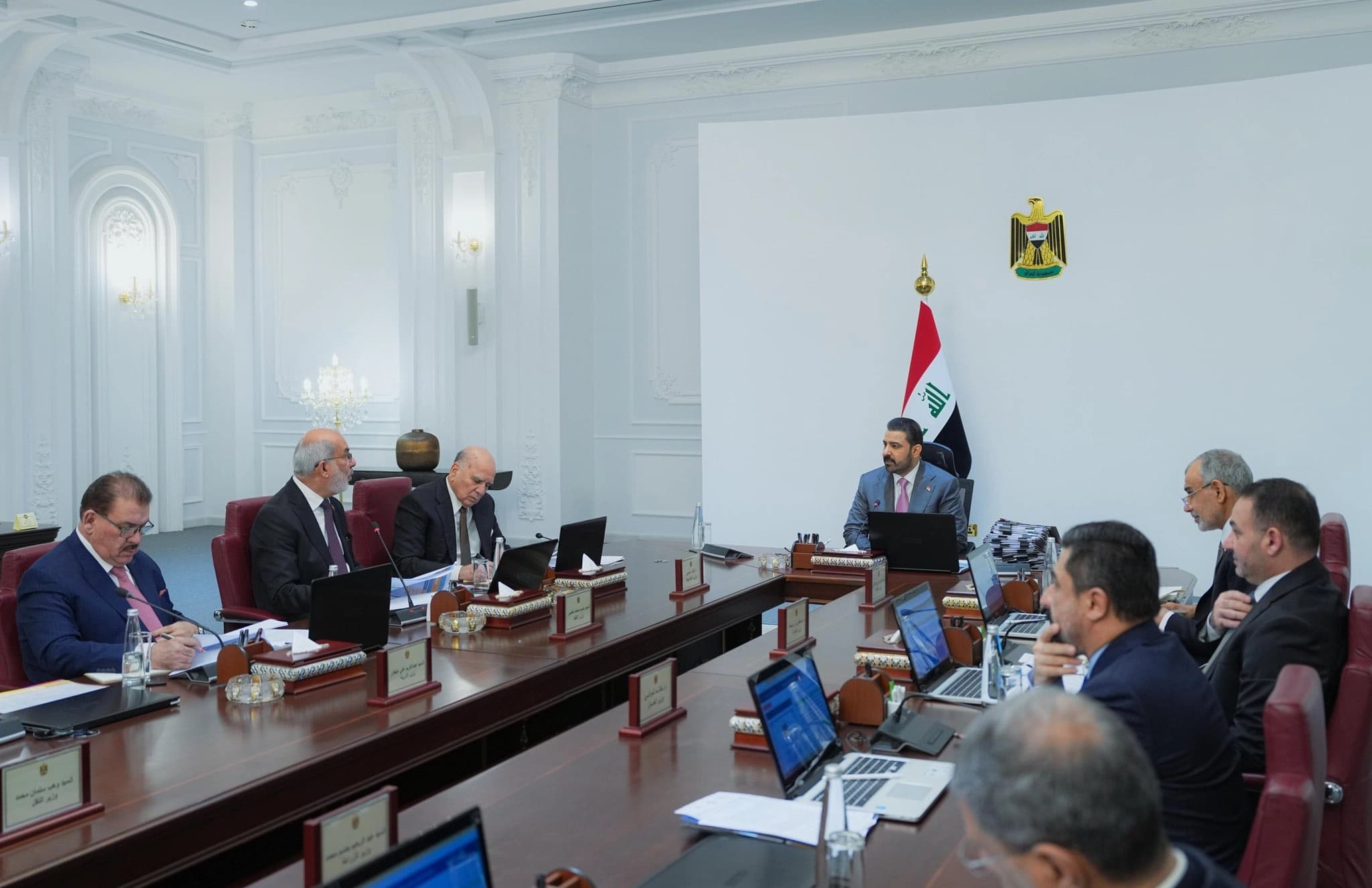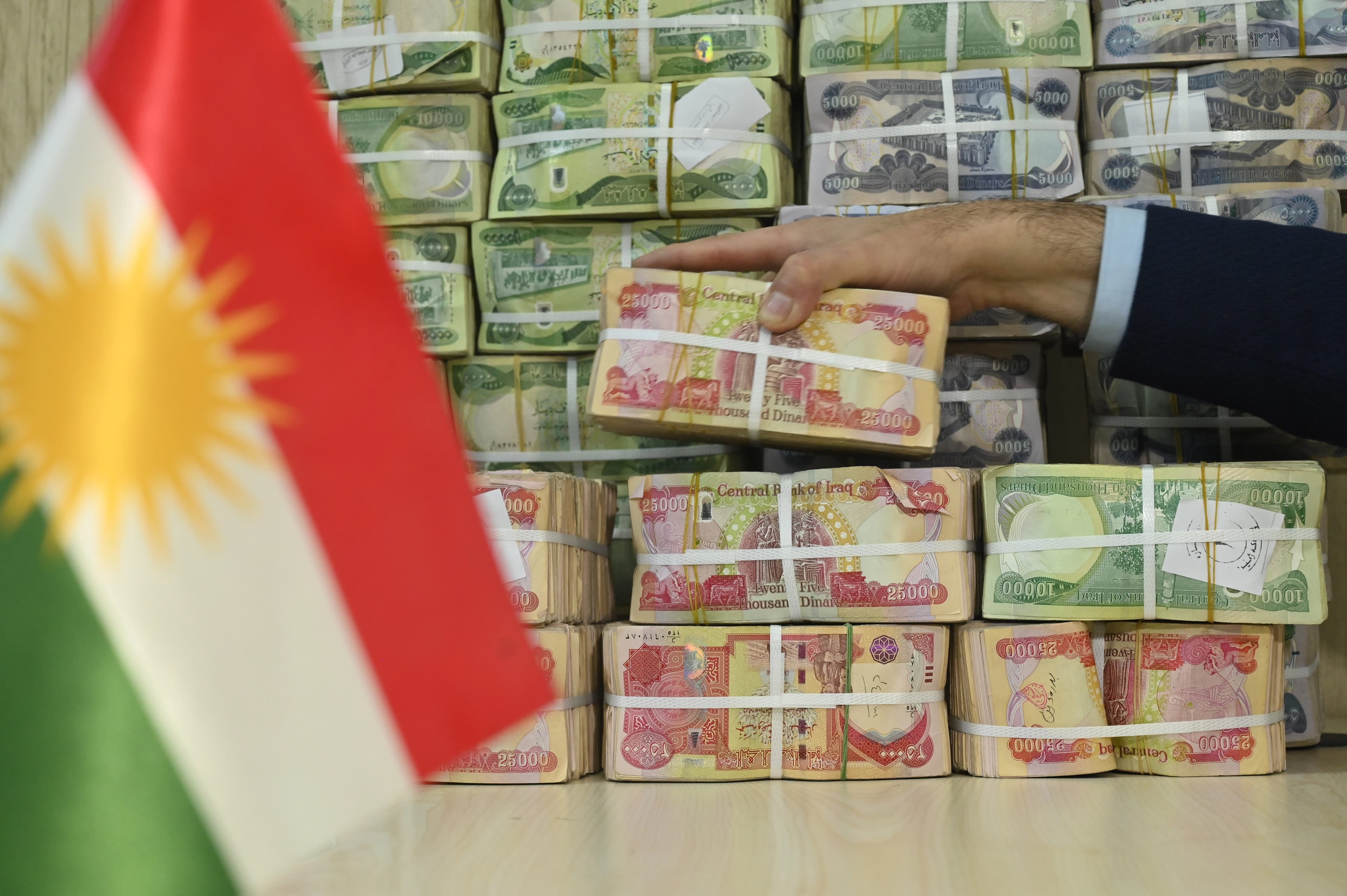

In the coming days, the Iraqi Ministry of Finance is scheduled to submit a budget to the Council of Ministers that differs distinctly from those of the past two decades. Just as the nature of this new budget diverges from previous ones, relations between Erbil and Baghdad, particularly regarding oil and finance, have undergone significant transformation. Therefore, the 2027 budget (or the "Program Budget") presents both major opportunities and severe risks concerning the Kurdistan Region's financial allocation.
Previously, negotiations before and after the preparation of the annual budget in the Ministry of Finance, the Council of Ministers, and the Iraqi Parliament centred on reaching an agreement over the Kurdistan Region’s share and embedding it in the budget law. Today, however, all fundamental agreements have been reached, and federal institutions possess more than enough data concerning the financial situation of the Kurdistan Region.
Historically, the Kurdistan Region's annual share in the Iraqi budget was defined by one to three articles—initially set at 17% and later adjusted to 12.67% based on population metrics. Yet, a review of the past decade shows that this allocated percentage was never fully disbursed or paid out. Various reasons were cited for this shortfall, including the failure to deliver oil to SOMO, the failure to return non-oil revenues, and the absence of civil servant payroll lists. Today, however, Baghdad holds the Kurdistan Region's financial data down to individual employee PIN codes. All produced and exported oil has been handed over to SOMO, monthly revenue and expenditure reconciliation balance sheets are sent to Baghdad, payroll lists are prepared, and a final agreement has been reached regarding the distribution of border-crossing revenues.
The core question now is: As Iraq prepares a unique budget for 2027, what will its implications be for the Kurdistan Region? Next year, will the Kurdistan Region receive a formal budget allocation, or will its salaries continue to be disbursed by Baghdad two weeks late?
Four distinct phases of the Kurdistan Region's share in Iraq's annual budgets
Based on the articles and clauses specific to the Kurdistan Region in Iraq’s annual budget laws from 2015 to 2023, its financial share has passed through four distinct phases:
Phase one (2015): The 17% fixed-percentage system and the introduction of Articles 10, 11, and 12.
Phase two (2016–2017): The expansion of sovereign expenditures, with the Kurdistan Region's share calculated only after these deductions.
Phase three (2018–2021): A fundamental shift in determining the allocation mechanism from a fixed percentage to population-based ratios.
Phase four (2023): The three-year budget law, adoption of the 12.67% ratio, and the formal inclusion of the Peshmerga's financial allocations.
Examining the textual basis of the laws:
First (2015): The Kurdistan Region's share was set at a fixed 17% of total actual federal budget expenditures (after deducting sovereign expenses). Article 11 served as the foundation for the oil and financial agreement between the federal and regional governments, incorporating conditional compliance clauses in case either party defaulted. Article 12 opened the door to review this percentage based on the general population census scheduled for 2015.
Second (2016–2017): Although the 17% system officially remained in place, the schedule of sovereign expenditures (Schedule "D" in the budget law) was significantly expanded to include new categories such as intelligence agency costs and radioactive resource controls. This expansion directly reduced the final net share, as these expenses were deducted prior to calculating the region's portion. This marked the beginning of financial disputes and accounting audits between Baghdad and Erbil—some repercussions of which persist today.
Third (2018): Following the political changes of late 2017, a fundamental shift occurred in the budget law: the fixed 17% formula was entirely dissolved and replaced by population-based shares per province (with the Kurdistan Region treated for a time as three separate provinces). Alongside the population criterion in Article 9 (and later Article 10 of the 2021 budget), sovereign expenditure lists were enlarged to encompass anti-terrorism forces, the Popular Mobilization Forces (PMF), federal police, and border guards. Consequently, the Kurdistan Region's financial rights and duties became tied directly to official data from the Iraqi Ministry of Planning.
Fourth (2023–2025): Under the three-year budget law—specifically Article 11 (alongside Articles 12 and 13) — ruling expenditures reached a new level. A key milestone was the allocation of a separate budget for Peshmerga forces within the ground forces schedule of the Iraqi army based on population ratios. While this was a novel step toward security and military equilibrium within the federal budget, it was not fully implemented, triggering serious crises in the disbursement of the Kurdistan Region's financial entitlements in 2023.
We have now entered a new phase that can be termed the "Phase of Agreement and Normalization." Because most issues that previously sparked continuous friction between Erbil and Baghdad have transitioned into mutual understandings and new agreements, this phase presents both opportunities and risks for the Kurdistan Region.
Opportunities for the Kurdistan Region in the 2027 federal budget
First: Moving away from the principles and phrasing of the past decade's articles (such as Articles 8 through 11 in previous budgets) that singled out the Kurdistan Region. It involves detaching the region's financial entitlements from restrictive conditions like "actual spending," ruling expenses, produced and exported oil volumes, constant approvals from the Council of Ministers or Prime Minister, and special decrees. Instead, the region's share would become a standard article among the 30 to 40 articles comprising the Iraqi budget law, mirroring other provinces and federal institutions.
Second: Safeguarding the rights and financial dues of the Kurdistan Region's civil servants on par with all Iraqi employees. Even if career advancement and new hiring are frozen across Iraq in 2027, exemptions must be made for the Kurdistan Region. Over a decade has passed without new public sector hires in the region, causing staffing levels to drop by approximately 3.2%. In 2015, the region ranked first in employee counts across Iraq's budget schedules, but by the 2023 budget, it dropped to eighth place. Meanwhile, federal staffing in sectors like education and health doubled in Iraq while remaining frozen in the Kurdistan Region.
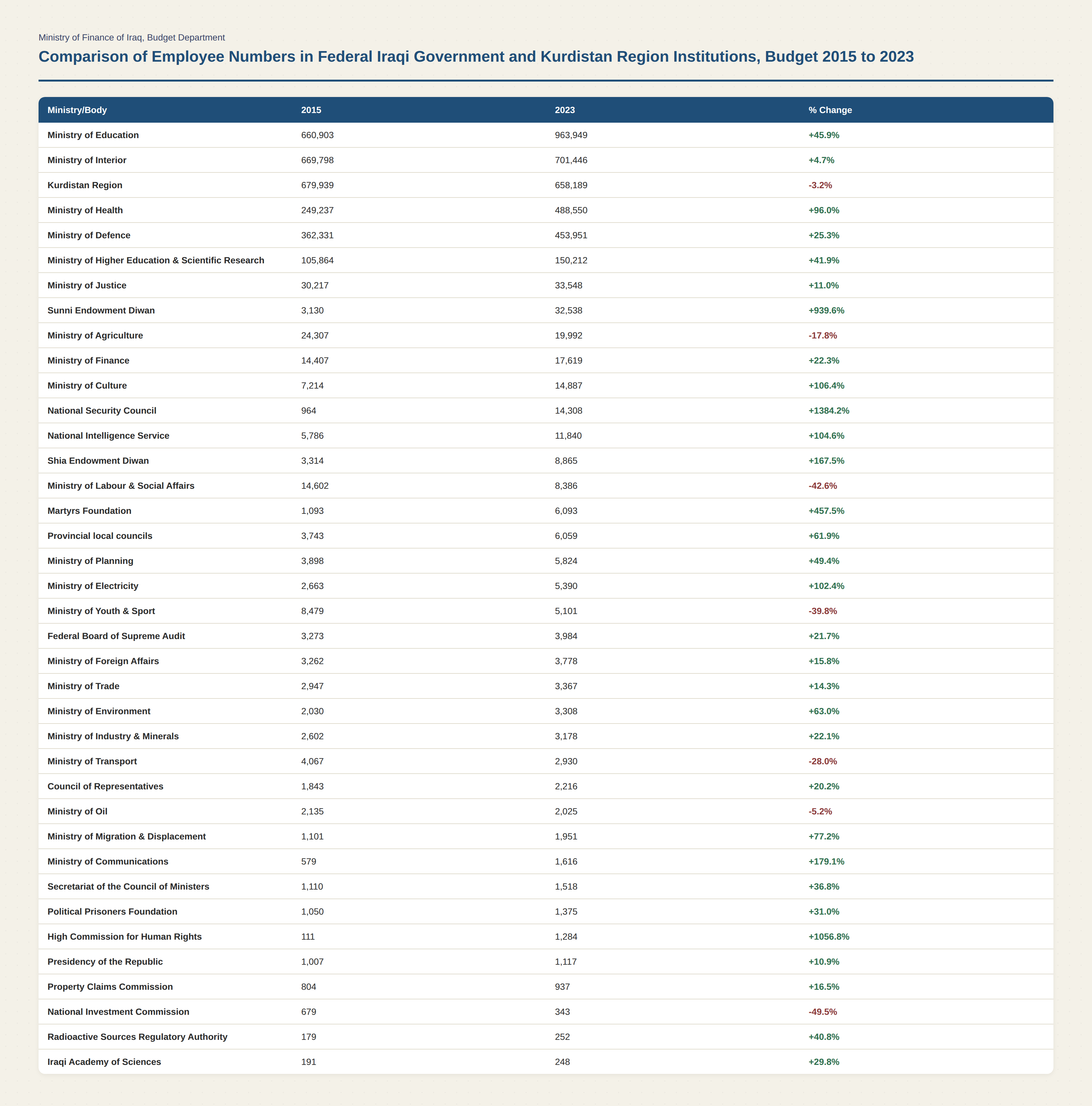
Third: Putting an end to the rhetoric claiming that "the Kurdistan Region only takes expenditures, returns no revenue to Iraq, refuses to hand over oil, sells it independently, and takes Basra's oil money." This logic is fundamentally flawed: if a province lacks oil, such as Nineveh (Mosul), should it be deprived of salaries, investment projects, and budgets? The Kurdistan Region contributes to the federal budget through both oil and non-oil revenues. Even this year, despite adverse conditions and oil production dropping by more than half, it returned over $1.3 billion to the federal treasury up to August 22, 2026.
Regarding oil issues, past mandates forced the region to deliver 250,000 to 400,000 barrels per day without settling production and export costs. McKinsey has now completed a detailed review report on production and export costs across the Kurdistan Region's fields and delivered it to relevant authorities. Per the September 27, 2025 agreement, the federal government must shoulder these costs, whether they amount to $8 or $28. As the director of SOMO noted in a recent interview with Al-Ahd channel: "Following the signing of the tripartite agreement, the situation improved significantly and put an end to suspicions regarding any oil or petroleum product smuggling. Under that agreement, all oil produced in the Kurdistan Region's fields must be delivered to SOMO. The truth is, we have no verified information confirming any smuggling from the region outside the oversight of the Oil Ministry and SOMO."
Addressing cost discrepancies (which stand at $4 in Basra versus $16 in the Kurdistan Region), he clarified: "Costs vary from field to field; for instance, in Basra's Rumaileh field it is $3 to $4, whereas in Wasit's Badra field it reaches nearly $25 per barrel. Thus, the $16 figure for the Kurdistan Region is not fixed. Following the McKinsey report, if costs are higher, we pay them; if lower, the funds are reimbursed."
Fourth: Guaranteeing the right of the Kurdistan Region's citizens in the new budget draft to benefit from federal energy financial support (gasoline, kerosene, and electricity subsidies) on par with residents of central and southern Iraq. According to recent official reports, this support exceeds $14 billion annually, leaving no justification to exclude the people of the Kurdistan Region.
Fifth: Securing investment budget shares for core sectors, primarily education and health. Similarly to the massive capital outlays dedicated to Iraq's oil and gas infrastructure, the Kurdistan Region's share must be allocated to develop and scale up production in its oil and gas fields.
Risks facing the Kurdistan Region's share in the 2027 federal budget
Repetition of past scenarios: The single greatest risk is the recurrence of past scenarios where trillions of dinars are allocated as the Kurdistan Region's share on paper within the budget tables, but are not disbursed in practice. In other words, the allocation exists textually, but monthly cash disbursements are stalled, causing employee salary distributions in the region to lag two weeks or more behind federal institutions.
Traditional request frameworks: The second risk relates to the nature of the requests submitted by the Kurdistan Region to the federal Ministry of Finance for drafting the 2027 share. The format of these requests leans toward a traditional budget of expenditure schedules rather than a "Program and Performance Budget." Though fine details are not yet fully public, revenue and expenditure sheets indicate that a comprehensive budget of this type requires incorporating all outcomes and requests—including new staffing, employee promotions, salary harmonization, university graduate hiring, and social welfare increases.
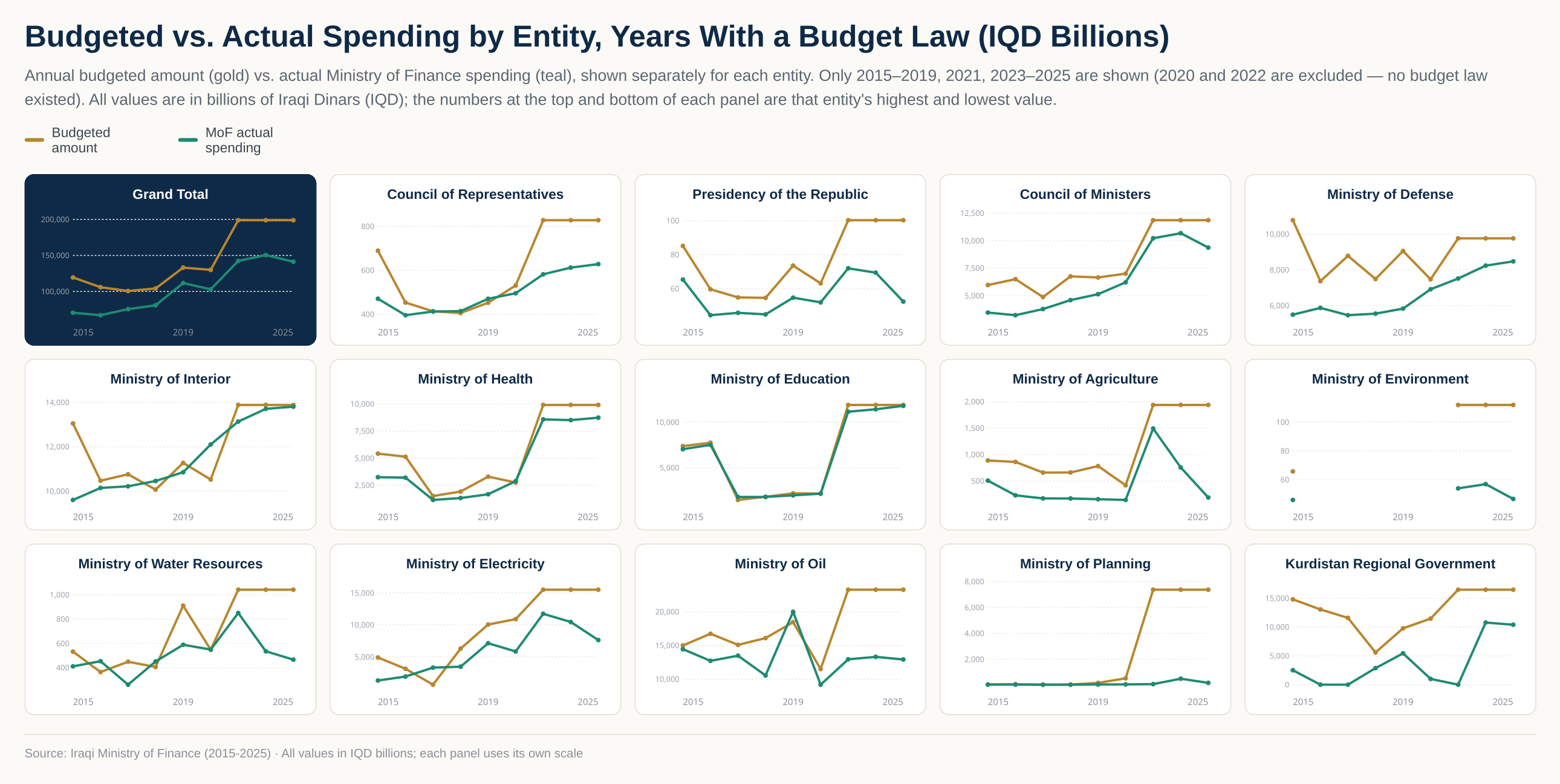
Absence of investment budgets: The third risk is the lack of an investment budget for next year in Iraq due to severe economic strains, which may deprive the Kurdistan Region of any investment allocation within the 2027 program budgets. In reality, Baghdad seeks to adopt this budget model not for new projects, but under the guise of allocating 15 trillion dinars (roughly $10 billion) exclusively for incomplete projects. Whether designated as investment or project completion funds, the Kurdistan Region hosts hundreds of stalled critical projects that require completion—such as the 400-bed Ranya Hospital or the Erbil Governorate building—which deserve a share of these allocations.
Population calculation formula: The fourth risk is the mechanism used to determine the region's share of Iraq's total budget. Previously fixed at 17%, it was later adjusted to 12.67% based on federal planning estimates. Now, following the general census demonstrating that the Kurdistan Region accounts for 14.1% of Iraq's total population, the issue is no longer up for debate: either a return to the consensual 17% rate (which was not population-based) as in 2015–2016, or, if population is the metric (as applied from 2017 to 2023), the 14.1% ratio must be formally codified immediately.
Conclusion
The draft "Program Budget" law for federal Iraq 2027 is expected to be complex. It represents a first-time implementation during an adverse economic phase where oil revenues cannot cover even a quarter of total expenditures—especially when tying monthly expenditures exceeding 10 trillion dinars to outcomes and performance.
Despite this broader complexity, unlike the past decade, the articles concerning the Kurdistan Region will be much simpler due to three main factors:
Oil and legal legitimacy: Issues concerning oil, contract legitimacy, production volumes, and handovers belong to the past. British company Gulf Keystone noted in its recent report that starting August 2027 it will recover production costs per-barrel based on the McKinsey report, proving that SOMO has overseen the entire dossier for over a year.
Audit mechanisms: Auditing revenues, expenditures, and payrolls will not rely on seasonal visits and joint approvals from the Board of Supreme Audit as in past years. Instead, the federal Ministry of Finance will audit and approve the previous month's accounts monthly before releasing the new month's salary funds.
Core demand: The primary demand of the Kurdistan Region is simply securing monthly salary funding—the right that was transferred smoothly every month without debate two decades ago.
Ultimately, while the 2027 budget draft differs structurally from all previous years, determining whether it will be uniquely favorable and trouble-free for the Kurdistan Region depends on final clause drafting by the Ministry of Finance, Council of Ministers deliberations, and subsequent political wrangling on the parliament floor. Final decisions will become clear toward the end of the first quarter of 2027.