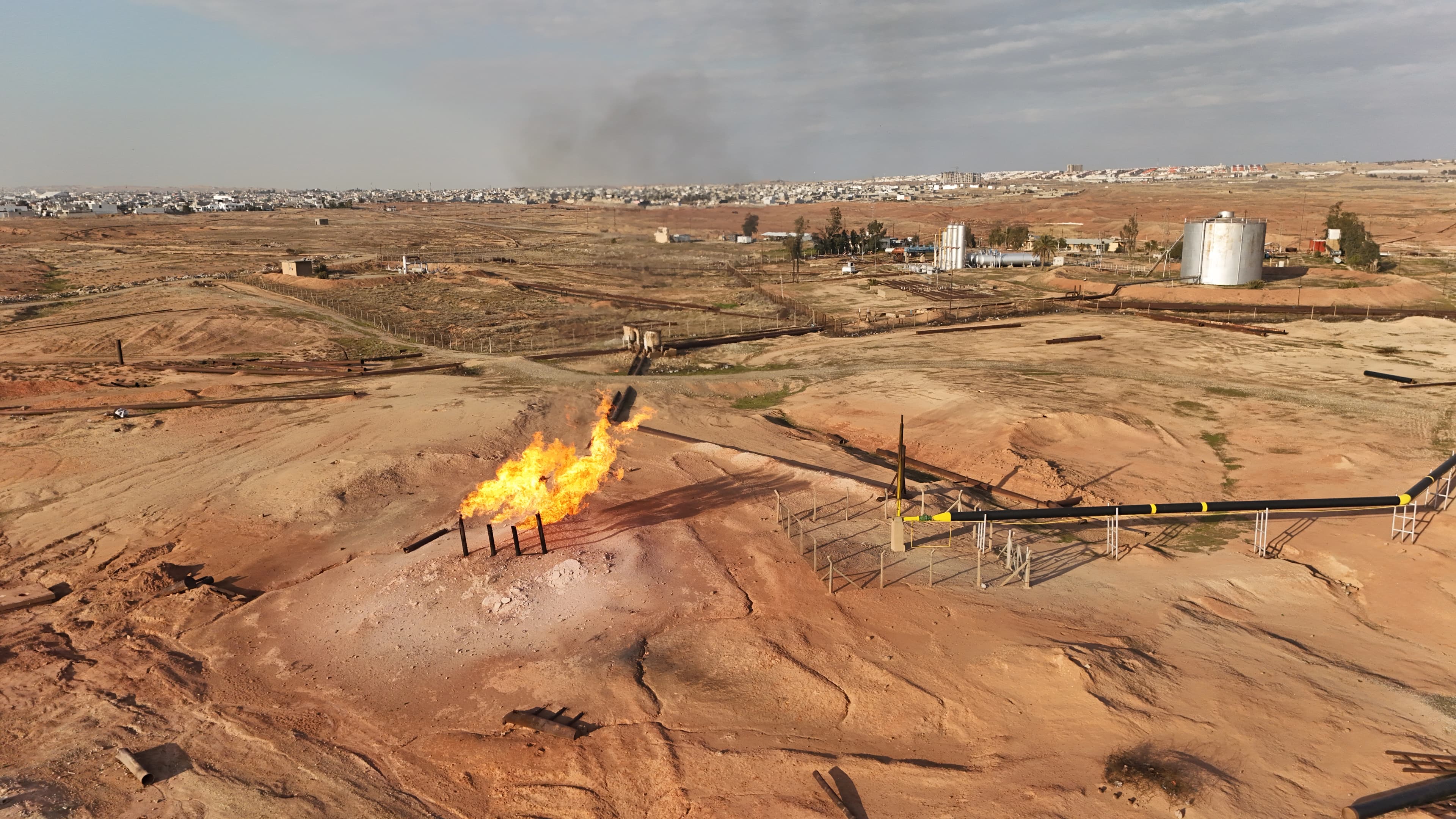

ERBIL, Kurdistan Region - British energy giant BP is drafting a comprehensive plan to increase oil and gas production in Iraq’s oil-rich Kirkuk province and halt gas flaring to support the Iraqi economy and drive local recovery, the company's Iraq president said Friday.
"The goal is singular: to support the Iraqi government in increasing production and to back the Ministry of Oil and our partners at the North Oil and North Gas companies," Zaid Elyaseri, BP's president for Iraq, told Rudaw's Malik Mohammed.
This comes as Iraq moves to diversify its oil export routes, relying heavily on the Turkish-Iraqi Pipeline (TIP) since a war erupted between the United States, Israel and Iran in late February. The conflict resulted in the restriction of maritime traffic at the Strait of Hormuz, a critical chokepoint through which over 90 percent of Iraqi oil exports previously transited.
BP has been operating in Kirkuk’s oil fields since October 2017, in which Turkish Petroleum Corporation (TPAO) acquired a 15 percent stake in BP's Kirkuk operations in late July.
The new Kirkuk contract is framed around reconstruction and development and includes exploration and appraisal phases to support future capacity.
"The objective of this project is to boost production and invest in gas to halt gas flaring, while supporting the Ministry of Oil in supplying electrical power through increased gas production," Elyaseri said.
BP intends to replicate its employment model from the Rumaila field in southern Iraq, where the vast majority of workers are local. “Nearly 94 percent of our employees are Iraqi, and more than half of our contracts are awarded to local companies,” Elyaseri explained.
"Building the Iraqi workforce in Kirkuk province and working with local Kirkuk companies remain top priorities," Elyaseri said, noting that "the Kirkuk project holds significant importance and will benefit Kirkuk and its surrounding cities, which naturally includes the Kurdistan Region."
When asked if intermittent bombardments by armed groups have affected their operations, Elyaseri cited receiving “strong support from the Iraqi government regarding this issue,” after having resumed operations in Kirkuk province in mid-May following a suspension of activities in March due to the ongoing regional conflict.
BP’s long-term contract in Kirkuk spans 20 years. Although the company has been involved in the project for more than a year, its activities have so far focused on consultancy, monitoring and data collection rather than direct field operations.
In early March, Iraq’s state-run North Oil Company assumed responsibility for operating the Avana, Bay Hasan, Jambour and Khabbaz oil and gas fields after BP withdrew its staff. Iraqi officials at the time said the move was aimed at preventing disruptions to production and maintaining operations during the company’s absence.
The Kirkuk redevelopment project was officially activated in October 2025 under an agreement signed between BP, the North Oil Company and the North Gas Company. Baghdad has described the initiative as a key component of its strategy to increase oil production, expand gas investment and attract foreign energy companies.
RELATED: Iraq’s oil exports rebound to 2 million bpd: Oil ministry