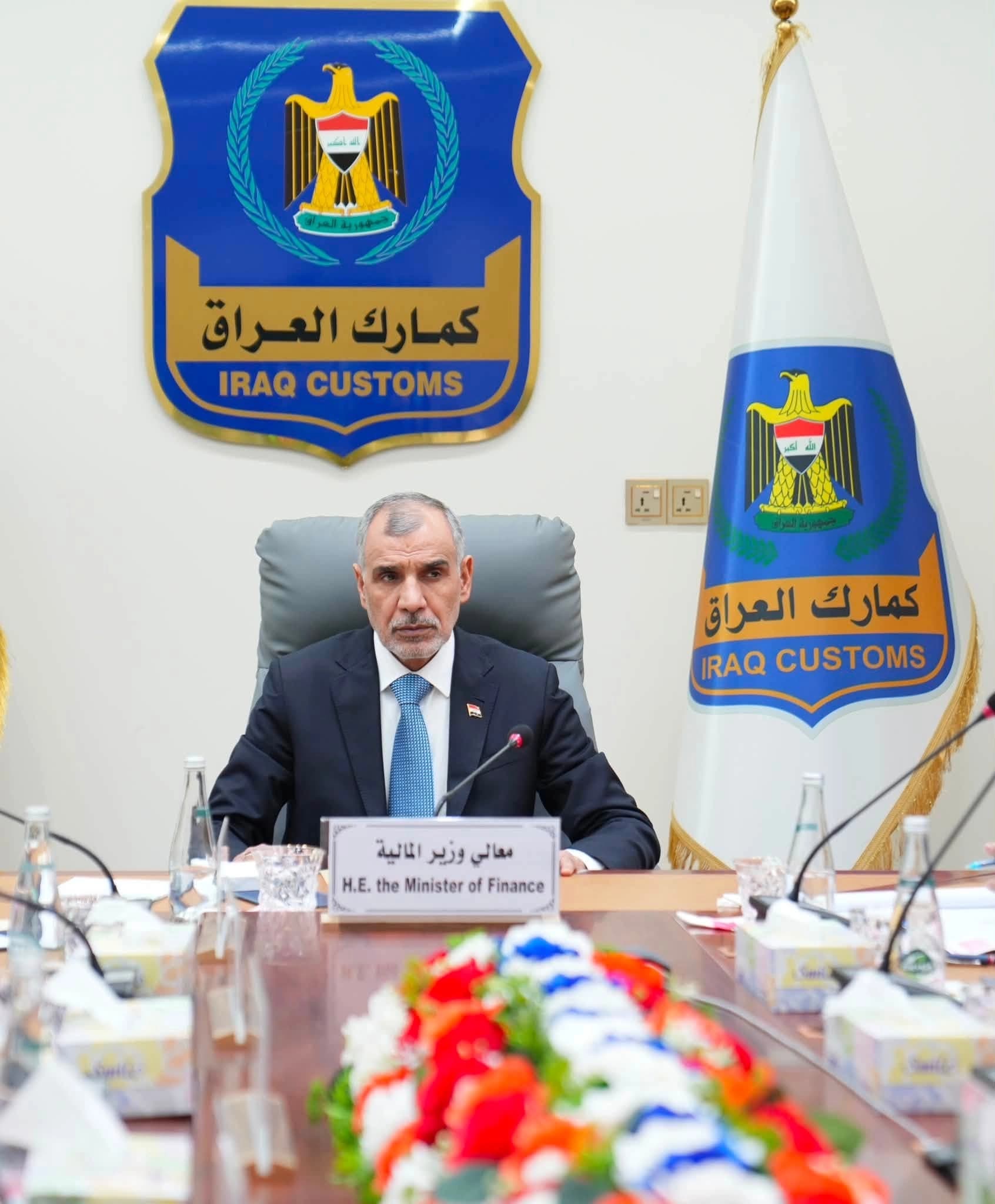

ERBIL, Kurdistan Region - Iraqi Finance Minister Faleh al-Sari has submitted two separate proposals to the federal Council of Ministers on the collection and distribution of customs revenues at the Kurdistan Region’s border crossings, Rudaw has learned, proposing an even split in customs revenues.
According to documents obtained by Rudaw, the first proposal, submitted 21 days before the second proposal on July 27, presents two options for distributing customs revenues generated at the Kurdistan Region’s crossings, whose status and revenues have been a longstanding source of dispute.
Under the first option, all customs revenues would be deposited into the Federal Ministry of Finance’s bank account, with half subsequently returned to the Kurdistan Region.
The second option proposes that 50 percent of customs revenues be deposited directly into federal government accounts while the other half of non-tax and non-customs revenues collected at the Region’s crossings would be allocated to the provinces where the crossings are located.
This comes as the Kurdistan Region earlier in September rejected a demand from the Iraqi government to hand over 100 percent of customs revenues from its border crossings ahead of the implementation of a UN-backed digital customs system.
ASYCUDA was developed by the United Nations Conference on Trade and Development (UNCTAD) in the early 1980s and covers all 22 of Iraq’s federal border crossings, including key ports in southern Iraq. In June, the Kurdistan Regional Government (KRG) and federal Iraqi authorities reached a technical agreement to implement ASYCUDA at Kurdistan Region border crossings.
However, seven border crossings in the Kurdistan Region have yet to receive official recognition from Baghdad, according to Sami Jalal, a legal advisor to the KRG Interior Ministry.
Salwan Akrayi, a member of the Iraqi parliament’s Committee on Border Crossings and Protection of National Products, told Rudaw's Hastyar Qadir on Tuesday that while Baghdad “grants exemptions at its own border crossings for certain imported goods that merchants bring in for ministries and institutions of the Kurdistan Region; however, this policy is not applied to goods imported through the Kurdistan Region's crossings,” Akrayi said.
Akrayi said the proposal was not put to a vote in the Council of Ministers because of pressure from the KRG, adding that citing “a prior understanding that each side would receive 50 percent of customs and tax revenues,” Akrayi said.
The proposals call for the formation of a joint committee headed by the Iraqi Border Crossings Commission and comprising representatives from relevant federal and KRG institutions to survey the Kurdistan Region’s borders and inspect unofficial crossings “in order to submit a report identifying which crossings meet operational criteria and which are unfit to serve as border crossings so they can be closed by the border guard," as well as a vote on an understanding.
The customs dispute comes amid wider budget talks as the KRG and federal government engage in discussions over the Kurdistan Region’s share of Iraq’s 2027 federal budget.
A well-placed source at the KRG Ministry of Finance and Economy told Rudaw English last week that Erbil is demanding a 14.1 percent share of the national budget, based on the results of Iraq’s 2025 census.
“We are heading to a month of extensive discussions with Baghdad,” the source said, adding that the talks would address the KRG’s financial needs and responsibilities.
RELATED: KRG rejects Baghdad demand for 100 percent of customs revenues