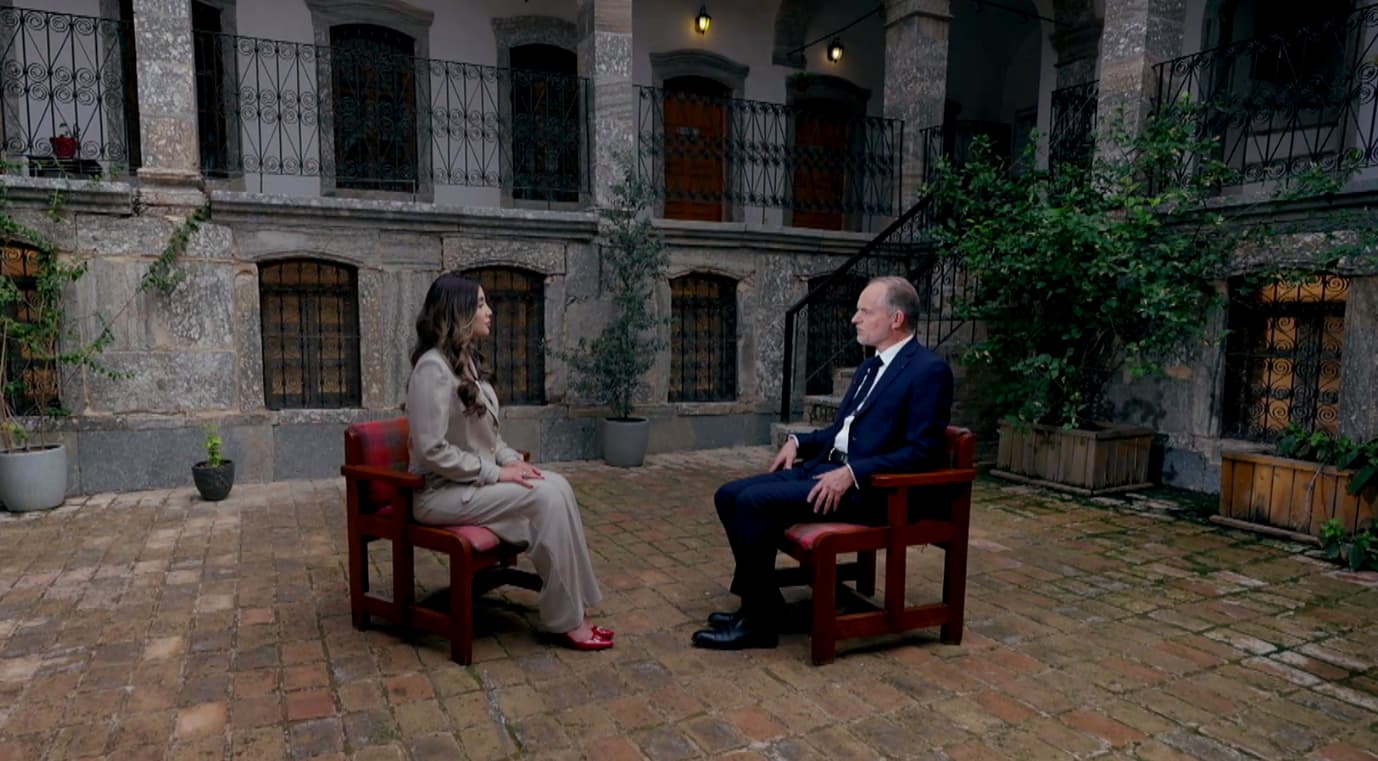
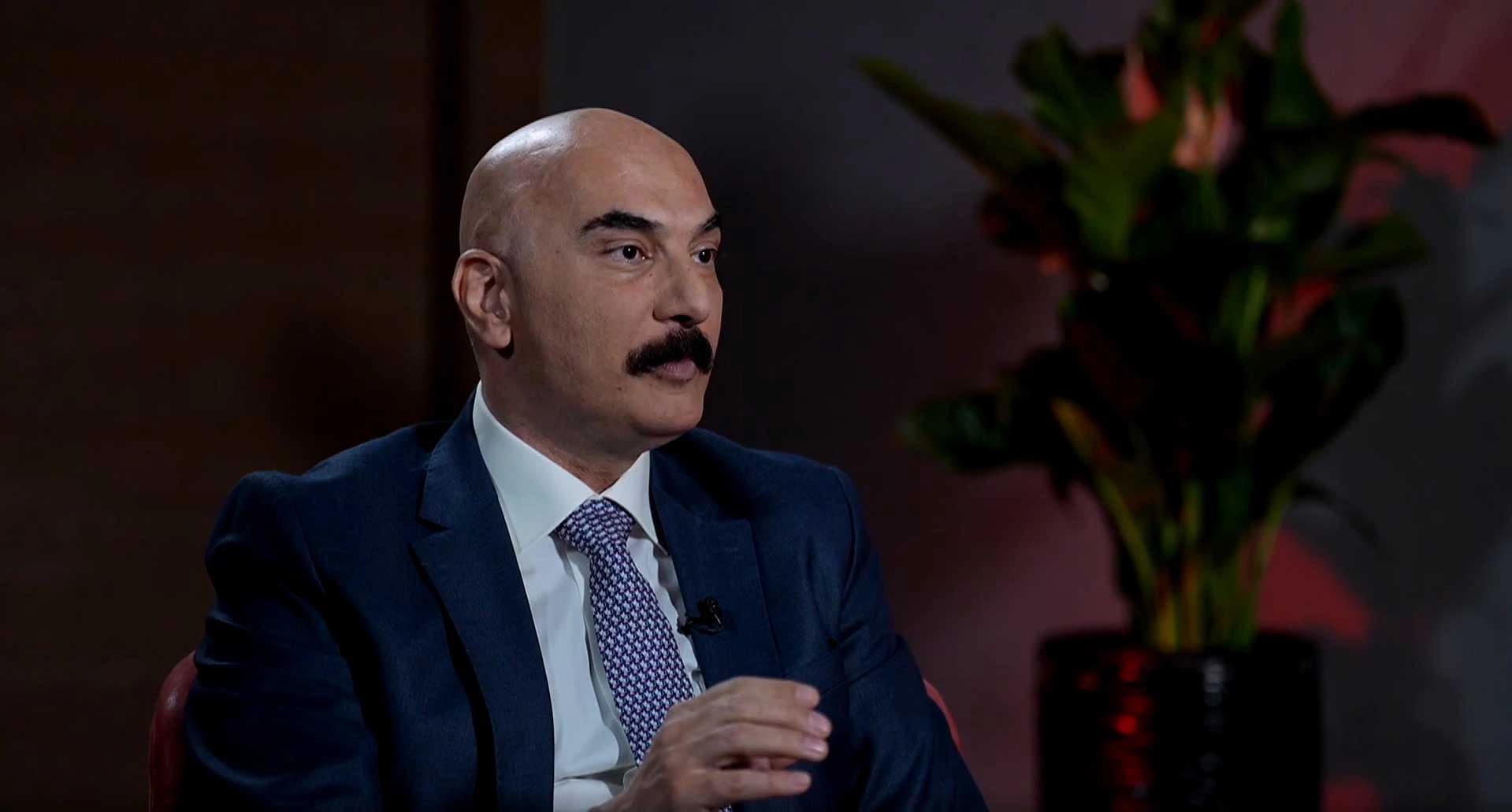
ERBIL, Kurdistan Region - Talks between the Kurdish administration in northeast Syria (Rojava) and the interim government in Damascus over the future of Kurdish-language education have made progress, with Damascus forming a committee to address the issue, Mazloum Abdi, commander-in-chief of the Kurdish-led Syrian Democratic Forces (SDF), told Rudaw in an exclusive interview aired on Saturday.
Abdi told Rudaw’s Dilbxwin Dara that Kurdish education in Rojava is “important” and “one of the key topics for us during the talks with the Syrian state.”
He added, “The issue of language is my priority. Let me say this, when we signed the January 29 agreement, it stipulated that the Presidential Decree 13 [about Kurdish language] should be implemented. At that time, I did not accept that because of the language issue. I said Decree 13 is not enough for us regarding the Kurdish language, because for 15 years in Rojava, Kurdish has been the language of education, and we have reached the university level.”
Decree No. 13 of 2026, issued by Syrian President Ahmed al-Sharaa on January 16, addresses the status and rights of Syrian Kurds. It recognizes Kurdish as a “national” language and allows it to be taught in public and private schools in areas with significant Kurdish populations, including as an elective subject. However, it stops short of recognizing Kurdish as an official language of the state.
The decree was seen as a goodwill gesture from Damascus aimed at paving the way for a ceasefire with the SDF and an integration agreement after intense fighting in which the Kurdish-led force lost most of the territory under its control.
The two sides signed the January 29 agreement following French and American mediation. The deal included the integration of Rojava’s military, security and civilian institutions into Syrian state structures.
During the interview, which was recorded on August 15, Abdi said the integration process would be completed before September. Speaking at an event marking the 100th anniversary of Qamishli’s founding on Thursday, he announced that the integration of Rojava’s military, security and civilian structures had been fully completed, a development welcomed by the interim government.
Abdi said the Kurdish side would not accept Kurdish being taught merely as an elective, adding that Damascus had formed a committee made up of people with “decision-making power… to resolve this matter.”
“What is being said to us now is: a Kurdish student must not only learn Kurdish but must also know Arabic. We said: no problem. That is, alongside Kurdish, there should be Arabic, and every student who finishes education should know both languages so that no problem arises. We said: no problem, we are flexible in that, but the important thing is for Kurdish to become the official language of instruction, and there is new progress in this matter,” he said.
Kurdish has been the language of instruction in Rojava since the establishment of the autonomous administration 15 years ago.
Abdi also said the Kurdish side had reached an understanding with Damascus over the formation of a brigade comprising SDF fighters from Afrin that would be stationed in or near the city.
Afrin was part of Rojava’s Afrin Canton before Turkey and its Syrian proxies seized control of the area in a major offensive in 2018. The takeover displaced hundreds of thousands of Kurds to other parts of Rojava. Thousands of families have since returned to their homes as part of the January 29 agreement.
“Fundamentally, there was an understanding with the Syrian Ministry of Defense that the youth of Afrin – those who were previously in the SDF – would also be affiliated with the Ministry of Defense as a brigade in the Afrin region or near the Afrin region, to organize themselves and carry out the duty of protecting their own areas,” he said.
During the interview, Abdi also addressed the future of the Kurdish movement in Rojava, saying he plans to establish a political body to fill the vacuum left by the SDF’s integration into Syrian state institutions.
He also confirmed that direct talks with Ankara are ongoing, saying the peace process between Turkey and the Kurdistan Workers’ Party (PKK) has had a positive impact on security in Rojava.
The following is the full transcript of the interview with Mazloum Abdi:
Rudaw: It is a great joy to see him after 30 years. How are you? Are you well?
Mazloum Abdi: I am well. I am also happy that we’re meeting. Welcome.
Thank you very much, General, for accepting this interview. I know you are busy these days and have a lot of work, but I have been trying for a long time to make this interview happen and to see you face-to-face. Thank you for giving us your time. I travel a lot among the people; I ask, and I listen. Some people in Rojava (northeast Syria) have become very hopeless. They say, ‘The Kurds were defeated.’ They say, ‘We gave 15,000 martyrs, so many wounded. You fought ISIS, you genuinely defeated ISIS.’ You showed great heroism, as Kurdish fighters of the Syrian Democratic Forces, but the question that remains is this: what is the outcome? Where are you headed? You made so many sacrifices; what did you achieve?
We care about this issue, and it is an important one. Our people always ask this, and it’s true. I cannot say that we have achieved an outcome worthy of the sacrifices our people, we and our martyrs made. There are some matters here on which we must criticize ourselves and give our people that right. But we want to say that this struggle was not in vain, as some claim. It is not like that, no. After that struggle and the effort that was made, there are some issues now on which we have reached an agreement with the Syrian government. There are agreements we have made together; those agreements were made between the President of Syria and us, and we have signed them. In those agreements, the specificity of the Kurdish enclave has been accepted - administratively, militarily, and on many other fields. This is the first time in Syria that there is a distinct perspective and treatment toward this region. Also, the latest agreement was reached on January 29. Although it did not meet our expectations, this agreement establishes a status for the Kurds within the Syrian state. There is a formal agreement, but it requires work for this agreement to become constitutional or enter the constitution. However, there is a result now, and based on this result, we can continue our struggle. I believe our people should know this.
Well, will these things become constitutional in the future? What are the guarantees, General, that the things you are saying be established in the new Syrian constitution will materialize? Will Kurdish rights become constitutional rights?
International actors were involved when we signed the agreements. For instance, French President Mr. Macron said: ‘I am the guarantor of the implementation of the political aspect of the agreement.’ US officials, both from the military and representatives of the US President [Donald Trump], were involved in the process. Although they did not sign any documents, they were involved in the process. They continue following up on the implementation of these agreements. So an international side is involved in this work. We have told the Syrian government that there should be constitutional things [guarantees] as well.
Although it might not be a signed document [by them], they were present in this process and are still following up on it; they follow up on the implementation of these agreements. We have discussed these [with Damascus], and promises have been made that in the future, when a new constitution is drafted, these things will be worked on. But I believe the greatest guarantee to protect these achievements - the ones that exist now on the ground, especially regarding Kurdish specificity, for them to become a permanent part of the Syrian constitution - Kurdish unity is necessary, the unity of Kurdish political forces is necessary, and we must strengthen ourselves and participate effectively in the building of the new Syria. Most importantly, we currently have achievements on the ground. According to the agreements we have made with the state, Kurds govern themselves in all areas where there are Kurds; whether militarily, security-wise, or administratively. The most important thing is that all political forces and our people take the responsibility to preserve it. They should not say that this achievement belongs to only one political party but they belong to all Kurds. When we all feel responsible for them [achievements] and struggle greatly for them, and create a Kurdish unity around them, this will constitute the greatest guarantee to ensure our rights are preserved in Syria.
Is Kurdish unity possible, General? I am asking because you have conducted many meetings and supervised many meetings between political parties in Rojava, but you did not achieve the intended result, and unity was not reached. Where is the problem?
True, there are problems facing the establishment of Kurdish unity. You know we held an [intra-Kurdish] conference, and good results emerged from the conference. For the first time in the history of Rojava, political forces united on a single agenda and certain goals. They even formed some committees, but in practice, this was not implemented. Now, I don't want to go into the core of the issue because we want this work to continue, but I can say this effort is still ongoing. I believe that results of the conference are still effective although they have been suspended practically. We are working so that we can proceed again in a new atmosphere and situation. There are some problems, but for a step to be taken toward Kurdish unity, both sides must agree. Both sides must make an agreement between themselves on how to proceed practically. This does not exist now, but we are working on making this agreement a reality.
It was claimed that General Mazloum Abdi has been working on establishing a Kurdish umbrella body. Is this still on the agenda?
True, I clarified this before in a statement and said: in my opinion, after the Syrian Democratic Forces is integrated into the Syrian state, one of my main duties is to remain among my people and, along with other Kurdish political forces and Kurdish figures, be able to create a political umbrella body to preserve the achievements of the [Rojava] revolution. Those struggles and efforts are still ongoing. We know there are challenges, but we want to work with new methods, engagements and dialogues with all Kurdish parties and the forces on the ground to achieve our objectives.
As far as I know, all Kurdish parties accept you. Now, the official interlocutor of Rojava is General Mazloum Abdi. Will you work, in Damascus, to make sure that the Syrian Kurdistan [Rojava] is mentioned in the official documents and the records of the Syrian state?
As is known, when this temporary constitution was set, they told us that this constitution had been previously drafted - meaning before we signed the March 10 agreement. Because of that, we didn't have the opportunity to instill the things we agreed upon in the constitution. But it has been promised that if they start working on a new constitution, it should include the decisions made by the President. In these agreements of ours, there is Kurdish specificity; there are matters related to the Kurdish language and matters related to Kurdish rights. These matters must go into the constitution; some promises have been made, and we will be following up on them. But I say it again: for this, struggle is necessary, the unity of political forces and the entire Kurdish people is necessary, and everyone must unite around the achievement and preserve them so that we can instill these achievements in the Syrian constitution.
General, is there a danger to these gains you made [throughout the past years]? Is there a fear that these achievements might be lost?
Not currently, but we must always take the risks into account. Ultimately, politics involves interests; there are international and regional interests, and everyone moves according to their own interests. Therefore, we must take these risks into account, and for that, we must struggle to preserve the things at our disposal. We must be in Damascus, we must be within the state, and we must conduct a certain struggle for this so that the current achievements are preserved.
There is another very important issue - language. I interviewed the Syrian Minister of Education Dr. Mohammed Turko, and I don’t know how you view the issue of language. For example, should the Kurdish language be an option in Kurdish areas, become an official language, or be taught alongside Arabic? Is there a formula regarding the future of education and the Kurdish language in Kurdish areas?
This is an important issue for our people and it is one of the key topics for us during the talks with the Syrian state. The issue of language is my priority. Let me say this, when we signed the January 29 agreement, it stipulated that the Presidential Decree 13 [about Kurdish language] should be implemented. At that time, I did not accept that because of the language issue. I said Decree 13 is not enough for us regarding the Kurdish language, because for 15 years in Rojava, Kurdish has been the language of education, and we have reached the university level. Because of that, we cannot go back to the language being an optional language. This is impossible. Therefore, the language of instruction, which is Kurdish, must continue. This has always been on our agenda; in all those meetings held in Damascus, that has always been our main agenda. In the last meeting held in Damascus between us and the President, I can say progress was made. This topic was discussed again, and we presented some solutions so the topic wouldn't reach a dead end and could proceed. The main goal was for the Kurdish language to remain as the official language of instruction.
Official language of instruction?
The official language of instruction. We made that one of the main themes, and new progress was made. According to the information they officially gave us, a committee has now been formed of those who have decision-making power in this issue to resolve this matter. What is being said to us now is: a Kurdish student must not only learn Kurdish but must also know Arabic. We said: no problem. That is, alongside Kurdish, there should be Arabic, and every student who finishes education should know both languages so that no problem arises. We said: no problem, we are flexible in that, but the important thing is for Kurdish to become the official language of instruction, and there is new progress in this matter.
Who has control of the oil? I mean the oil that was in your hands for years, which you used and was an income for you. Now, what is the future of the oil and who has it, General?
Officially, we have handed over the file of oil and the oil fields such as Rmelan, Suwaydiya, and other places - which used to be under our control - to the Syrian state. We handed them over to the Ministry of Oil, and now American companies are coming and working here. They have contracts with the Syrian state, and now they have taken over that file and are managing it. Therefore, we can now say the oil file is in the hands of the Syrian state.
Have you agreed that a portion of the oil revenue will be for you?
More than that, when meetings were held on this topic, we told them that Kurdish areas - and specifically Hasaka province and other places - have been neglected for a long time by the Ba'ath regime and the previous ones, and economically it has remained a backward region that the state did not look toward. Therefore, special treatment must be made with this Kurdish region and other Kurdish areas; meaning there should be support for those areas, especially regarding the budget. In this regard, there is a positive outlook. That is, we have generally agreed that it should be given importance. Regarding Hasaka province and other places, we are monitoring to see how these details will be carried out practically, and that will become clear in the future.
What about these negotiations of yours with Damascus, your going to Damascus - I don’t know how many times you met with the President of Syria, Ahmed al-Sharaa, in Damascus?
Many times.
Dear General, are these just meetings or is there actually a signed protocol between you? You say a promise was given. Is that promise only oral, or is there something signed between you, besides that agreement we saw signed between you two [in January]?
All of our meetings were triggered by some reasons [incidents]. That is, I didn't go to Damascus just to see him. We have signed agreements; so far, we have signed three agreements. We talked about how to implement the agreements. Sometimes we agreed, and sometimes we didn't. Sometimes we held meetings but didn't agree, resulting in a [an armed] clash. There were things we didn't accept, and they insisted on their own view, and then a clash broke out. That happened once too. Generally, I can say those meetings we hold in Damascus – especially those held with the President – are serious meetings, and serious topics were discussed in them, agreements were made in them, or we focused on how these agreements can be implemented. I believe those meetings had a positive impact in this field despite everything that happened.
Let me come to the issue of the Syrian Democratic Forces, which you are the commander-in-chief of. The integration is ongoing. Many people look at that integration in different ways. They say the integration means the dissolution of the SDF and the Autonomous Administration. Is there truly any benefit for the Kurds in this integration?
I believe there is; this in itself is a method of solution. Perhaps some people are against this, and some don't accept it. That is their opinion, and we say nothing, but if there is a better solution, they can tell us, and we will consider it. But in our view, in the situation that arose and the conditions created, the best thing was the January 29 agreement. It foiled many plans against Kurds. There was a danger of genocide against Kurds, and that was prevented. Although that agreement might not meet our expectations, it protected some Kurdish specificities. These are among the benefits of the integration. We ourselves don't say "integration" much and don't want to focus too much on that term; rather, we say the implementation of the agreement of January 29 – that term is more accurate because we made an agreement, and it is clear what we are doing in that agreement. Now we are implementing that. Regarding our military force, we have decided that our military force will become part of the Syrian army, but with our own identity, and we will participate as Kurds; Kurdish commanders will participate, Kurdish soldiers will participate, and they will be Kurdish brigades. Those brigades will all work with the state within a military structure. In my opinion, that was the most positive solution we could have; in a way that Kurdish youth who are in the SDF can perform military service in their own region and protect their own areas, while simultaneously becoming an official part of the Syrian army. This was the best solution. Therefore, even if this process ends, the Syrian Democratic Forces that existed will not vanish, but rather will change their style and structure. These forces that were previously under the name of the SDF will become part of the Syrian army under another name, another structure , and another military style. SDF commanders will also take their place within the army. This topic strengthens both sides, and at the same time, the Kurds can protect their areas in the name of the Syrian state.
Will Kurdish forces remain in Kurdish areas?
Currently, it is like this. The January 29 agreement stipulates that Kurdish forces [will remain]. There are brigades of Derik, Qamishli, Hasaka, and Kobane. We are also working now to have an Afrin Brigade, and work is being done for that.
Will you establish a Kurdish force in Afrin that is affiliated with the Syrian Ministry of Defense?
Fundamentally, there was an understanding with the Syrian Ministry of Defense that the youth of Afrin – those who were previously in the SDF – would also be affiliated with the Ministry of Defense as a brigade in the Afrin region or near the Afrin region, to organize themselves and carry out the duty of protecting their own areas.
Is there a set time for the dissolution of the SDF?
No, we don't want to use the word "dissolution" much but [paraphrase it] as when the SDF is fully integrated into the Syrian army. We can say that now a part of the SDF forces has been integrated and received training. They operate as part of the Syrian army but more than half of them [SDF fighters] have yet to be integrated. We are working on their integration. I believe we will see the full integration of the SDF into the Syrian army soon.
At that time, will you appear before the public and say that the integration is done and the Syrian Democratic Forces no longer exist?
Yes. For example, when we say the remaining SDF forces have all been integrated – and we are now at the end of that process – at that time we will say the process of the integration of SDF into the Syrian army has been completed. Then the SDF will continue under another name; meaning it will become the Qamishli Brigade or other brigades.
Meaning they will remain as a military force?
They will become part of the Syrian army, they will have their own military structure, and they will do their work within another system.
Well, at that time, where will I see General Mazloum Abdi?
Truly, I have said it in my statements before and I still stand by my word; we must work for our people and for Kurdish unity. Now, with the SDF joining the Syrian army, a political vacuum will be created because for 15 years, thanks to the existence of the SDF, there has been a political situation. We don't want a vacuum to be created. Certainly, a vacuum must not be created from the SDF side, and there must again be a political presence that can fill that vacuum. I am working on that as well, and a struggle must be made for that wherever it may be; whether here, in Damascus, or abroad. I will do whatever is good for our people.
Do you intend to reside in Damascus to manage the work that you intend to do?
In our last meeting with the President, we spoke about this, and they expressed their desire for me to be in Damascus.
To be appointed to a position?
They want me to be in Damascus so that we can work together, but we haven't made a final decision yet.
What is your plan for after you finish military work? You say: you will continue in some way. For example, from the outside, people were heard saying: maybe General Mazloum Abdi will establish a political party?
No, it doesn't necessarily have to be only a political party. I clarified before that, for me, it is important that the vacuum created by the SDF joining the Syrian army does not remain unfilled. That is important. This means those political personalities who were around the SDF, the external and internal relations of the SDF which were created with struggle and great effort as it has friends within the Kurdish community and surroundings. A political body will be established in order to prevent this vacuum. The body could be a political party, front, movement or anything.
It is aimed to fill that vacuum?
Yes, to fill this vacuum, and I will wholeheartedly support such a movement; We have to do it. But despite that, if other steps are necessary to serve our people, of course, we will do them. But it is on our agenda to fill that vacuum with a political body.
When the SDF was fighting ISIS, it received great military and economic support from America. A portion of the American budget was allocated for you. Is that American aid still ongoing?
It is not ongoing now. No, it has been stopped for a long time.
No aid reaches you from anywhere?
No, not at this time.
From France, from Europe?
No, we don't receive aid from anywhere now. To be honest, even in the past, we didn't receive such large financial aid; this information was a bit exaggerated. American soldiers were here and they had their own budget. They spent it on themselves and part of the SDF, who were working with them, not all. Also, there was the issue of the prisons, which received aid [from the US]. But there was no support for the entire SDF forces.
At one time it was said you would visit America. The media was very occupied with it. What was the reason General Mazloum Abdi did not go to America?
There was no special reason, but we were all busy with the war. Until a few months ago, we were all busy with the war. Because of that, we didn't go not only to America but to other places too. Before this, there was war, and we didn't go out much. We visited our close neighbors when we had urgent work and the tasks were somehow necessary and related to the war against ISIS, but such visits to neither Europe nor America were made because of that issue. But now the situation has changed. I had a tour to Europe, and we may go to the US too.
Do you think Europe and America turned their backs on you after the end of the war against ISIS?
No, we don't think that way. We, the Americans, and the Europeans were clear with each other. They were with us in the framework of the war against ISIS; from the first day, they always said: ‘We are here because of ISIS.’ They were here for the war against ISIS, rather than for supporting the entire Kurdish cause until the end, or to create an entity for the Kurds.
Had they given no promises?
We had received no such promises from them; in that regard, I cannot say they betrayed or cheated us.
Because Kurds say America betrayed you?
I view it that way. We may have wished they continued their support, but we know the whole world is about interests. The promise they gave us was related to the war against ISIS. After the war against ISIS ended, they withdrew. Now they want to withdraw from Iraq as well.
True, in September. But do relations between you and America still exist now?
Yes, they continue even now. Although the traffic has decreased, we have contact with all American officials, and we have it with Europeans as well. We continue our relations with our old friends.
Which among European and Western countries has remained your closest friend since the war against ISIS?
We don't want to differentiate between countries, but the President of France always expresses his support openly and says it openly; in that regard, they always give importance and we want our relations with everyone to continue.
Well, do you have direct dialogue with the Elysee Palace?
Yes, always.
Meaning, until now, that material, military, or moral friendship with France continues? Or is it standing by you as a power and supporting you in your negotiations with Damascus?
I don’t want to be unjust towards the President of France, Mr. Macron. When the war broke out and when the January 29 agreement was signed, he worked hard. He spoke with us several times by phone. He expressed his views on the points of that agreement and spoke with the Syrian President as well. He made a great effort and said: ‘I am the political guarantor of this agreement.’ We can say that politically and morally they provide good support.
Before Bashar al-Assad fled, was there contact between you and Ahmed al-Sharaa?
Our comrades always had contact with Hay’at Tahrir al-Sham (HTS) but I myself did not have any contact with them.
How was your relationship with HTS?
At one time we were beside each other. In the years 2012 and 2013, fighting happened between us and agreements were also made between us. At that time, our comrades saw their officials, and we made agreements, negotiations were held; sometimes fighting happened, and many times agreements were made. It was a process. Later, our comrades who were in Afrin and their officials who were in Idlib became close to each other, and there were many common issues between them. Our commanders in Afrin were in negotiations with them. There was always contact with the leadership of Hay’at Tahrir al-Sham and before that with Jabhat al-Nusra. But my direct contact with them happened during the Battle to Deter Aggression [in December 2024] before they controlled Damascus. We spoke on the phone.
Did they ask you to help them?
Before they took over Damascus, we spoke [on the phone] so that we could create coordination and avoid fighting one another.
Is there a threat to Rojava?
Truthfully, there is. We must always look at it that way. Until a complete agreement is made and the situation becomes normal, the risks will remain. A problem arises, it grows and grows. A few days ago a problem occurred; if it hadn't been prevented, it might have caused a war.
The Sari Kani (Ras al-Ain) issue?
Yes, the Sari Kani issue.
What happened to the displaced people of Sari Kani, General?
First of all, let me say the situation of Sari Kani and Gire Spi (Tal Abyad) is a special one, and chauvinism prevails. The state and its institutions are not dominant there. The people who are dominant there now have seized the properties and houses of Kurds and those people who were with the SDF. Some of them do not want the people to return. There is a problem of this kind. Because of that, the return was delayed a bit. Recently, the opportunity for return to the villages of Sari Kani was created. We provided the necessities; there were mines there, they were cleared. A plan was set for those villages and they returned. There were 12 villages and I believe a portion of the people returned. In relation to the incident that happened in downtown Sari Kani, some of the officials there had promised our people that they could return and nothing would happen. They [IDPs] had returned independently, but they [the officials] did not fulfil their promises and could not overcome the gunmen there; therefore, these incidents happened.
Is the threat of ISIS over Syria and Rojava gone?
I think it exists. Those who minimize the threat of ISIS are wrong; ISIS has reorganized itself and is still working. Perhaps it is the opposite, and ISIS has now expanded its base and entered the cities as well.
Has it reorganized or does it exist as small groups?
Perhaps it is not at the [territorial] level it was before, but now it has spread and is in all cities. For example, previously it wasn't present in the major cities of Syria, but they are there too.
General, I traveled across Rojava – I didn't go to Kobane because there wasn't time – but in Hasaka province services are very few. People complain and say: the power was in the hands of the Autonomous Administration. You also had income and you were the government there. What was the reason that you didn't serve Rojava as was desired?
We accept the criticisms. The Autonomous Administration was responsible and provided services. It had shortcomings, and we must also say that according to the opportunities available to the Autonomous Administration, services were not provided and they were not at the necessary level; that is also true. It can be criticized and now we criticize ourselves. This exists, but we must not forget the situation we passed through and we must not separate ourselves from the situation of Syria; I think that wouldn't be fair. For example, in Syria, there were four governments: the Damascus government, the Idlib government, the Azaz government, and there was the Autonomous Administration government. The situation of none of the rest was better than ours.
But in terms of services, the Sharaa government developed Idlib a lot?
I don't think so. I disagree.
You don’t think so?
Yes, I don’t.
It is claimed that the service offered there was much better than that of the Autonomous Administration.
I disagree. There are things the Autonomous Administration has done, along with those things where shortcomings were made. Both sides exist, and let's not see only black and white. In my opinion, this comparison is not fair. On the other hand, we had a different situation. I don't want to defend that, and let these words of mine not be interpreted as a defense, but we must look at it realistically. Until even before the fall of Damascus, the entire infrastructure of Rojava was being bombed. Electricity was bombed and municipalities were bombed. If there was one embargo on Syria, there were double the embargoes on us and our region. There were problems. We did not escape war; for 15 years we were in war and we didn't get out of it. Along with that, it is true and our people have the right when they criticize. We can say with the opportunities that were available, the Autonomous Administration could have provided more service, but we must see the obstacles and barriers during the evaluation.
What kind of Syria did you want, General? A decentralized Syria? A centralized Syria? How do you see Syria in the future?
We believe the main reason for what happened before in the era of Assad and the Ba'ath was that there was a totalitarian rule and an absolute centralized power. The system was centralized and the main reason for all that wrongdoing and oppression that was done was exactly that. Therefore, in the future of Syria, a centralized system is not a solution. Syria has tried it before and it was not successful. Something that has been tried before should not be tried again. Therefore, the best system for Syria is to be a decentralized system; our view is this way.
Let me come to your relations with neighboring countries. During this interview, you mentioned neighbors. How is your relationship with Turkey?
If we compare it with before, it is better now. Until a year ago, we were always being bombed by Turkey, our infrastructure was bombed and we were all targets. Now it is a situation where a ceasefire and open channels exist between us. We have dialogue with each other and we want this to progress further and move past the topic of a ceasefire and become a topic where understanding can be created between us, so that we and Turkey can normally have relations and dealings with each other like everyone else.
Is there direct negotiation between you, or are there mediators?
No, there is direct [contact]; our comrades see them and they see our comrades.
Well, when will we see General Mazloum Abdi in Turkey?
This depends on the political situation and how much Turkey is ready for this. I believe if the situation is prepared a bit more, something like this will happen.
Are there signs?
Yes, there are positive things, there are positive signs. I also believe it is in the interest of Rojava, in the interest of the Kurdish people in Syria, and in the interest of Turkey as well that our relations be created at a higher level.
When will General Mazloum Abdi and Mr. Abdullah Ocalan see each other?
That is also connected to this topic; it is tied to the issue of us and Turkey.
Have direct negotiations happened between you and Ocalan?
No, they haven't happened.
They haven't happened?
No, they haven't happened between [Ocalan] and me.
Meaning they have happened with your comrades?
Yes, perhaps that has existed, but it wasn't with me, and I am speaking about myself.
Do you want to see him?
Of course, he is a Kurdish leader and lived here for 20 years. He played a role in the peace process or the ceasefire [with Damascus] and his role continued until we reached an agreement.
So Ocalan played a role in the agreement?
Yes he did and he will continue to have a positive role.
As part of the ongoing peace process in Northern Kurdistan (southeast Turkey) – a law has been passed. Will it have an effect on Rojava?
It already has because we can say one of the reasons there is a ceasefire now and Turkey does not bomb here and does not attack like a year ago is the direct effect of that. I believe if this process moves forward, it will have even more positive effects.
How is your relationship with Southern Kurdistan (Kurdistan Region), General?
It is good. I believe it is now in the best stage. We have relations with everyone; including Erbil and Sulaimani, and through Erbil we have relations with everyone.
Because President Masoud Barzani during the war, and also Nechirvan Barzani, President of the Kurdistan Region, Masrour Barzani, the Prime Minister, and the Patriotic Union of Kurdistan (PUK) also supported you in difficult times. Do you agree?
Yes.
Do you still need Southern Kurdistan?
I believe we need it more than before, because we have now entered a new stage. In this new stage, Southern Kurdistan can play a greater role. That time was a time of war and they helped us in many ways, but now in the reconstruction stage, in the field of investment, and also politically and diplomatically, I believe we will need it more than before. The relationship of Southern Kurdistan with the Damascus government is also good. In that framework, that will also be a reason that we, Erbil, Sulaimani and Damascus, can do better work together.
How is your relationship with Qandil (PKK)? For example, for a while, some people said: the income of Rojava goes to Qandil, General! Was it really like that?
AHere we must say two things. First thousands of people from Qandil, Northern Kurdistan, even those youth affiliated with Qandil whether from Eastern Kurdistan (western Iran) or Southern Kurdistan came here and fought, defended, and some were martyred. Now the graves of all of them are here and they stayed here and didn't return to their own places; it was their own will, they said let us stay in Rojava and be buried in Rojava. Rojava helped the whole of Kurdistan and all parts of Kurdistan came and helped Rojava. We don't forget this; those people who came and gave their blood for our sake and were martyred here and defended us, we will never forget them. That topic was greatly exaggerated, but we must see the side of defense. Besides that, in that topic we have been criticized in several ways, especially politically and diplomatically. The Turks used that heavily against us. Now at this time, we have entered a new situation. Now we are dealing with the Syrian state and have become part of the institutions of the Syrian state. We have made our decision and the Kurds of Rojava see their representation in the SDF and in this Autonomous Administration, and we have decided to work with Damascus. In the last meeting held in Damascus with the President, we spoke about this topic extensively and clearly and reached a result. We said from today onward, our forces have been integrated. Now we will work with Damascus. We, as Kurds, want to become part of this state. Kurds were not part of the state during the creation and independence of the Syrian state, but now an opportunity has been created for Kurds to become part of building this state – the Syrian state. Now we have decided to be that way. We have discussed this issue with Damascus and have agreed.
But General, is Damascus ready to give political posts to Kurds?
I believe they are ready. These topics have been spoken about. They are waiting for this integration process to move forward a bit more and be done for such steps to be taken.
Are you in a hurry regarding the integration and do you want it implemented quickly?
The agreement stipulates that it was supposed to finish in February; it is already late. Both sides are to be blamed for the delay. In this matter, I don't want to put it on one side alone, but it dragged on and was delayed. Now we have planned that integration will completely end this month.
My strategic and special questions were these and I believe they were very important, because Kurds are truly very eager for the answers to these questions. Those questions I prepared for this interview were the people's questions. I went to Northern Kurdistan as well. People are eager to know what will happen to Rojava. Has Rojava ceased to exist and should we wash our hands of everything? I was saying: maybe I will do an interview with General Mazloum Abdi. They were saying: ask him these questions. Hopelessness had been created among the people after – I don't know if you say defeat or errors happened – in the war. But a large part of the people of Rojava, even the Kurds themselves, had become a bit hopeless. Do you give hope to the Kurds? Do you say: ‘We are not defeated and we will succeed’?
No, let's specify this precisely. It is true we withdrew militarily; we withdrew from a very large area and we were defeated in Sheikh Maqsoud. We didn't protect the people of Sheikh Maqsoud. This is a matter of self-criticism for us. It was a Kurdish area, an agreement had been made and that agreement should have been implemented – the April 1 agreement. We also see our responsibility in that and truthfully it is a matter of self-criticism, but the best thing was that the agreement for the people of Sheikh Maqsoud should have been implemented. The reasons are many. Among ourselves, we have questioned ourselves and questioned each other.
Have you questioned each other on those things?
Of course, we have questioned each other and in that regard, we will later announce it to our people. But before that, in other areas, meaning from Dayr Hafir and onward, truly we withdrew from there too and some mistakes were made. There too, we gave sacrifices we shouldn't have and they had an impact. These are again those topics we are now focusing on and they are matters of self-criticism. But let me say this, in the end when we saw the war expand here, we decided to retreat and return to Kurdish areas and protect Kurdish areas. That was our decision. The reason we retreated so quickly and came to settle in these areas was that. It is true that in the military field, there were mistakes on our side too; there are matters we must focus on, but we didn't want to fight there until the end – we withdrew and came back to Kurdish areas. Later I appeared myself in the media and said this is our area and we will fight. When I came on screen I said: ‘Now we will fight in Kurdish areas.’ I said it myself: Kobane, Hasaka province, the Jazira region – it is not Raqqa and Deir ez-Zor, and we will fight for these. We told this to the Syrian state, to the Americans, and to everyone. We said: ‘We will fight here.’ Later, as you know, an agreement was made and the war stopped. Therefore, if we evaluate it this way it will be much better. True, for me this is a matter of self-criticism, but it must not be criticized in another way. But now in this area where we are, there is an agreement. We and the state must also take steps according to that agreement and in my opinion, there are still some things here that we can preserve.
Well, I have some personal questions. Why do I say personal? Interviews are political, strategic, and questions are so heavy regarding the issue of the future of Rojava, but many people are eager to know you as General Mazloum Abdi; perhaps the comrades around you know you well, but there are people who want to know you better. You studied in Aleppo, you studied engineering, and you were in an educated family in Aleppo. Your father, Dr. Khalil Abdi, was the first Kurdish doctor in Kobane. What was the biggest mistake Mazloum Abdi ever made?
The biggest mistake?
Do you remember anything? A mistake that you say: I wish I hadn't made this mistake?
That is truly a difficult question, but I will answer it because it relates to our people too. Especially after we signed the March 10 agreement, there was an opportunity to implement it. Mistakes were made in our politics, there were errors. Of course, I wanted to make an effort to implement that agreement, but I see it that way – my efforts were few. To be able to put the things we agreed upon with the Syrian state into practice, my efforts were few. I see that for myself as the biggest mistake. If you ask me in what matter you give the Kurdish people the right to criticize, I give it in this matter; we should have made a greater struggle to be able to put that agreement into practice. Even now, to leave that behind, we are again in a stage. I have promised my people that for this time – an agreement that although it might not be entirely to our liking or according to our demands – for the sake of the war not happening again and so we don't face those things our people don't want, I have promised to use all my energy and ability to implement this agreement this time and create stability, and then we will continue our struggle.
When you fall into hardship, for example, you make a decision and get confused, is there a person or people you go back to for consultation?
I have my team. My comrades who work here in the SDF command. Of course, we consult together and take their views and many times it has been useful. Truly, many times I take the views of the people seriously too; I see someone among the people saying something like you should have done that – we analyze it and when we see it’s good, we come to our comrades and say let’s do it, and then we do it.
Is your relationship with the people good, do you see the people? Do you receive the people?
I always try for it to be good.
Now you are an important leader, not only in Rojava but in other parts of Kurdistan everyone accepts you, everyone respects and loves you. Does your friendship with the friends you had before you reached this position remain? For example, your university friends in Aleppo, your old friends, your friends in Kobane? Do you still have any contact with them, General?
Yes, our relationship is good. Some of them sometimes come to me and remind me, saying: we were together. They surprise me and I become very happy. Yes, those exist and many of my old friends are there. To be honest, I told them it’s true we were separated, but now you must come and work with me, and I have put some of them back to work.
Don't you miss civilian life, because we always see you in military uniform?
Actually, in the beginning when I came to Rojava, at the start of the revolution, I was doing civilian and political work, but later war was imposed on us. In 2013, I put on the military uniform. In the years 2011 and 2012, I was doing political struggle and didn't have much to do with military affairs, but war was imposed on us in 2013. I started to wear a military uniform and haven't taken them off until today.
Will you take them off?
But I believe it is time to take them off.
The time has come – is that time near?
I believe it is near.
So we won't see you in military uniform anymore?
I think when the integration of the SDF into the Syrian army reaches its end, we will return to our previous work and I think that is much better for our people. I myself take the will of the people as a basis; when they need a soldier I become a soldier and when there is a need for a politician I do political work.
Something else that is a curiosity for me too – do you ever listen to songs, do these things exist for you, General? Is there an artist you say: I like them and I always listen to their songs?
There are. I used to support them too; perhaps you remember when we were studying and working in Aleppo, at that time we used to establish several bands and support them.
True, you were a very main support for artistic work and activities.
Even now I still support and give importance to them, but I don't want to go too much into the topic and mention names so that no one gets upset.
You're afraid of making some people disappointed?
Yes, I don't want to differentiate between them.
What do you remember of Kobane, during your childhood?
I remember the primary school stage; that stage was important. Our first attempt was when we were in the primary stage – I and several friends of mine – we wanted to change the names of all the schools in Kobane and make them all Kurdish. At that time there was talk about whether to change the school names or not; we said let’s name them after the martyrs. At that time I went to Kobane and they told me: ‘We won't change the names. The Syrian state had issued presidential decrees.’ I remember that when we were just entering the middle school stage, once a friend of mine and I went and brought paint and changed the names of all the schools in Kobane.
You changed them to Kurdish names?
We made them all Kurdish and finished them all in one night, and later a big problem arose in Kobane. Later, the intelligence (Mukhabarat) got involved in the topic and some people were arrested. I remember this memory.
If you had finished your studies, we would see you as a Kurdish engineer now, wouldn't we?
True, that could have happened, because I liked engineering myself, but then we participated in political work.
Don't you miss those days of studying at Aleppo University?
Actually, Aleppo University was something special for me; because we had entered political struggle in an organized way. Previously we did it as friendship, but when we went to university it was something else – we entered it for a political goal. We were conducting a great political struggle in the university. I believe in my political life the greatest struggle was what we did with our friends in the university; dozens of my friends participated in political work with me and most of them are still with us until now. Some were martyred and some we are still together and continuing until now.
I was very happy. I said after 30 years I would see you again. Truly I was very happy. General, you are just like before. I saw you in Kobane, in Aleppo during study days, I saw you in Europe – you are just as you were. Now too I see you as a Kurdish leader and a General, a great commander of Kurdish forces who defended Rojava against ISIS, but you remain unchanged! Do you see yourself as you are too?
I myself don't want to move away from my own nature. I have a natural personality; there are some people who criticize me and say you are too simple and don't take protocols seriously, and they criticize me. I receive much advice in this regard, but I want to remain natural and continue just as I was before.
Stay as you are and may you remain as you are! Thank you very much for this interview. I was very happy. If you have any final thing to say.
I want to thank the Kurdish people in all four parts of Kurdistan for this struggle made in Rojava; I thank them from my heart. Actually, recently we went through a difficult process. We know our people suffered a lot because of it. I want to say we suffered more, because our friends were martyred, our friends were taken captive. We were inside this process ourselves and we also suffered, and of course, we questioned ourselves. Now we have finished this stage and, among ourselves, we did what was necessary. I want to tell my people that we are now entering a new stage. Now we have an agreement with the Syrian government and we will finish and succeed in it this month. I see the process as important for Rojava to start again. We will manage it; whether in the field of governance or the field of administration and politics, on those achievements created so far we will make a greater struggle. On the basis of those successes, we will make a greater struggle than before to protect Kurdish specificity. In order for the Kurds to strengthen their position within this state and all achievements are protected, we need a new and stronger struggle. We will manage this. What we ask of our people is for them to pass through the previous stage and be more hopeful than before. Let them participate with us in the march we have started. Let’s march together until we secure the rights of the Kurdish people in Rojava. This is my desire and hope from our people. It was a pleasure meeting you and welcome.