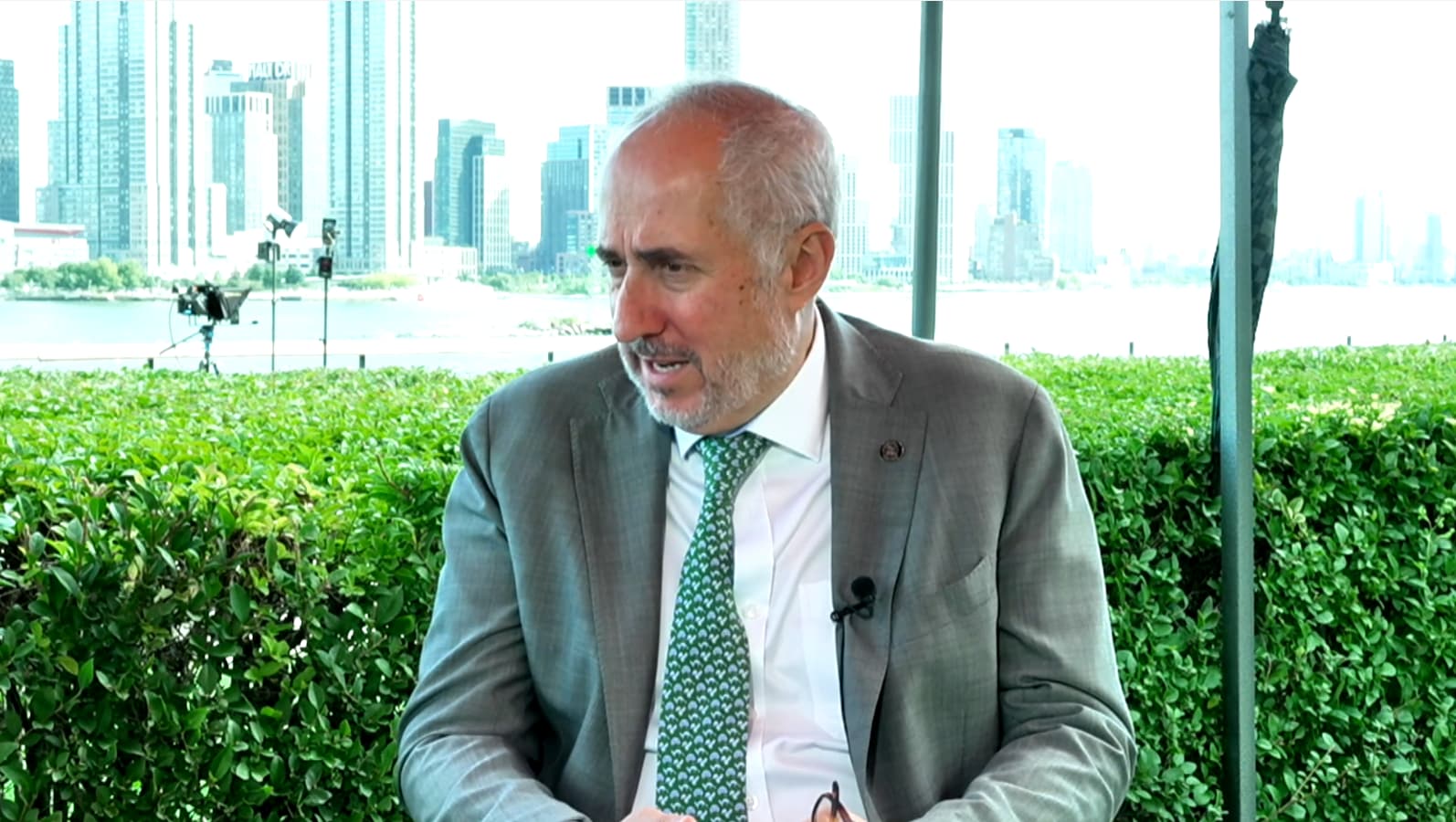
ERBIL, Kurdistan Region - Unifying the Peshmerga forces can strengthen their capabilities by ending party affiliation and help them secure their full financial entitlements from the Iraqi state, Peshmerga Minister Shoresh Ismail told Rudaw on Monday.
Ismail spoke to Ranj Sangawi on Rudaw's flagship program Lagal Ranj - with Ranj in Kurdish - about the unification of the Peshmerga forces, formally announced at a ceremony in Erbil on Monday.
After years of efforts, amid a general policy in Iraq to bring arms under state control, the Kurdistan Region finally managed to organize party-affiliated Peshmerga forces under the auspices of the Ministry of Peshmerga Affairs.
“Today was a historic day and a national achievement for the people of Kurdistan, for the Kurdistan Peshmerga forces,” Ismail said, noting that the Peshmerga force is now “a united national force, a credible and trusted force operating under a defined military system and law.”
He said unification would help the Peshmerga obtain its financial entitlements from the Iraqi state. An Iraqi soldier receives twice the pay of a Peshmerga member, according to Ismail, who said that disparity should now be addressed.
“Under the constitution in Iraq, there should be no discrimination between components [ethnic groups] or between military and security units,” he said.
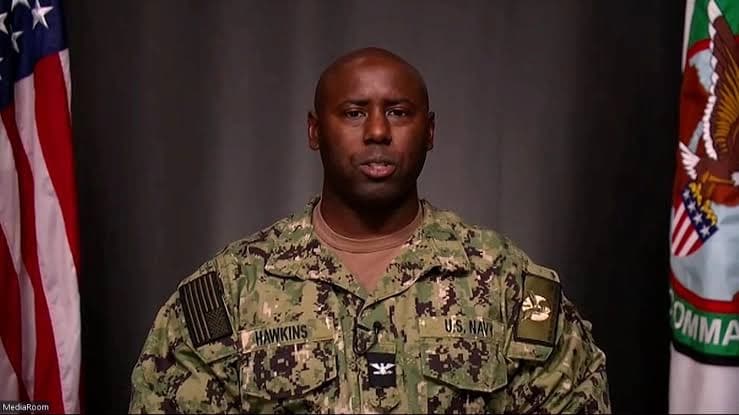
The unification of the Peshmerga was formally announced Monday in the presence of Kurdistan Region President Nechirvan Barzani, Prime Minister Masrour Barzani, Ismail, Iraqi officials and representatives of the US-led Global Coalition to defeat the Islamic State (ISIS).
The final phase of the unification process was completed on September 10, according to a statement from the Ministry of Peshmerga. The ministry said the forces had been reorganized under a unified command-and-control structure, with two military area commands assuming their duties.
Under the new structure, the Kurdistan Democratic Party's (KDP) Unit 80 and Patriotic Union of Kurdistan's (PUK) Unit 70 operate as Area Command 1 and Area Command 2, respectively. Together with previously unified forces, the structure now includes 11 divisions, 33 brigades and 99 battalions.
Peshmerga forces had long been divided along partisan lines between the KDP's Unit 80 and PUK's Unit 70.
Between 2010 and 2013, about 42,000 Peshmerga fighters from the two units were merged into 14 brigades, but the process was disrupted by political disputes and the war against ISIS that began in 2014. Reform efforts restarted in 2018 with a plan backed by the US-led Coalition, while the first phase of the latest unification process began in 2022.
In February, President Nechirvan Barzani and Prime Minister Masrour Barzani signed decrees formalizing the authority of the two regional commands and setting out their legal and budgetary responsibilities.
Ismail said the two ruling parties had created obstacles to his work early in the process, but he remained determined to press ahead.
“They caused me a lot of trouble, but this sacred goal did not slow me down. These things, the personal problems that were created for me, the obstacles that arose, did not slow me down or make me lose hope,” he said.
Ismail, who said he has been a Peshmerga for 50 years, described Monday's announcement as a foundation for further reforms.
“I am certain that what was announced today is a strong and solid foundation on which, in the future, something much broader, greater, stronger and more reassuring can be built,” he said.
He called on military commanders to remain loyal to their commanders while keeping political activity out of the Peshmerga.
“And from here I say to all military commanders: they must remain loyal to their own commanders. At the same time, under Law 38, Article 47, political and party activities within the Ministry of Peshmerga Affairs and within the Peshmerga force are prohibited,” Ismail said.
He added that Kurdistan should come before party interests.
Asked whether he had engaged in party activity while serving as minister, Ismail said he had not. He said that even during his years of armed struggle, Peshmerga from other parties had fought alongside the forces under his command.
“I engage in party politics in another way. I do not do it in the way we used to do it in the past, when we acted underground because an occupying power ruled over Kurdistan. Now party politics organizes society. Its work is somewhere else. It must be kept away from the Ministry of Peshmerga Affairs and from the Peshmerga,” he said.
Ismail recalled that some members of his own PUK had called him “a traitor” after he pushed for a unified accounting system.
“When I was talking about a unified accounting unit, they used to say, ‘Shoresh Ismail is a traitor for talking about a unified accounting unit.’ Yet we established a unified accounting unit, and this is an achievement for the Peshmerga,” he said.
Ismail said political and party affiliation within the Peshmerga weakens its capabilities. He also said Peshmerga members would be able to serve across the Kurdistan Region regardless of where they live.
“The difficult first step has been overcome,” he said.
The minister rejected criticism that renaming Unit 80 and Unit 70 as Area Command 1 and Area Command 2 amounted to little more than a rebranding.
“I do not want to go back to what kind of authority the 70 and 80 had. Today, the Kurdistan Peshmerga force is directly under the umbrella of the Ministry of Peshmerga Affairs, the Regional Government and the Presidency of the Region,” he said.
Ismail said the Peshmerga was already sufficiently large and that there would be no new recruitment.
The 2017 Iraqi military offensive and the subsequent withdrawal of Peshmerga forces from disputed territories between Baghdad and Erbil exposed the fragility of the previous arrangements. Ismail said he hoped the divisions that followed that episode would not be repeated.
“I hope nothing like that happens again, and I do not believe it will, because I think we have all learned a great lesson, a great historical lesson, from that: there was nothing good or beneficial for Kurdistan, the Peshmerga force or our nation in that division,” he said.
Ismail said the KDP and PUK agreed to the unification out of their own conviction rather than under pressure.
“Because if they had been obstacles, this unification and this historic achievement would not have materialized today,” he said.