ERBIL, Kurdistan Region - Iraq is taking on serious security risks by ending the US-led global coalition’s combat mission while internal and external pressures continue to threaten the country, a former senior United States diplomat said Wednesday, as the coalition withdrawal formally concluded on September 30.
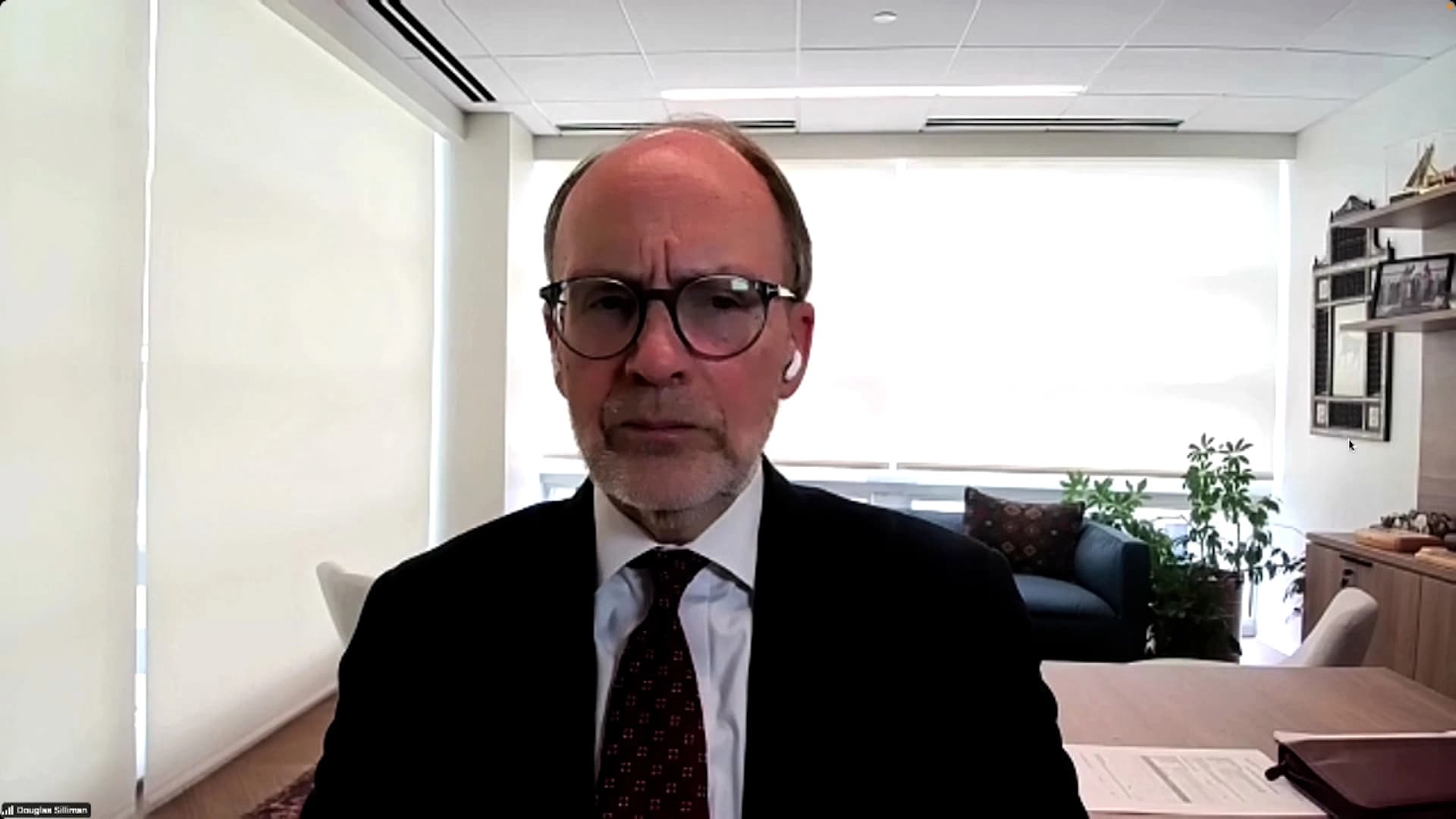
"There is no way to guarantee that such a threat will not emerge, but the US, under different administrations … respected Iraqi sovereignty and an Iraqi government's decision to end the combat troop presence,” Barbara Leaf, former US assistant secretary of state for Near Eastern affairs, told Rudaw's Zana Kayani, adding that “this is a risk that the Iraqi government is taking on."
The remarks come as the US-led global coalition concludes its military presence in federal Iraq following a bilateral agreement reached between Washington and Baghdad in 2024. The formal withdrawal ends an operational mission launched more than 12 years ago at Baghdad's request, after the Islamic State (ISIS) swept across the Syrian border in 2014 and seized roughly a third of Iraqi territory.
Leaf identified Iranian-backed armed factions as a primary challenge facing the Iraqi state, describing them as actors that undermine state authority by holding unauthorized arms and maintaining control over areas inaccessible to government forces.
"They are, in fact, a breach of Iraqi sovereignty as internal actors," Leaf said, warning that disarming these groups will be a "very long and complex road" requiring political adherence from faction leaders rather than military confrontation alone.
Leaf highlighted critical deficiencies in Iraq's ability to protect its own airspace, particularly against recurring drone and missile strikes targeting the Kurdistan Region and diplomatic facilities in Baghdad.
She noted that while federal authorities are legally and politically responsible for safeguarding national skies, successive Iraqi governments have proven unable to establish that defense or deter foreign interference from Tehran.
Leaf added that Washington is likely to "consider military responses to any attack on US facilities" moving forward, noting that future security ties will depend on separate bilateral negotiations regarding the exact numbers, roles, and missions of remaining foreign military advisors on Iraqi soil.
The following is the full interview transcript:
Zana Kayani: When the US withdrew in 2011, a security vacuum emerged, and in 2014, ISIS surfaced. Now Baghdad says there are no security concerns. Is Washington confident that this withdrawal will not repeat the same scenario of a security vacuum and the return of terrorism?
Barbara Leaf: There is no way to guarantee that such a threat will not emerge, but the US, under different administrations in 2011 and again during the Biden administration and now under the Trump administration, respected Iraqi sovereignty and an Iraqi government's decision to end the combat troop presence. So this is a risk that the Iraqi government is taking on.
How is it a risk?
Yes, the risk can be internal, as we saw in the period leading up to 2014 when ISIS exploded into Iraq from across the Syrian-Iraqi border and took over nearly a third of the country and threatened Baghdad repeatedly.
It can be external in the guise of a state like Iran, which has many internal mechanisms that provide pressure on Iraq, and it can be internal in the form of these militias, which persist and which often do the bidding of a foreign government, Iran in this case.
Baghdad describes the decision to end the coalition's mission as a sovereign decision. Regarding the negotiations with Iraq, based on your assessment, to what extent was this decision driven by real pressure? Was it genuine pressure, or an actual security necessity on the ground?
So I think there are a number of factors that push Iraqi governments in this direction. There's no question that there is pressure from Iran and from those who act on Iran's behest, whether political actors or militia actors.
There is also the question of confidence that an Iraqi government may feel. In 2011, certainly the government then and many of the political leaders felt very confident that Iraqi forces could take on any threat. And as we saw, that was a misplaced confidence.
I will say that in the intervening years, US and NATO, and other coalition partners have put a lot of effort into assisting, supporting, training, and advising Iraqi security forces. So it's, one can say that one can judge that these forces are in much better shape than they were 12, 13 years ago to handle internal threats and possibly external threats. But it's still an unclear picture.
You said the Iraqi government has confidence in itself. Has Iraq actually reached a point where it could defend itself?
It depends on what the threat is. And I would stipulate that the militias that Iran helped create over the course of the war when the US invaded- these militias, which Iran continues to provide lethal aid and training to, they confront and have confronted successive Iraqi governments. And they are, in fact, a breach of Iraqi sovereignty as internal actors.
They hold weapons outside the control of the Iraqi state. They control territory that the Iraqi state is not allowed to enter. So this is a very serious security and political issue for the Iraqi government.
But it's not something that you want to see resolved through force of arms, but rather through a political process. And that is the test for this prime minister.
The Ministry of Peshmerga has expressed concern over the coalition’s withdrawal without the provision of an air defense system—especially, as you know, after hundreds of drone and ballistic missile attacks. Does leaving the Kurds at the mercy of militia drones and regional missiles, as we have witnessed, send a negative message to the entities attacking the Kurdistan Region?
Well, I think it's a very serious weakness in Iraqi defenses, their air defenses.
And of course, Iraqi Kurdistan has received the most attacks by drones and missiles, both from Iran and from Iran-backed militias. So it's a threat in two directions. It's a threat against the people in the government of Iraqi Kurdistan.
It's also a threat to the central government, to Baghdad, that it cannot control these actors and it cannot prevent Iran from attacking parts of Iraq. We also saw earlier many such attacks on the US embassy in Baghdad, which the government could not prevent. So air defenses are critical.
But also what is missing is the ability to bring these groups under control and to impress upon Tehran that it can no longer intrude and intervene in Iraqi domestic affairs and attack citizens of Iraq, whether they are in Iraqi Kurdistan or elsewhere.
Iraq says protecting the Kurdistan Region’s airspace is Baghdad's responsibility, and contracts have been signed to purchase air defense systems. Does the White House have confidence that Baghdad can or wants to defend the Kurdistan Region's skies against attacks by groups, some of which are part of the state and the Popular Mobilization Forces (PMF)?
Well, I think clearly the government is still not able to provide that defense. That is properly the role and responsibility of a state, of a central government.
So in fact, literally, politically and legally, it is the responsibility of Baghdad. But it's clear that both in military terms and political terms, successive Iraqi governments have not been able to provide that defense. And as I said, it's not only a military responsibility or a military role that Baghdad has to assume.
It's also a political one to make it clear to these groups and to Tehran that this is no longer acceptable.
Regarding those groups, the spokesperson for the Commander-in-Chief states that several armed factions have shut down their headquarters, and starting after today, serious steps will be taken to hand over weapons. What is your reading of Baghdad's assurances? Does the US withdrawal pave the way for these groups to seize control over all levers of security decision-making?
So I think this is going to be a very long and complex road that this government will begin and probably successive governments will have to continue. These groups have been operating with impunity on Iraqi soil since 2003, 2004, some of them.
It is a responsibility of the political leaders of these militias to comply, to ensure that these militias comply fully with the state. And if the state decrees that they must hand in their arms, then so be it. So it is a responsibility, of course, of the prime minister's government to carry these tasks out.
But it is also a responsibility of these leaders, political leaders, to ensure that these groups comply with the state's orders.
If after this date—meaning after today, September 30—a direct and major threat emerges against Erbil, or against the US Consulate and American interests, what will Washington's military response look like, given that a joint operational framework will no longer exist in Iraq?
It's unclear for the moment. But I think this administration will consider military responses to any attack on US facilities.
They have done so in the past, and I think it's still very much a possibility in the future going forward.
Finally, is transitioning the coalition’s mission into a bilateral security relationship merely diplomatic jargon, or is there a genuine mechanism that we will actually see on the ground?
Well, the numbers of US military advisors or other European or other military advisors, of course, will be negotiated. Their roles, their numbers, their missions, what they do on Iraqi soil with Iraqi security forces will be negotiated.
Each set will be negotiated bilaterally.
Has it not been done yet?
I don't know across all the different countries that have contributed previously, I don't know where that stands. But certainly, yes.
Well, the numbers have been reduced, and their mission falls within a bilateral mission, and not all of those details are known.