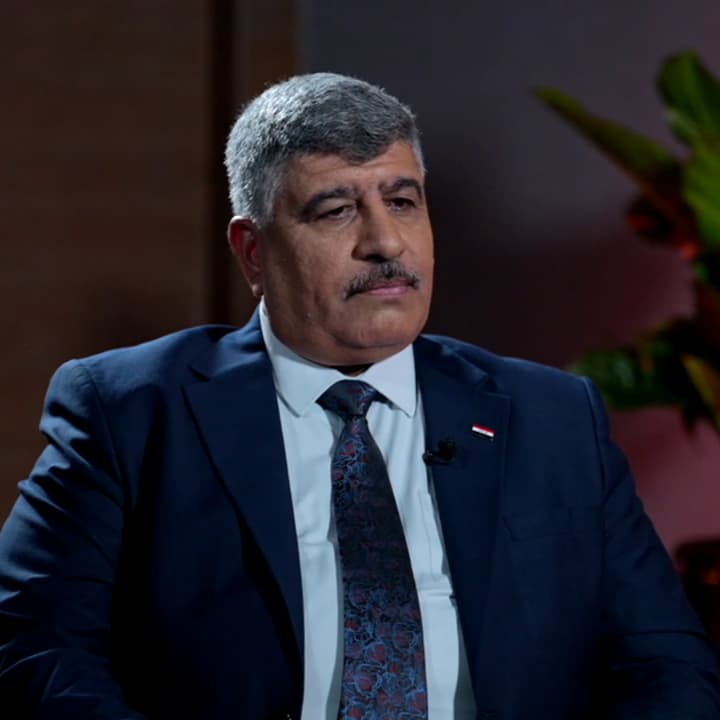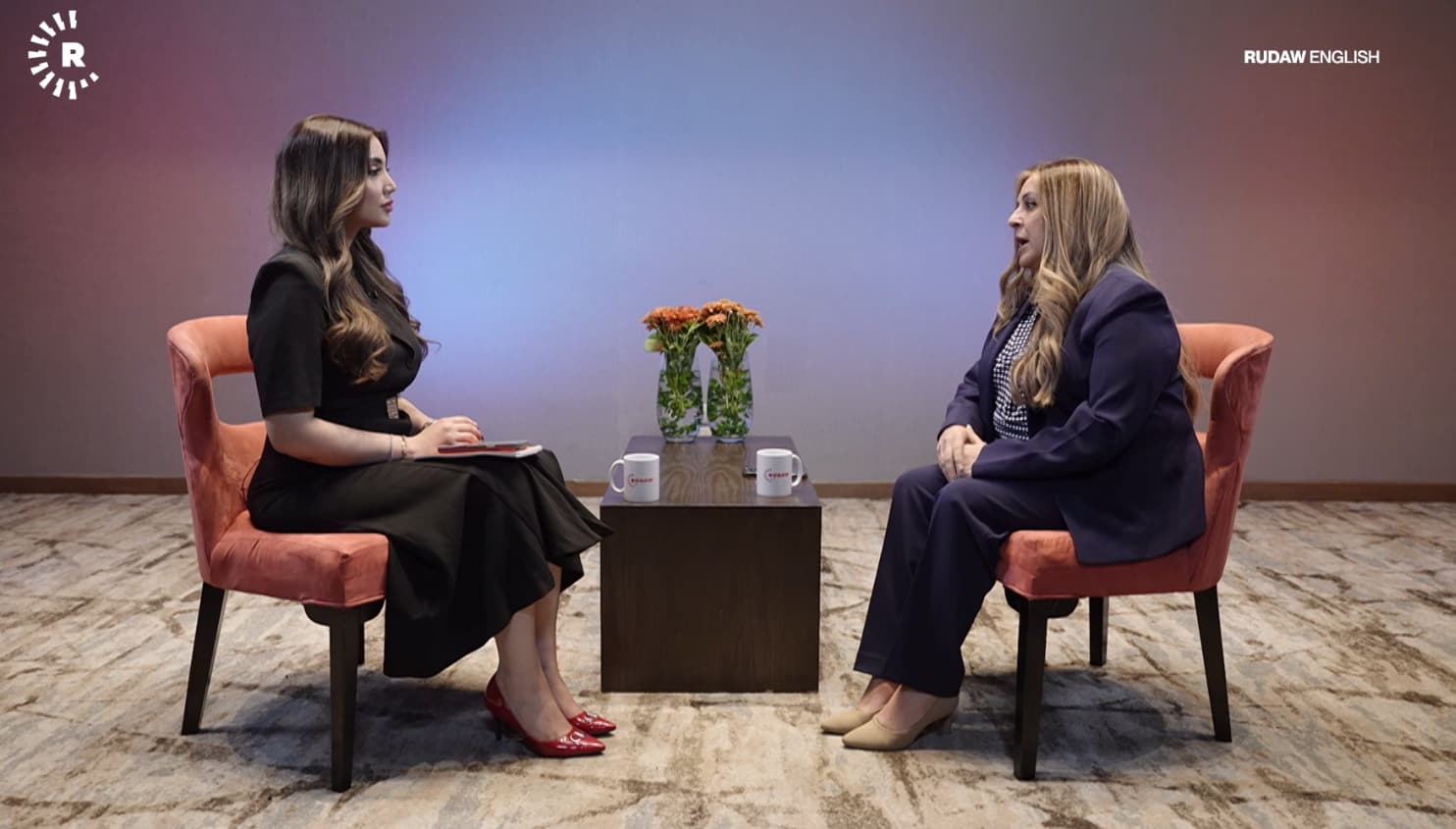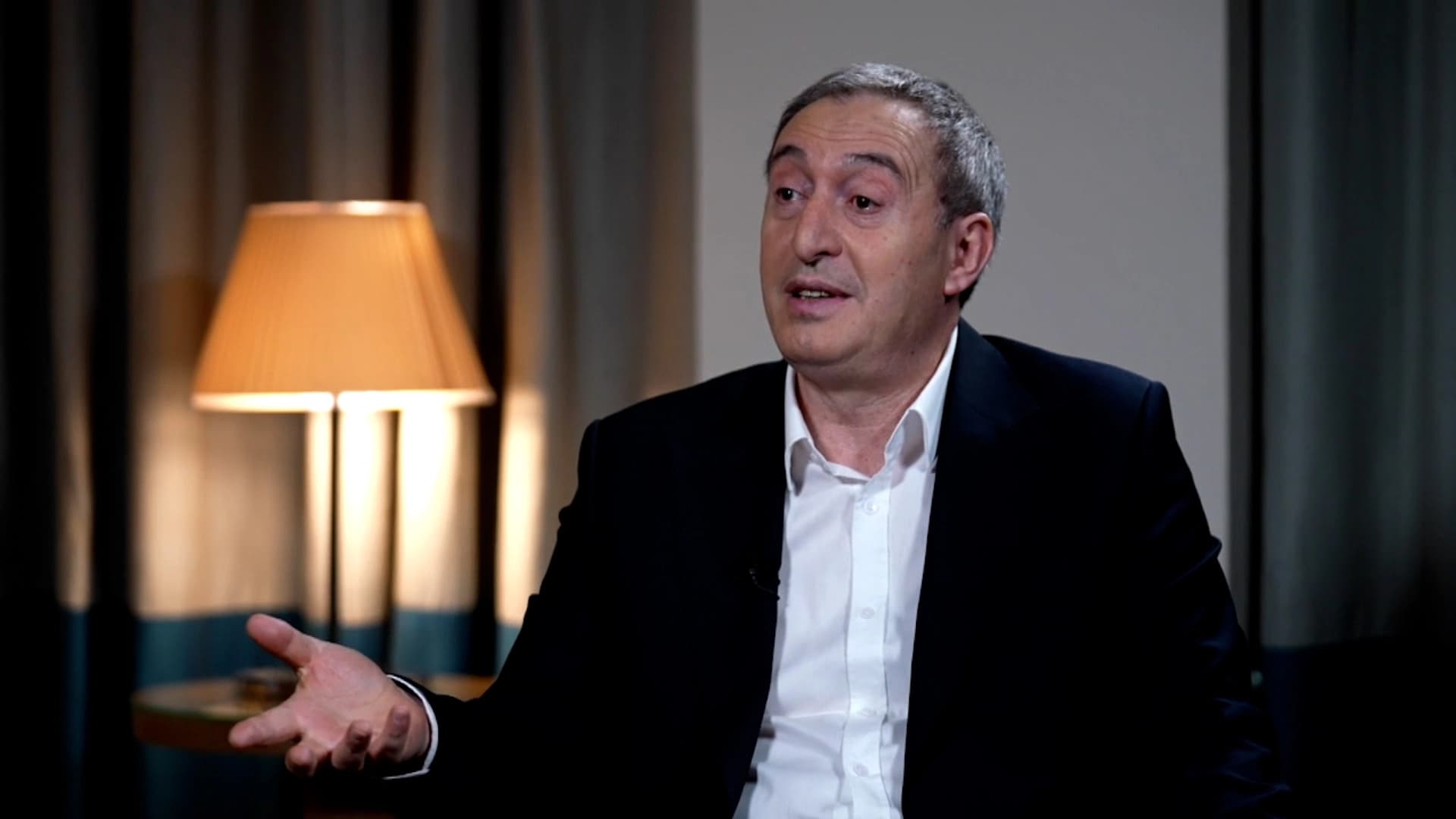

ERBIL, Kurdistan Region - Turkey's peace process with the Kurdistan Workers' Party (PKK) is nearing the end of its first phase, with the release of political prisoners, the return of exiled Kurds and broader Kurdish rights expected to dominate the next stage, the co-chair of the pro-Kurdish Peoples' Equality and Democracy Party (DEM Party) told Rudaw in an interview earlier this week.
Tuncer Bakirhan said the process, which he described as a historic effort to resolve a century-old Kurdish issue, was awaiting a report from Turkey's National Security Council confirming the completion of the first phase, focused on ending armed conflict.
"We are nearing the end of the first phase. The PKK has taken a very significant step," Bakirhan told Rudaw’s Dilbxwin Dara during the interview in Erbil, adding that the group had "more than fulfilled" its responsibilities.
"What remains now? The verification report of the National Security Council. We are now waiting for that report. It will confirm the completion of the first phase, and once it is issued, the process will move into the second phase."
The DEM Party co-chair explained that the first phase aims to remove the PKK and its weapons from the equation, replacing armed conflict with political engagement, while the second will focus on democracy and Kurdish rights.
He cautioned that resolving decades of conflict would require time but urged all parties to avoid unnecessary delays amid growing regional uncertainty.
Bakirhan said the transition to the second phase could pave the way for the release of political prisoners and the return of Kurds living in exile, including former PKK members.
"If that report is issued, 90 to 95 percent of our comrades in prison and those abroad will be able to return," he said.
He added that the fate of approximately 800 senior PKK figures would remain an issue to be addressed during the second phase.
"I hope that once the report is issued, political prisoners will return first, followed by our comrades abroad and in exile."
Asked whether jailed PKK leader Abdullah Ocalan would be able to participate in legal politics, Bakirhan said he had the right to do so, although the necessary conditions had yet to be established.
"That is his most natural right," he said, praising Ocalan for advancing the disarmament and dissolution of the PKK earlier than similar armed movements had done in other peace processes.
Bakirhan also pointed to Turkish nationalist leader Devlet Bahceli's previous call for Ocalan to address the DEM Party's parliamentary group as evidence of changing attitudes toward the Kurdish issue.
"To achieve a resolution, the state must also take steps in line with that call and create the necessary conditions," he said.
The DEM Party co-chair praised Bahceli's evolving position, noting that the nationalist leader had previously opposed Kurdish demands.
"Bahceli has done something very significant," he said, adding that people should appreciate the position he had taken.
However, Bakirhan criticized the continued use of the term "terrorist" by some Turkish officials and media outlets when referring to the PKK and its leadership.
"Now you have established a negotiating table. There are negotiations and dialogue taking place. You cannot call the person sitting across from you at the negotiating table a terrorist. That is unacceptable," he said.
He urged Turkish officials to adopt language that would not offend Kurds, prisoners, exiles or PKK members, stressing that reconciliation required changes from all sides.
Bakirhan said Ocalan and the PKK had demonstrated their commitment to peace through concrete actions, including the group's decision to dissolve itself and its members' symbolic burning of weapons in Sulaimani.
"The state must also demonstrate some sincerity," he said.
In another part of the interview, Bakirhan revealed that Ocalan had repeatedly expressed his desire for veteran Kurdish leader President Masoud Barzani to head a Kurdish national congress.
"Mr. Ocalan has said several times, ‘Tell Masoud [Barzani] that he should become the president of the Kurdish National Congress. Send him my greetings.’"
Bakirhan made the remarks when asked whether statements circulating in Ocalan's name accurately reflected the jailed leader's views.
"Sometimes statements are circulated in his name. Let me tell you that some of these statements have no basis whatsoever," he said, adding that some individuals fabricated remarks and attributed them to Ocalan.
He said Ocalan had also repeatedly expressed appreciation for Kurdistan Region President Nechirvan Barzani and Patriotic Union of Kurdistan (PUK) leader Bafel Talabani.
According to Bakirhan, Ocalan believes Kurdish political leaders across the region should cooperate rather than allow disagreements to undermine their common interests.
Bakirhan stressed that the Kurdish issue extended beyond Turkey and that developments affecting Kurds in Iraq, Syria and Iran were interconnected.
"If we are united, the people of the world will recognize our rights. But if we remain isolated, we do not know what will happen to us," he said.
The following is the full text of the interview with Tuncer Bakirhan:
Rudaw: We are talking about the process. All Kurds are waiting. What is this process? How far has it progressed? Is it serious or not, Mr. Tuncer?
Tuncer Bakirhan: First of all, I would like to greet the viewers of Rudaw TV. Of course, this process is called the peace and democracy process. We are now dealing with a century-old issue. Of course, this century-old issue has involved 40 to 50 years of major conflict. Around 100,000 of our people have lost their lives. Thousands of our comrades disappeared in what is known as cases whose perpetrators are unknown. In other words, this is an enormous, historic issue. A historic issue spanning 40, 50 or 100 years cannot be resolved in a month, two months or a week. Sometimes, a dispute between two villages can last for years. A settlement was reached between Britain and the IRA [Irish Republican Army], but the process lasted 22 years and nearly continued into a 23rd year. Of course, that does not mean we should say that moving slowly is good. I am not saying that. We must act quickly, take steps and avoid unnecessary delays. Provocations are taking place in the Middle East. It is not clear what will happen to Turkey tomorrow. We do not know what might happen to these countries. Therefore, we are in the first phase. The first phase is called peace.
You are in the first phase?
Yes, yes. We are currently in the first phase. The first phase is peace. What does that mean? The PKK and its weapons are removed from the equation. In other words, instead of weapons and war, politics and the political arena become the foundation. The second phase is democracy and Kurdish rights — the rights for which we have made sacrifices, been imprisoned and killed, and for which our villages were destroyed and we suffered. That is the second phase. Where are we now? We are nearing the end of the first phase. The PKK has taken a very significant step. As you have also heard, the PKK leadership has issued statements over the past two or three days. They have more than fulfilled their responsibilities. What remains now? The verification report of the National Security Council. We are now waiting for that report. It will confirm the completion of the first phase, and once it is issued, the process will move into the second phase.
I have another question, Mr. Tuncer. In the second phase, will PKK guerrillas outside northern Kurdistan [southeast Turkey], those who have been convicted and gone to Europe, prisoners and senior PKK officials be able to return?
Of course. If that report is issued, 90 to 95 percent of our comrades in prison and those abroad will be able to return. Only the issue of approximately 800 people from the PKK leadership will be left for the second phase. I hope that once the report is issued, political prisoners will return first, followed by our comrades abroad and in exile.
Will Ocalan be able to engage in politics? Legal politics?
Yes, yes. Fundamentally, he has that right. What Ocalan has done is something that no one else would dare to do. There are other conflicts around the world similar to the Kurdish issue. [In international examples,] they [organizations] have left disarmament and the dissolution of their parties until the very final stage. But Ocalan, unlike them, brought both steps forward. This demonstrates his sincerity. Therefore, of course, if he wishes to engage in legal politics in the future. However, some time is needed before that step. There should be any issues as the party has been dissolved and weapons have been laid down. They will become involved in politics, society and [democratic] struggle. That is his most natural right. Bahceli himself wanted to see this happen. That is why he called for Ocalan to come to the DEM Party's parliamentary group and address parliament. Therefore, to achieve a resolution, the state must also take steps in line with that call and create the necessary conditions.
Are there really some people or groups in Turkey who are obstructing the process and preventing it from succeeding?
There are now some groups in Turkey who say the process should proceed successfully, and they are also providing support. But Kurds have been denied recognition for 100 years. We can say that very deep wounds have been inflicted. There are some who do not want this process to lead to a resolution. They are fighting against it and want things to get worse. However, 70 to 80 percent of the people of Turkey want a resolution. This support is gradually increasing and growing. If the government takes certain steps, public support for the process will become even stronger. People still have doubts.
For example, have relations between you and Bahceli improved now. I see you meeting at gatherings, greeting each other and so on.
Bahceli has done something very significant. Sometimes we see that some people are upset with him. They say he was against the Kurds, against their name, against their rights. Bahceli used to be irritated by the word ‘Kurd.’ For example, between 2013 and 2015, he would hold a thick rope in his hand and call for executions. Now Bahceli has reached a good position. He, too, now says, ‘They are our brothers. They have rights." People should appreciate him and the position he has taken.
But Mr. Tuncer, even now I see statements from Turkish officials and the Turkish media constantly referring to what you call the peace process as the "Terror-Free Turkey" process. In other words, does Turkey still regard senior PKK officials as terrorists? For example, I listened to an interview with Murat Karayilan. He said that they still refer to Mr. Abdullah Ocalan as the "leader of terrorists." Is Turkey really prepared to change internally in its approach toward you, the PKK and the Kurds? Is Turkey genuinely sincere, or is its only objective to eliminate the guerrillas?
What you are saying is absolutely correct. First of all, the language must change. Now you have established a negotiating table. There are negotiations and dialogue taking place. You cannot call the person sitting across from you at the negotiating table a terrorist. That is unacceptable. In other words, some of the language being used is bad. Not everyone's language, but the words used by some people are very bad. We constantly point this out and draw attention to it. We say, ‘No, this is unacceptable.’ They must change their language. They must use cleaner language that does not offend Kurds, PKK members, prisoners or those in exile. Kurds stood up for their rights. They denied our existence, and we told them, ‘We are not Turks. We are Kurds. We have our own language, culture, art and democratic rights.’ That is why the language is gradually changing. It is not like before. For example, a year ago, the language was still extremely offensive, and we were deeply upset by it. But gradually, that too is improving. For example, we have changed our own language. We do not want to say certain things either. That is what peace is about.
Everything should change during a peace process.
In a peace process, everyone takes steps. If you continue using the same language and raising the same issues as you did 50 or 100 years ago, nothing will succeed. That is why our people are also deeply upset about this. Turkey — or rather, let us not say Turkey, but certain individuals and groups — must change their views and their language. As for sincerity, let me tell you that we are sincere. We went and met Mr. Ocalan. We spoke with him for four hours. I swear, Mr. Ocalan is also very sincere. He said, ‘Until now, we took up arms and said we would achieve our objectives.’ We have now reached a different stage. We are now the third-largest party. If democratic elections were held, we would win 90 percent of Kurdish cities. And not only those. In Turkey's metropolitan cities, whoever we want to win, we can make them win, and whoever we want to lose, we can make them lose. In other words, our strength is also considerable. The reality of the Kurds is now being recognized. Perhaps rights have not yet been granted, and perhaps we have not made much progress in that regard, but everyone now recognizes the reality of the Kurds. We are sincere. Mr. Ocalan is sincere. Look, the PKK is sincere. Mr. Ocalan made a call, and just a few days later, they burned their weapons in Sulaimani. They also dissolved the party.
Does the PKK follow instructions from Qandil and Ocalan?
For example, when he called for withdrawal, they withdrew from their camps. Whatever he said, they implemented it. The state must also demonstrate some sincerity. We are talking about a century-old issue rather than a trivial one. That is why all sides must be sincere and fulfill their responsibilities. Of course, the state is a major and complicated organization. Some people want the process to succeed. Others oppose it. Some want it to fail. Some people benefit from war. There are parties that would prefer Kurds to be killed, imprisoned and their political parties shut down. They would prefer that nobody even mention the word Kurd. They ask, ‘Why do they mention Kurds?’ That is why we are sincere, and they must also be sincere.
You mentioned Mr. Abdullah Ocalan. There are many things that Kurds are genuinely curious about. You regularly visit Mr. Ocalan in Imrali prison. Are the statements released outside in Ocalan's name really his own words, or are they being filtered before being published? This is a very important question. People ask me this question wherever I go. Since you meet Ocalan, I thought it would be appropriate to ask you.
Thanks for raising a very good point. Your viewers, the Kurdish people and indeed the whole world should understand this clearly. We have spent time with Mr. Ocalan. Sometimes statements are circulated in his name. Let me tell you that some of these statements have no basis whatsoever. Sometimes people simply fabricate things and attribute them to him or to the Kurdish people. Mr. Ocalan has said several times, ‘Tell Masoud [Barzani] that he should become the president of the Kurdish National Congress. Send him my greetings.’
Ocalan has said these things?
He has said this on several occasions. He has also repeatedly expressed his appreciation to [Kurdistan Region President] Nechirvan [Barzani] and Bafel [Talabani, President of the Patriotic Union of Kurdistan]. He said that thousands of our people went to Erbil and Sulaimani and did not feel like guests. They were like our home. Who can deny their contributions? Mr. Ocalan sees things this way as well. Ocalan is a Kurd. He has struggled for the Kurdish people. He has been in prison, in a cell, for 27 years. Why would he oppose other Kurds? How could such a thing happen? Look, I have been involved in politics for 35 years. Over the past 10 years, our relations have improved. We see this in practice. For example, politicians [from Kurdistan Region] come to the Newroz celebrations in Amed. Our people welcome them warmly. They receive them with great respect and appreciation. Our relations are good, and we have grown closer to one another. I swear, when Iranian artillery and gunfire strike Erbil and Sulaimani, we are deeply upset. We have raised this issue several times in parliament and during meetings. We told Iran, ‘This is unacceptable. You cannot pursue hostility toward the Kurds. You must change your policy.’ The people of Sulaimani and Erbil are not alone. We stand with them. The people of northern Kurdistan stand with them. Ocalan is also someone who thinks this way. His politics are for the Kurds and for the poor. Why would we say bad things about Kurdish politicians or their parties? That is why those claims are not true. Even recently, for example, let our people see and understand this. We sent a message to those outside. We said that Mr. Nechirvan and Mr. Bafel should play a major role in this latest process. For example, they should also be involved in the disarmament process. They should be involved. That is a good thing. If we did not trust them, why would we constantly mention their names? Why would we send them greetings? That is why there are some people who constantly want to create tensions among Kurds. Ocalan is a Kurd, a democrat, a knowledgeable person and an intellectual. He understands very well that without Amed, Erbil is nothing. Without Erbil, Qamishlo and Kobane are nothing. If we are united, we are something. If we are united, the people of the world will recognize our rights. But if we remain isolated, we do not know what will happen to us.
Mr. Tuncer, regarding western Kurdistan [northeast Syria (Rojava), you have relations with Rojava. Your delegations travel there and back. You are a major party in the Turkish parliament, and you have millions of votes in northern Kurdistan and Turkey. How do you view Rojava? How can you help Rojava, particularly during these sensitive times?
We all must help. There are currently shortcomings there [in Syria]. They have not yet established laws and decrees. We are seeing certain things. The situation there is still new. Whatever the nature of the regime, however it operates, it must be democratic toward the Kurds. If it behaves like Assad and once again opposes the Kurds and refuses to recognize their rights and language, we must not remain silent. But there are shortcomings. For example, regarding language, there are very serious shortcomings. Arabs have the right to their language. Persians have that right. Turks have that right. But when it comes to Kurds, suddenly they have no such right. Who can accept that? It is shameful! There are Kurds in Rojava, too. They have their own language and speak Kurdish. They must have their own schools and be able to attend them. Instead, they are given three hours of lessons - like Turkey, where it is known as elective lessons. How can such a thing be acceptable? We are talking about a people who have lived there for hundreds, even thousands, of years. Afrin, for example, is a Kurdish city. Is it not shameful to give them only two or three hours? We do not accept this. We want the [Ahmed] al-Sharaa’s government — and Turkey also has influence and authority there — to put an end to this shame. Everyone must end this hostility toward the Kurdish language.
Another issue. I often meet people from Makhmour here in Kurdistan, Mr. Tuncer. Do you ever think about them? They have been here for many years, and their situation is bad, to put it directly. Their situation is bad in every respect, and they face injustice. Some of them have returned, but are they being discussed at all in this peace process? What will happen to them?
Yes, yes, they are also being discussed. First of all, I would like to thank our leadership in southern Kurdistan. They have taken care of these people for 30 or 40 years. I know that your resources are also limited. Makhmour is now being discussed as well. We have also raised this issue with the government. What will happen to our people from Makhmour? Their villages no longer exist. Their land, trees and other property are gone. Village guards have occupied their villages. They have no money, wealth, capital, land or homes. If they return to Turkey, what will they do? We have told the government this. We say that their villages must first be rebuilt. Then there are some who returned here after 20 or 30 years and have no identity documents. Their identities must be recognized. They must be compensated for their losses. What are they supposed to do if they return here? They have no homes, no villages, no land and no capital. That is why we say the Turkish government must develop a program or plan for them. It must rebuild their villages, compensate them for their losses and provide identity documents to those who have returned. It must also assist them with their return. God willing, our people in Makhmour will be among the first to benefit in the second phase [of the peace process]. Their displacement was caused by that war, and their return is also on the negotiating table. We are insisting on this issue. They should not worry. God willing, if the process continues and progresses well, all sides will benefit from it.
This is important. Let us say the process succeeds. The peace process succeeds. The first phase is completed successfully, and you move to the second phase. The second phase also succeeds. Then a constitution is drafted. What rights will Kurds have under that constitution, Mr. Tuncer? We are talking about a people, a nation of 20 to 30 million Kurds in northern Kurdistan. It is not just about laying down weapons. It is not just about dissolving the PKK, the return of guerrillas, the return of convicted people living abroad or the release of prisoners. There is a national question. How will that national question be resolved? What rights will Kurds have?
Yes. Once the first and second phases have been completed the government-appointed trustees must go. Whoever the people elected, whoever they wanted, must return to their municipalities. Our comrades in the diaspora and in exile will hopefully return, but that alone will not resolve the issue. That is not the real issue. These problems are consequences of denial. Kurds were not always in prison or exile. That is why the fundamental issue is exactly what you said. The language must be free. There must be democracy in the regions. The powers of municipalities must be expanded. Currently, Turkey's laws and constitution effectively say, ‘Everyone is a Turk.’ It is as though there are no other identities, no other peoples and no other beliefs. But Turkey is a mosaic. That mosaic must be reflected. We are Kurds. You are a Turk. Someone else is Circassian. Another person is Laz. We are all citizens of Turkey. The country's laws must reflect this mosaic. In other words, the rights of languages and regions must replace laws based on denial, rejection and uniformity. Our struggle, our people and our organization — your strength is proportional to the strength of your organization. Let me tell you something. Look, if they had wanted to, if they had possessed sufficient power, I swear this process would never have happened. Nobody would have called us ‘our Kurdish brothers.’
Your power made Turkey take such a step [towards peace]?
That is exactly how it is. Look at Rojava. Let me be frank about this as well. If northern Kurdistan had not existed, they would have swallowed Rojava very easily.
Mr. Tuncer, your Kurdish was very good!
We are from the Sarhad region.
You are from Sarhad! Before we started the interview, you said, ‘Dilbixwin, perhaps my Kurdish will not be good enough.’ But your Kurdish was very good. Some of the Kurdish members of the DEM Party cannot speak Kurdish. You campaign for Kurdish to be an official language in Turkey. But many of your colleagues are Kurds but cannot speak Kurdish. Open courses and teach them Kurdish.
No, let me tell you something, sir. For 40 years, we have been struggling and fighting. The comrades you are referring to did not have the time or opportunity. We were in prisons, in police custody and involved in the struggle. Now, of course, this is a very big issue, but nothing can be achieved without struggle. Otherwise, we would not even be discussing our language today. So what is our responsibility now? Culture, art and language. Courses alone are not enough. Over the past two years, we have made significant progress. Our municipalities have opened courses for the Kurdish language. God willing, perhaps one day we will open schools. There are some of our cities where Kurdish is the language of the economy, politics and everyday life. But we must also acknowledge the situation in northern Kurdistan. For 40 years, we endured oppression and everything that happened to us. But now there are no excuses [not to learn Kurdish]. God willing, when we come here again in two years, whoever comes here should be able to speak Kurdish and should know how to read Kurdish. This is how we work.
Kurdish used to be banned and caused the imprisonment of many people. But this ban has been lifted.
There was no time. I swear, there was no time. But I know our politicians very well. They have spent three years in prison, two years outside, two years in prison, two years outside. After all, was it not for our language that we struggled? We made sacrifices for our language. We endured all that suffering for our language.