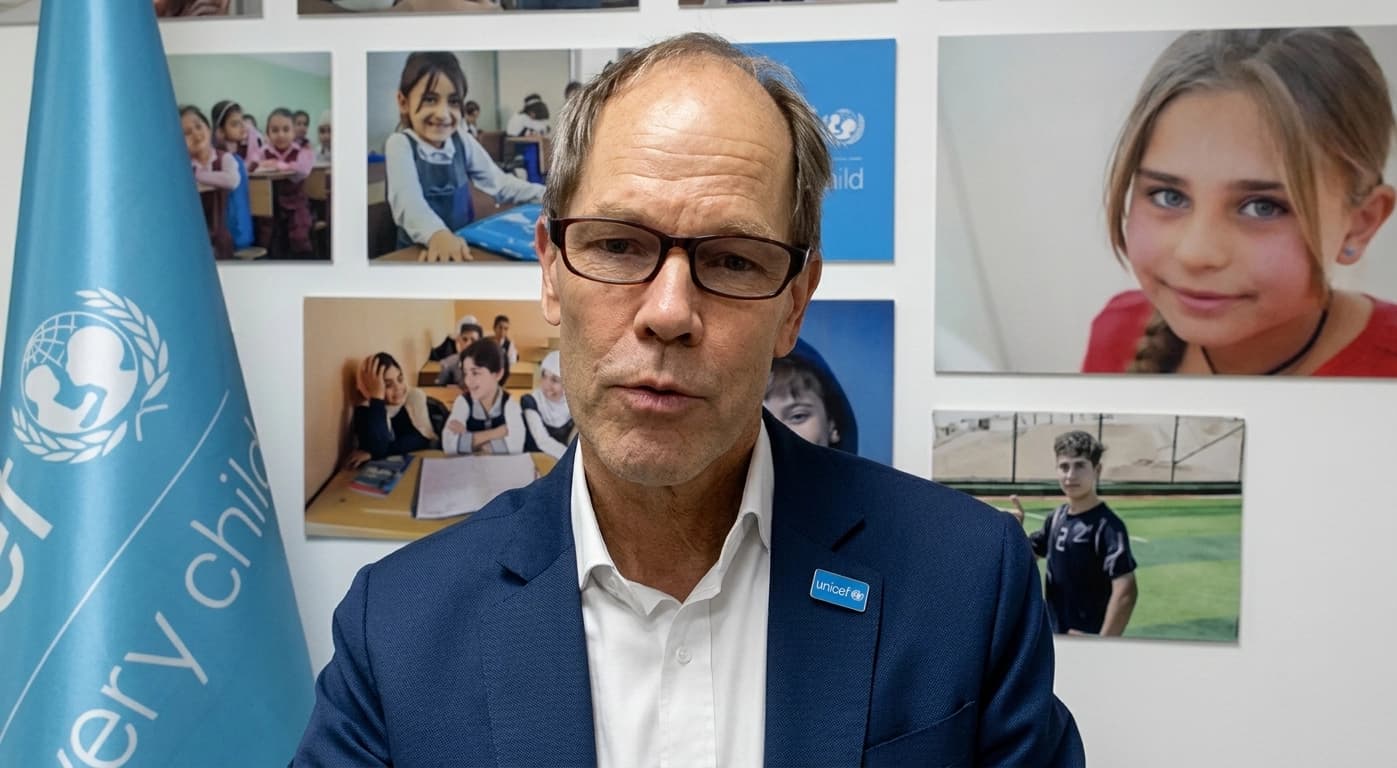
“We understand that the transitional authority is there to prepare the transition to constitution and restore the order in democracy, to establish a democracy and for the rehabilitation and restoration of Syria. It’s going to be a long process,” Samuel Zbogar, Slovenia’s representative to the UN, told Rudaw in New York, adding that the transition period must not last too long.
He called on the Damascus authorities to assume responsibility for a “Syrian-led, Syrian-guided, Syrian-owned” future where all Syrians, regardless of ethnicity or religion, “will feel comfortable.”
“The Security Council is expecting that everybody in Syria, all minorities, ethnic groups, all parts of society, and women and civil societies, will get a role and a place when discussing the future of Syria,” Zbogar said, but added that it is not up to the council “to micromanage the constitution of Syria.”
Syria’s civil war dramatically reignited late last year when a coalition of rebel groups led by the Islamist Hay’at Tahrir al-Sham (HTS) launched a blistering offensive that culminated in the ousting of Bashar al-Assad as Damascus fell, ending decades of Baathist rule.
After HTS leader Ahmed al-Sharaa was appointed interim president in late January, he vowed to uphold the rights of all ethnic and religious groups. He has, however, come under fire internationally and domestically for an interim constitution that cements authoritarian rule and for his administration’s treatment of minority populations.
In early March, Damascus faced widespread condemnation after a violent crackdown on Assad loyalists in the coastal Alawite-majority areas, where at least 1,500 people were killed - mostly civilians - according to the Syrian Observatory for Human Rights war monitor.
According to Zbogar, safeguarding minority rights “can strengthen the relations with neighboring countries and it can strengthen the self-confidence of the nation if minorities are feeling comfortable in a common home.”