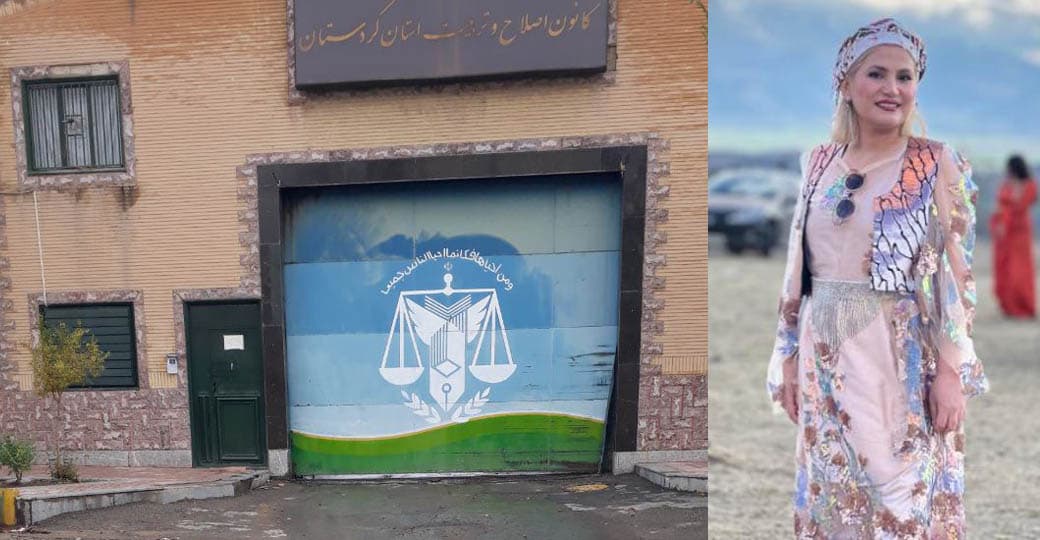
ERBIL, Kurdistan Region - The health of a Kurdish female civil activist has become a growing concern two weeks after she undertook a hunger strike in solitary confinement at Sanandaj women’s prison in western Iran (Rojhelat), protesting the detention of herself and other family members.
The Paris-based Kurdistan Human Rights Network (KHRN) reported on Saturday that Kazhal Rahmani has entered the 14th day of her hunger strike. According to the rights group, she is suffering from low blood pressure and dizziness but has refused to end the strike or receive medical treatment at the prison hospital.
Rahmani was detained in early June by agents of Iran’s Ministry of Intelligence, along with her sibling, Danyal Rahmani, and her husband, Isa Feyzi, without the presentation of a judicial warrant.
According to KHRN, officials at the Kamyaran Public and Revolutionary Prosecutor’s Office said all three prisoners have been charged with “membership in opposition groups based outside Iran,” and a 20-day temporary detention order has been issued against them.
Rahmani belongs to one of the Kurdish Dadkhah families (a term used to describe survivors and relatives of victims who seek truth and justice). When members of her family appeared before Branch 3 of the Kamyaran Public and Revolutionary Prosecutor’s Office to inquire about her whereabouts and request a visit, they were reportedly met with a dismissive response, KHRN said.
Authorities allegedly informed the family that Rahmani’s hunger strike would have no impact on the ongoing investigation, reportedly stating that if she were to lose her life as a result of the strike, they would simply issue a death certificate, according to the right group.
The network said Rahmani has been denied visits and phone calls until further notice. The group added that authorities threatened her family after reportedly finding several political books in her home during the arrest.
There is still no information regarding the whereabouts or condition of her husband and her brother who have reportedly been denied access to legal counsel and family visits.
Rahmani’s family was able to visit her on June 15, following approval from the Kamyaran Public Prosecutor, according to KHRN. During the visit at Sanandaj Women’s Prison, the group said that Nassiri, the prison’s deputy warden, insulted and humiliated Rahmani for allegedly failing to observe the mandatory hijab and threatened to open a new legal case against her.
According to the US-based Human Rights Activists News Agency (HRANA), Iran carried out 2,063 executions in 2025, the highest annual total recorded in more than three decades. Human rights groups have expressed concern that additional protesters and political prisoners could face severe sentences, including execution, as authorities continue their crackdown on dissent in the aftermath of anti-government protests