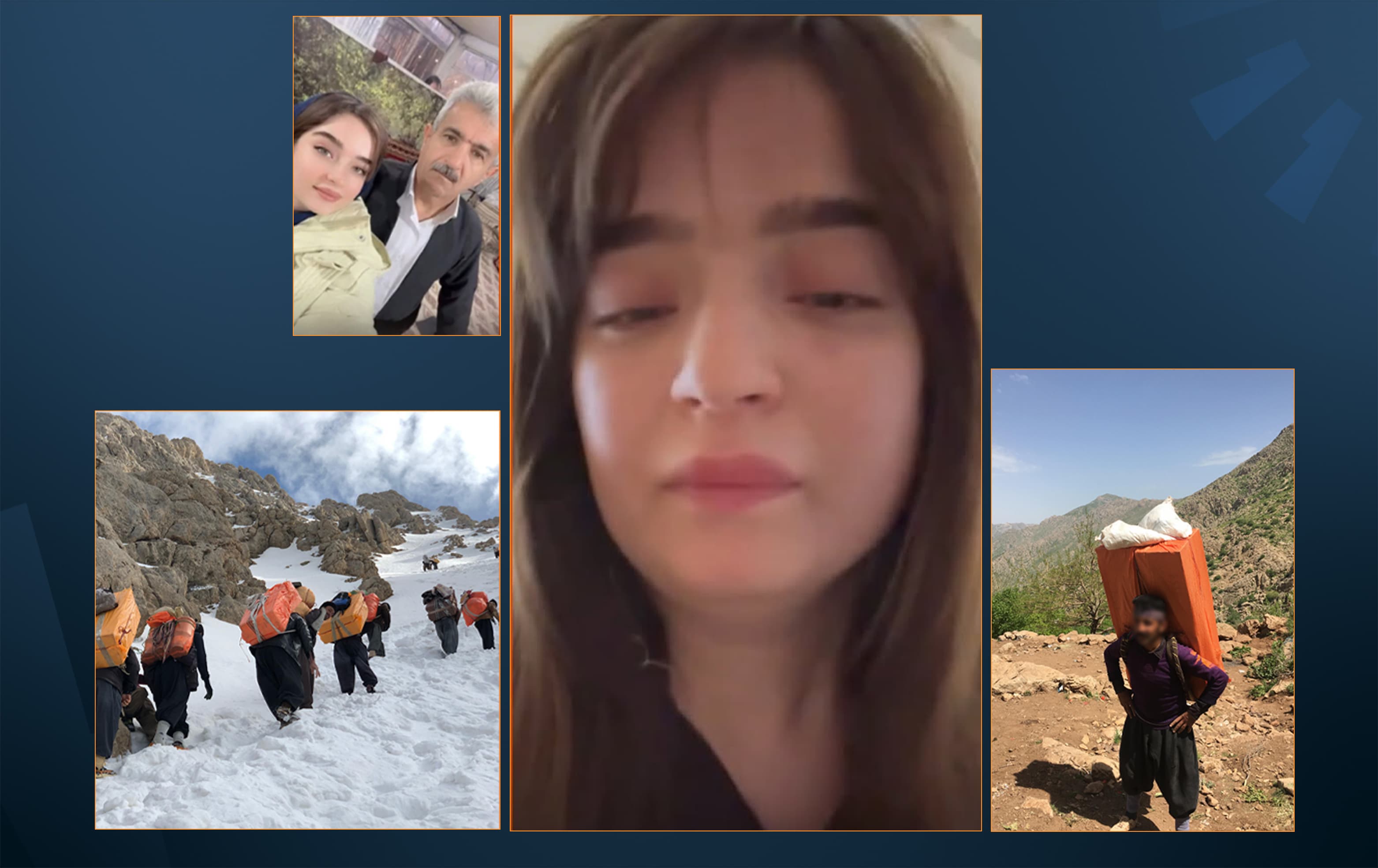
ERBIL, Kurdistan Region - The daughter of a Kurdish border porter (Kolbar) who was shot dead by Iranian border guards on Friday, the same day the week-long procession funeral of former Supreme Leader Ali Khamenei commenced in Tehran, demands recognition and acknowledgment over Tehran’s treatment of Kolbars and the pain inflicted on hundreds of families in the Kurdish region in western Iran (Rojhelat).
"My father was killed unjustly, and they took away the only joy of my life," Soma Rahimi said in a public social media video shared on Saturday by Kurdish human rights group Kurdpa, a day after the killing of her father, Wazir Rahimi, a 57-year-old Kolbar and father of five, from Kermanshah province’s Shahu district.
"I want to not only be my father's voice, but the voice of all the Kolbars who were killed in silence and secrecy, whom no one talks about," Rahimi cried.
Border porters, known locally as Kolbars, carry un-taxed goods such as fabric, tea, coffee, and auto parts on foot across the mountainous and heavily militarized border between Iran and the Kurdistan Region in exchange for modest wages. The trade sees a majority-Kurdish employment among poor and low-income border residents on the Iranian side, who have been issued a limited number of work cards by the government.
In recent years, economic desperation in Rojhelat and widespread unemployment have driven many more to spend their lives working on the border, enduring extreme weather and physical exhaustion to survive.
Rahimi stated that she “buried my father with my own hands” a few days before her 25th birthday which she said she had hoped to celebrate with her father before Iranian forces “took my father from me and made us fatherless.”
Her father’s death coincides with the first day of the week-long funeral procession in Tehran for former Supreme Leader Ali Khamenei, who led the Islamic Republic from 1989 until targeted strikes killed him on the first day of the US-Israeli war against Iran on February 28, along with a number of other commanders and leaders.
Human rights organizations have repeatedly documented cases of Iranian security forces opening fire on unarmed Kolbars, resulting in deaths and injuries every year.
According to Kurdpa and the France-based Kurdistan Human Rights Network (KHRN), Wazir Rahimi was shot dead by Iranian Border Guard forces in the early hours of Friday near the Shushmi border in Nowsud district of Kermanshah province, which borders the Kurdistan Region.
KHRN reported that Rahimi was shot “at close range” and that the border guards targeted Rahimi “without prior warning in the Shushmi border area of Nowsud, causing him to die instantly.”
According to KHRN, at least 19 Kurdish Kolbars have been killed along the Iran-Kurdistan Region border in 2025. Fifteen of those deaths were caused by direct gunfire from Iranian military forces, while four others died due to frostbite, cardiac arrest, a road accident, and an avalanche.
The organization has documented 21 injuries in 2025, 20 of which were caused by direct gunfire or physical assault by Iranian forces.
.jpg&w=3840&q=75)