ERBIL, Kurdistan Region - The bodies of two young Kurdish men killed during Iran’s lethal January crackdown have been exhumed after authorities buried them under the wrong names, Kurdistan Human Rights Network (KHRN) reported on Wednesday, a fact their families have learned several months after burials took place.
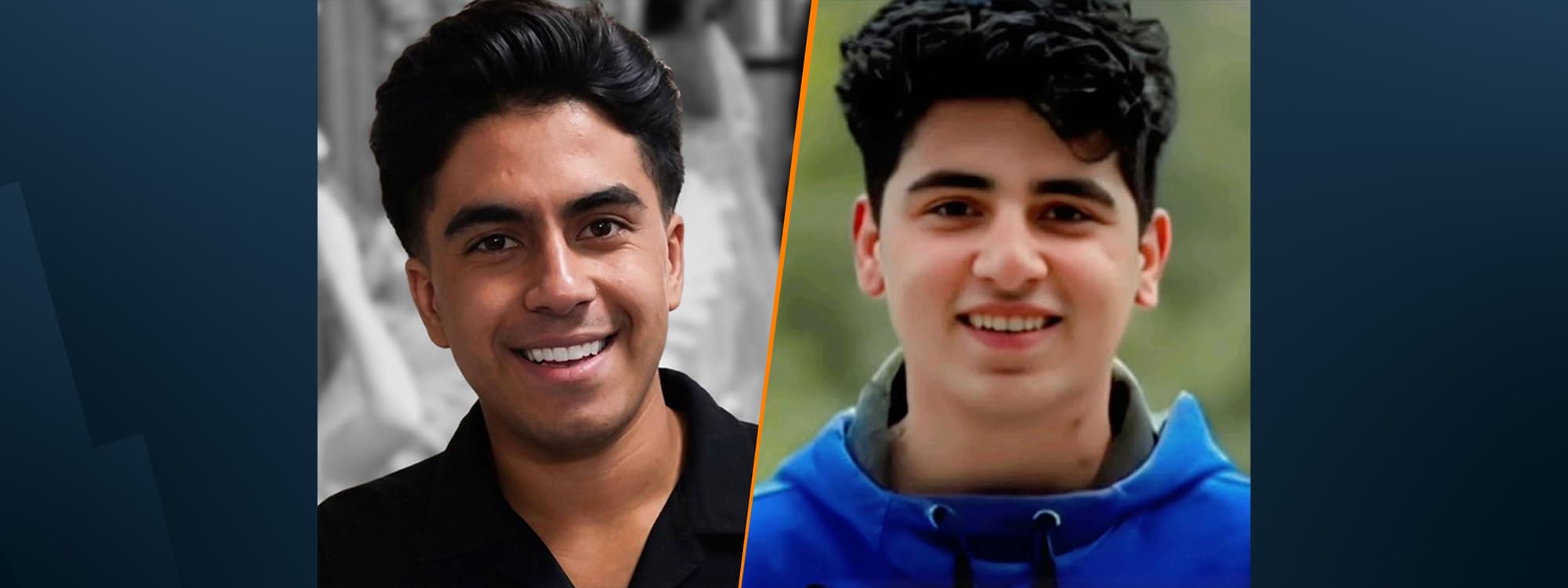
Soroush Karami, 18, disappeared during protests in Kermanshah’s Maskan neighborhood on January 8. His family spent months searching for him after former detainees claimed he had been arrested and later transferred to solitary confinement on the capital charge of moharebeh, enmity against God.
Meanwhile, another young boy, 17-year-old Amir Ali Haydari, who was killed during the protest on January 8 by the IRGC was buried in his home village of Sarablah outside the city of Kermanshah.
“His body was collected from Kermanshah’s Taleghani Hospital, severe signs of beating were visible on his head,” KHRN reported at the time. “They said the injuries were inflicted with a rifle butt after he was wounded.”
Kermanshah in the Kurdish region in western Iran saw one of the bloodiest crackdowns by the Islamic Revolutionary Guard Corps (IRGC) and its militia arm, Basij, with dozens of protesters killed and thousands of others detained in the weeks following the protest.
Protests over the economic crisis erupted in Tehran bazaar and quickly spread to the rest of the country including to the Kurdish region, with Kermanshah experiencing major unrest in several neighborhoods. Spearheaded by the IRGC, security forces began killing thousands of protesters to stifle unrest as several cities across the country were taken over by protesters.
Many families, terrified by the crackdown, secretly buried their loved ones to avoid their bodies from being seized by the IRGC and affiliated authorities. As a result, no proper identification of the bodies was carried out in many cases.
The family of Amir Ali Haydari, 17, believed for the past six months that they had given him a proper burial in his home village of Sarabla until an employee of the forensic department approached the family and disclosed otherwise.
“Some time ago, an employee at Kermanshah’s forensic medicine department saw Amir Ali Heydari’s photograph online and informed his family that the body of the 17-year-old had been kept in the forensic morgue for several months before being buried anonymously in Kermanshah’s Bagh-e Ferdows cemetery,” family members told KHRN.
“At the same time, another citizen sent Soroush Karami’s family a video showing the moment of his death, rejecting reports that he had been detained and saying that he had been killed by gunfire,” they said.
Prosecutors subsequently ordered both graves opened. Examinations, including the identification of a metal implant in Heydari’s left leg, established the identities of the two buried men. Karami’s remains were then returned to his family and buried on Wednesday in Lanjab village, in Sonqor and Kolyai county.
The cases highlight the continuing uncertainty faced by families searching for relatives who disappeared during January’s nationwide protests.
Demonstrations began on December 28, 2025, following the collapse of Iran’s currency, soaring inflation and worsening living conditions. Beginning with strikes and shop closures in Tehran’s Grand Bazaar, protests quickly spread across the country and evolved into calls for an end to the Islamic Republic.
Security forces carried out their largest and most lethal crackdown on January 8 and 9, when thousands of protesters and bystanders were killed, according to Amnesty International.
US-based HRANA human rights organization has documented more than 7,000 deaths and over 50,000 arrests in the first six weeks of the unrest, while the Iranian government has acknowledged no more than 3,200 deaths.
KHRN said hundreds of Kurdish citizens were killed in Kermanshah on January 8 and 9. The organization has so far confirmed the identities of 64 victims in the city, while witnesses who visited its forensic center reported seeing hundreds of bodies, many belonging to people under 30.
A family member told Rudaw, “For seven months, Amir Ali has lain buried, nameless, unknown, alone, with no one - without even a gravestone to be washed. No one has covered his grave with flowers. No one has gone to visit his grave. He has been alone for seven months.”