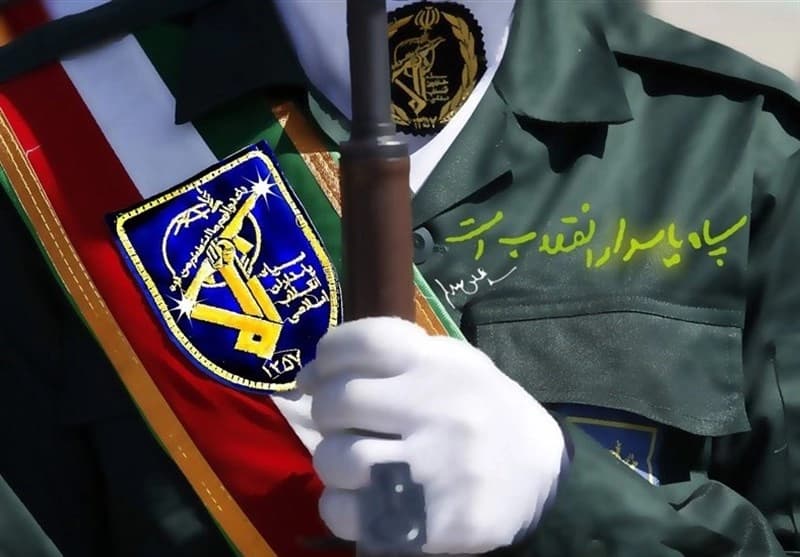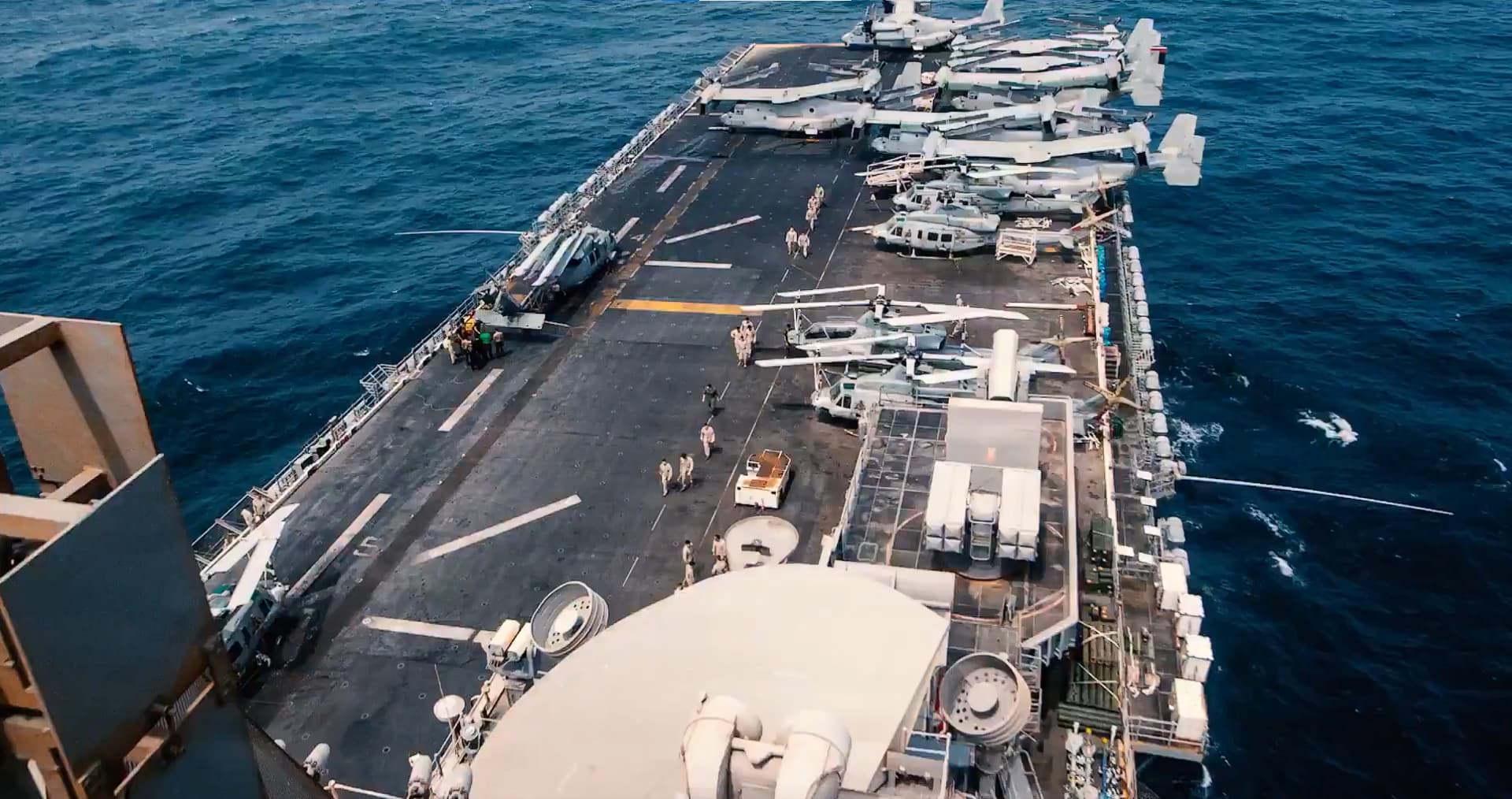

ERBIL, Kurdistan Region - Iran's Islamic Revolutionary Guard Corps (IRGC) early Sunday confirmed that it had targeted a US aircraft carrier and destroyer with ballistic missiles, hours after the US military said it struck three Iranian crude oil tankers in retaliation for the attack.
"The Aerospace Force of the Islamic Revolutionary Guard Corps, using several ballistic missiles, attacked an aircraft carrier and a destroyer of the aggressor, child-killing US military that had been harassing Iranian ships and participating in a naval blockade," the IRGC said in a statement.
"These two warships, after sustaining damage and out of fear of a renewed attack, were forced to flee the conflict zone," it claimed.
US Central Command (CENTCOM) said late Saturday that its forces struck three Iranian crude oil tankers after Iran "launched ballistic missiles toward two U.S. Navy warships patrolling regional waters."
The US military added, "A U.S. aircraft carrier and guided-missile destroyer successfully evaded multiple unprovoked Iranian attacks. No American personnel were harmed."
CENTCOM said it permanently disabled the M/T Downy off Kharg Island and the M/T Stark 1 near Jask, while completely destroying the unladen M/T Kylo, also known as the Noxen, in the Gulf of Oman after its crew was instructed to abandon the vessel.
It accused the three tankers of being part of a multibillion-dollar network financing the IRGC and its regional allies.
The latest exchange marks a sharp escalation in direct US-Iran fighting following a month-long lull in a conflict that has dragged on for more than six months.
US forces last Sunday struck two Iranian rocket launchers on Larak Island in the Strait of Hormuz, saying IRGC forces were preparing to use rockets to deploy sea mines in the strategic waterway.
Iran subsequently launched attacks against US positions and Washington's regional allies, while the United States carried out further strikes against Iranian military targets.
The renewed clashes come amid a prolonged standoff over the Strait of Hormuz, through which around a fifth of global oil supplies passed before the war. Iran has maintained restrictions on traffic through the strategic waterway, while Washington has imposed a maritime blockade targeting Iranian ports and oil exports.
A fragile ceasefire collapsed in July after renewed attacks on commercial shipping in the strait.
The Saturday strikes came after Iranian media reported several explosions near Kharg Island, Iran's main crude oil export terminal and a strategically important part of the country's energy infrastructure.
Iranian state media reported that the tanker struck near Kharg Island suffered no casualties, while crews from other targeted vessels were evacuated.
The IRGC late Saturday also published footage purportedly showing its attacks on commercial ships in the Strait of Hormuz.
"Should hostile and aggressive actions continue, the American regime must expect formidable responses," warned the IRGC.
CENTCOM commander Admiral Brad Cooper also warned the IRGC.
“Let the message to the IRGC be clear: If you shoot at two of our ships, we will impose an even higher economic cost —taking out three of yours. We will not hesitate to defend American forces, and if necessary, destroy Iran’s limited and exposed oil fleet," Cooper was cited as saying in an X post by CENTCOM.
The post was accompanied by video purportedly showing aerial footage of US strikes on the three Iranian oil tankers.
The latest escalation comes as Washington has also intensified economic pressure on Tehran. The US has announced new sanctions targeting entities accused of financial links to Iran and the IRGC as it seeks to pressure Tehran over its restrictions on shipping through Hormuz.
US President Donald Trump on Friday played down the scale of the conflict, describing it as "small potatoes" for Washington, while also threatening further strikes against Iran if Tehran escalates its attacks.