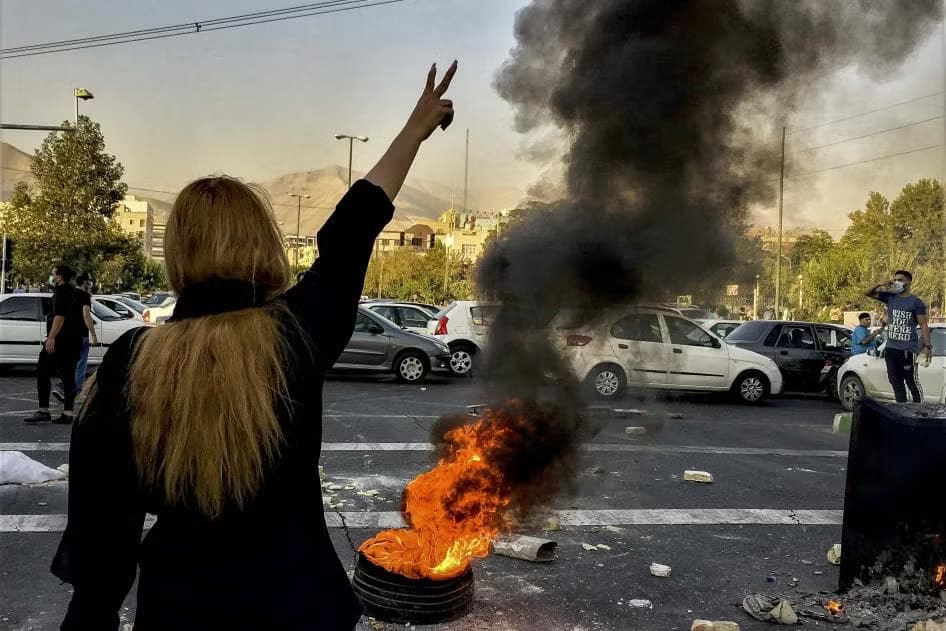

ERBIL, Kurdistan Region - Four years after Iran’s 2022 “Woman, Life, Freedom” protests, Amnesty International is calling on the UN Security Council to refer 87 Iranian officials to the International Criminal Court for crimes against humanity.
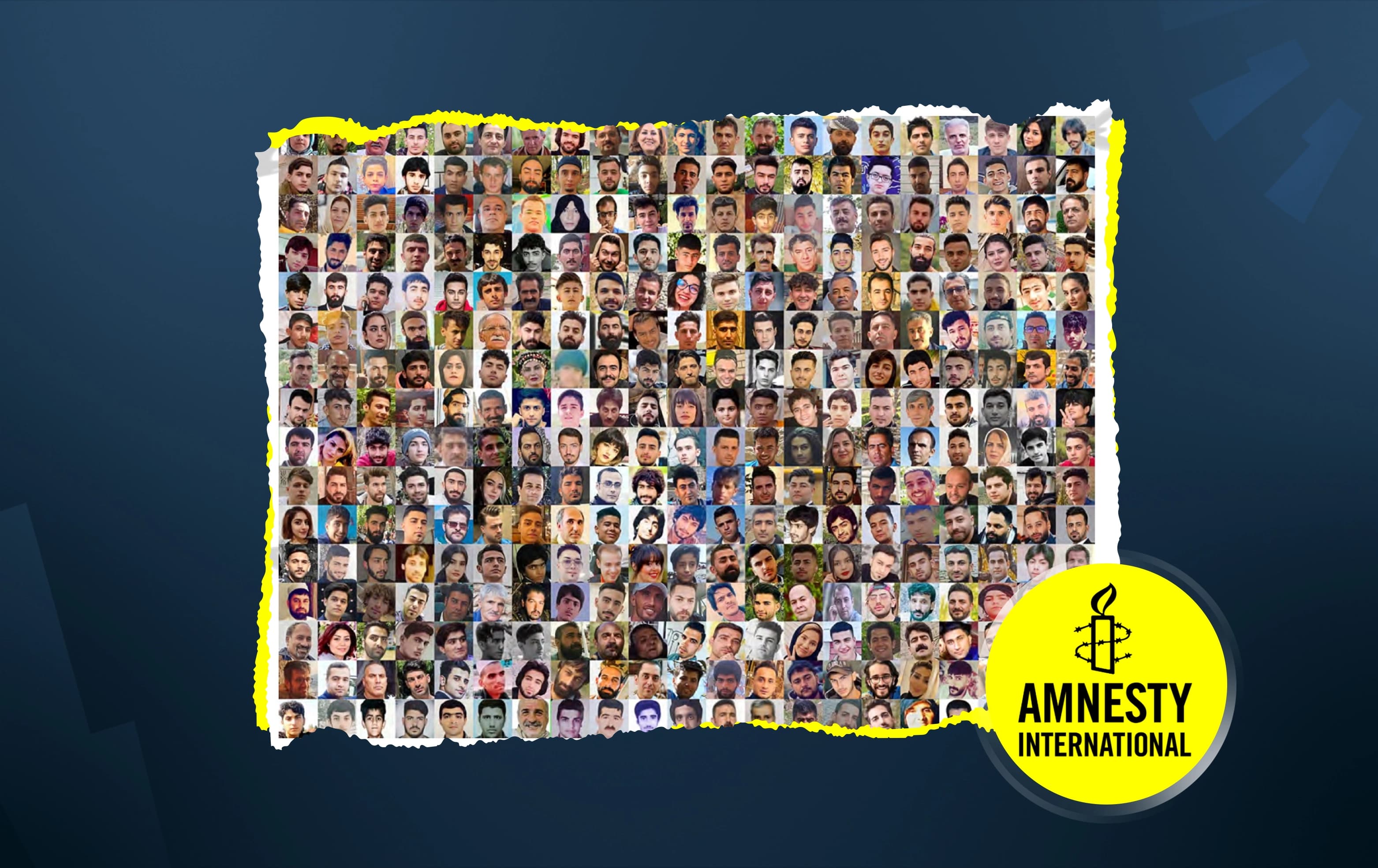
The human rights organization released a 1,000-page report Wednesday documenting the deaths of 377 protesters and bystanders. Citing extensive evidence, Amnesty International’s Chief Agnes Callamard stated that the report “leaves no doubt” that Iranian authorities committed crimes against humanity to crush the uprising.
The findings echo the accounts of Kurdish survivors who continue to recount the trauma, as well as the cross-community solidarity, that defined the nationwide movement.
A Personal Toll
During the 2022 demonstrations, a man who goes by the name Aristo owned a concrete block manufacturing plant in Bokan, a city in Iran’s Kurdish-majority west (Rojhelat). He joined hundreds of residents traveling to nearby Saqqez to honor Zhina (Mahsa) Amini, the 22-year-old Kurdish woman whose death in police custody over mandatory hijab rules sparked the unrest.
“Upon our return to Saqqez’s city center, bullets came from everywhere,” Aristo told Rudaw English.
After seeing a woman and her 6-year-old daughter struck by metallic shotgun pellets, Aristo began hurling stones at armed, masked security forces. Moments later, he was shot from 15 meters away.
Nearly 100 pellets pierced his body, knocking him face-first to the ground. Three pellets embedded in his left eye, impairing his vision. His left arm, which sustained several pellets, has limited capacity.
He lay immobile for around a half an hour until unidentified men loaded him onto a motorcycle. He awoke to a stranger promising to send medical help to his home in Bokan.
“I was afraid, but I had no choice,” Aristo said. A car took him home, where an underground doctor was already waiting to administer first aid.
To avoid state authorities, Aristo relied on secret networks and sought hospital care anonymously. A clinic in Tabriz performed his first surgery to extract pellets, followed by a second procedure two weeks later in Tehran.
“Imagine an egg,” Aristo recalled the Tehran surgeon telling him. “It is broken and its parts are all scrambled. It is incurable.”
Reflecting on the strangers who saved him, Aristo said: “I didn’t know them, but they took the risk of giving me medical treatment without handing me over to the authorities.”
Aristo spent over a year in hiding before fleeing Iran in February 2024. Now, at 39, he lives in Munich, Germany, with his wife and two daughters.
Despite six surgeries three pellets are still encapsulated in his left retina, leaving him blind in one eye.
Underground Networks of Support
Fayagh Rasuli, a civil rights activist from Khane (Piranshahr) who now lives in Erbil, shared a similar story of solidarity from the operational side.
During the protests, Rasuli led a clandestine, multidimensional network of nurses, doctors, lawyers and psychologists operating across Iran.
“We sent the injured protesters to trusted places,” Rasuli told Rudaw English, noting that his network rescued at least five individuals from near-certain death.
“We even paid $2,500 for a doctor to perform surgery on one protester whose leg would have otherwise been amputated,” he said.
Rasuli confirmed that Iranian authorities were never able to track down the patients his network treated.
A Lasting Legacy
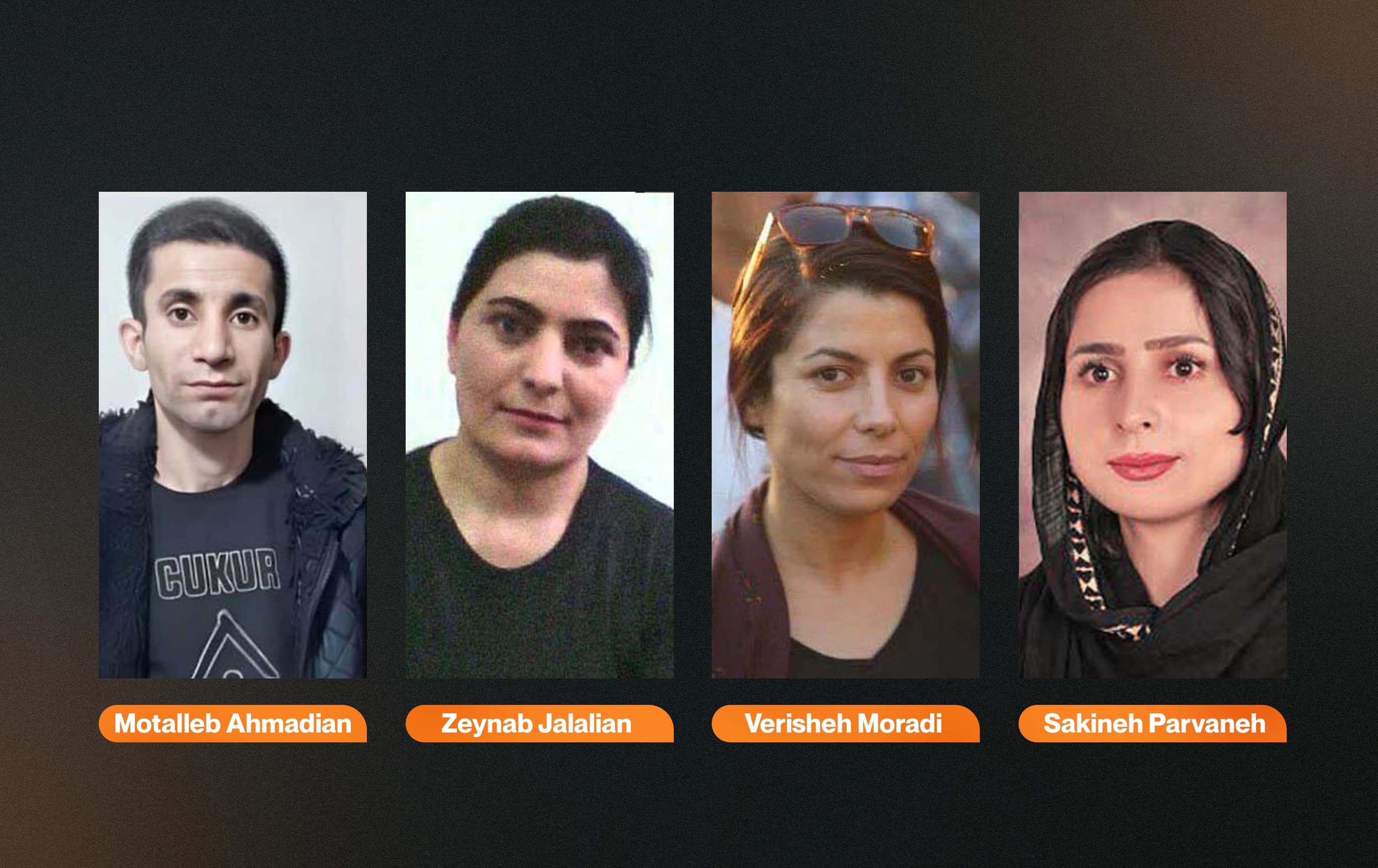
Four years after her death, Zhina Amini continues to inspire defiance. On Wednesday, rights groups reported that shopkeepers and businesses across Rojhelat shuttered their doors in a general strike, while four political prisoners in Iranian jails declared a hunger strike to commemorate her anniversary.
What started as a series of demonstrations to secure basic rights for women quickly morphed into protests spanning almost the entire country. The organizers from the Kurdish areas immediately rejected interventions from political parties. Rasuli - and perhaps tens of others - emerged as team leaders without having been formally appointed. The movement was authentic and oriented to achieve long-denied rights. Protesters were bound not only by common goals, but a common destiny.
Amnesty’s Wednesday report is a critical stepping stone towards achieving accountability. It gives the survivors hope to bring those responsible for their ordeals to justice. Aristo, and 15 other activists, have already registered an organization in Munich. Their NGO, The Association of Victims and Justice Seekers of the Zhina Movement, has already spearheaded protests across Germany against the Iranian government.
“We are ready to work with Amnesty,” Aristo noted, adding that they have already compiled “several books” documenting slain and wounded protesters in the movement.
“We are ready to share our details with Amnesty,” he said, “If they are compatible, we can submit them to a court in Germany or the Netherlands."
Rasuli held a more pessimistic view. While showing gratitude to Amnesty for their efforts, he said their cause might be sacrificed for the sake of political bargaining.
“We all remember Hamid Nouri,” he recounted, whose release dealt a severe blow to survivors and relatives of victims alike.
Nouri, a former Iranian judicial official who was arrested, tried, and convicted in Sweden for his role in the mass executions of political prisoners in Iran in 1988, was released in June 2024 as part of a high-profile prisoner swap between Sweden and Iran.
“Maybe it’s not the same [situation] as Nouri but I fear that Iranian authorities might get away with it,” he explained.
As Iranian authorities deploy heavy security forces across Kurdish regions, reiterating earlier warnings vowing to show “no leniency” toward unrest, informal support networks of people helping one another despite personal risks sends the message of defiance against “an architecture of impunity” ever so pervasive in the country's political and legal institutions, while acts of community solidarity offer a snapshot of hope that humanity will triumph and Iranians will bear witness to better days.