
ERBIL, Kurdistan Region - Senior Saudi, Turkish and Pakistani officials are expected to meet Iranian officials in Tehran on Monday to discuss regional security coordination, as Washington and Tehran remain locked in a standoff over the Strait of Hormuz and the prospect of renewed hostilities.
The talks will bring together Saudi Defence Minister Prince Khalid bin Salman, Pakistan Army Chief Field Marshal Asim Munir and Turkish intelligence chief Ibrahim Kalin, according to Ali Bagheri-Kani, deputy secretary of Iran’s Supreme National Security Council.
Kani told state broadcaster IRIB news that the discussions aim to establish a regional security framework independent of outside powers.
“All three countries participating in this meeting, together with Iran, can draw upon the successful experience of the Islamic Republic of Iran in national security-building to take an effective step toward establishing endogenous security,” IRIBN news reported.
Reuters also reported that senior officials from Saudi Arabia, Turkey and Pakistan, all members of the Mecca Pact, are scheduled to meet Iranian officials in Tehran on Monday to discuss regional coordination, citing two people familiar with the matter who spoke on condition of anonymity.
The meeting comes as US President Donald Trump continues to weigh negotiations with Tehran against the possibility of renewed military action, despite ruling out a US strike on Iran on Sunday.
“They have never been hit so hard. And now my question is do I make a deal with them or do I finish them off? That's my that's the only question. Do I make a deal or do I finish them off?” Trump told Fox News on Sunday.
He also asserted that Washington had secured control of the strategic waterway, saying, “Remember, we now control the Hormuz Strait. They get nothing. We get everything. They get nothing.”
Trump separately told reporters there would be no strike against Iran that day, while leaving open the possibility of future military action.
Tehran, meanwhile, has maintained that it remains open to negotiations while warning that it is prepared to defend itself if hostilities resume. Iranian Foreign Ministry spokesperson Esmaeil Baghaei said Sunday that Tehran had not abandoned diplomacy and that messages were being conveyed through intermediaries.
“We have never left the negotiating table. At the same time, we have been fully prepared to defend our country,” Baghaei said, according to the Tehran Times.
Iranian Foreign Minister Abbas Araghchi has also reiterated that negotiations remain an option, with Tehran presenting Washington with a seven-day proposal that reportedly includes lifting the naval blockade of the Strait of Hormuz, releasing frozen Iranian assets and ending the war across the region.
The strategic waterway has become a focal point of the confrontation, with both Washington and Tehran asserting control over a passage vital to global energy supplies. The tensions have intensified following Iranian claims that its forces struck two supertankers carrying more than 4.5 million barrels of crude oil on Friday.
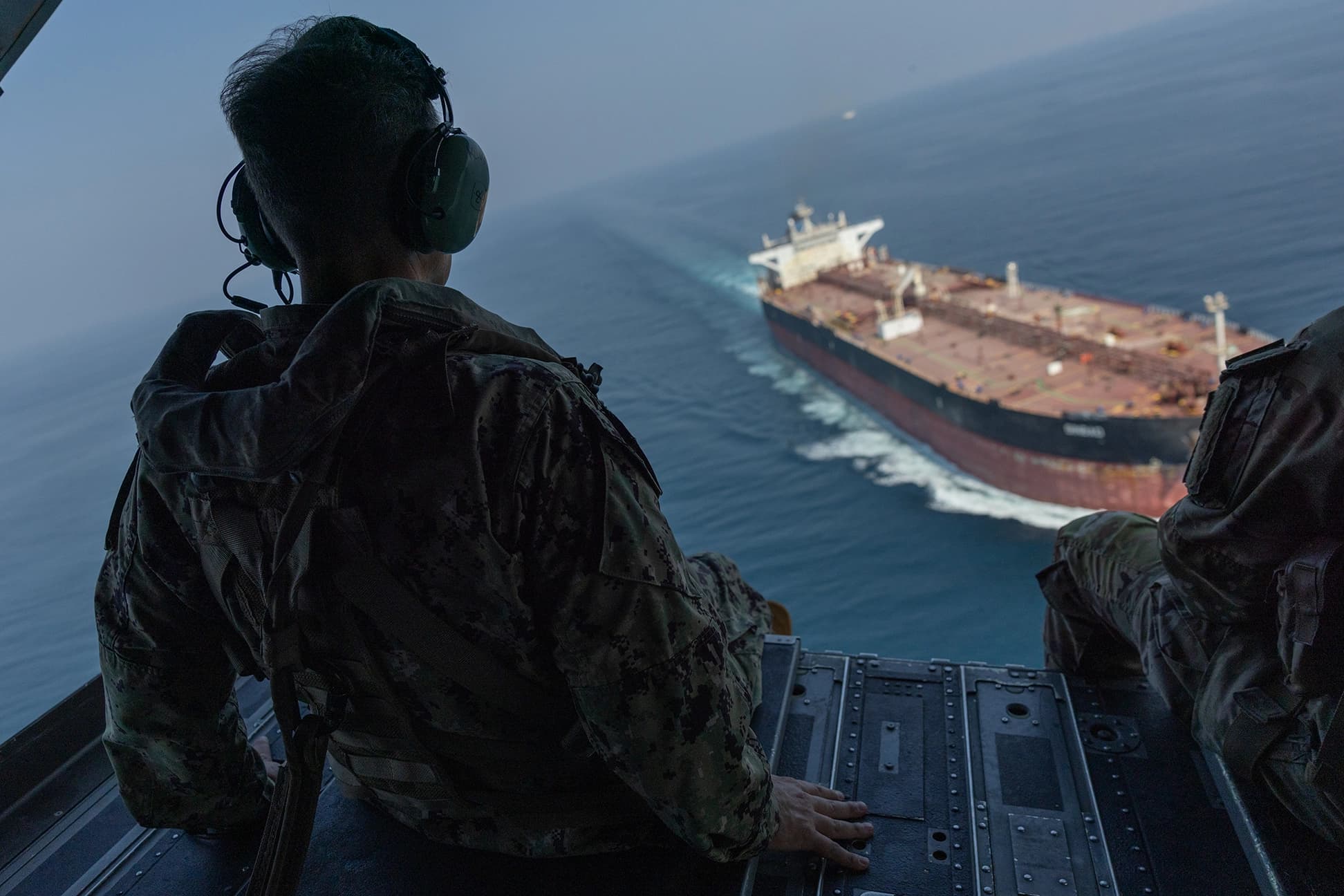
Against this backdrop, US Central Command (CENTCOM) chief Adm. Brad Cooper visited the Strait of Hormuz on Sunday, as the US military marked a milestone in supporting Gulf partners’ oil exports.
CENTCOM said Sunday that US forces had helped Gulf partners export more than 1.5 billion barrels of crude oil since summer, while more than 3,000 commercial vessels had transited the strait with American military support over the past six months.
“We continue to stand shoulder to shoulder with our Gulf partners and the shipping industry,” Cooper said, emphasizing Washington’s commitment to maintaining freedom of navigation through the international waterway.
CENTCOM also said the main shipping routes remained clear of Iranian sea mines following a US-led clearance operation, adding that more than 95 percent of vessels navigating the strait in recent months had transited safely.
Separately, TankerTrackers - an independent online service that tracks crude oil and petroleum-product shipments by sea - reported Monday that at least two very large crude carriers (VLCCs) previously associated with the US-sanctioned Dark Fleet were heading toward the Middle East, potentially as part of efforts to reduce oil transportation costs under a recently announced US initiative.