
ERBIL, Kurdistan Region – Iran mulls the establishment of two new counterintelligence bodies within its Intelligence Ministry after years of Israeli intelligence infiltration that has resulted in the assassination of senior security and intelligence officials and amid longstanding rivalry with the more powerful Islamic Revolutionary Guard Corps (IRGC) intelligence organization.
The proposed restructuring, would establish two new organizations within the ministry: an Intelligence Protection Organization unit responsible for internal security and an Ideological-Political Organization unit overseeing religious and ideological affairs, the IRGC-affiliated semi-official Tasnim news agency reported Wednesday.
Iranian Supreme leader Mojtaba Khamenei will appoint the head of both units, while legislative authorities work to pass legislation that would remove a legal requirement that the intelligence minister possess advanced Islamic jurisprudential qualifications, known as ijtihad. This could potentially pave the road for a non-clerical figure to take helm of the powerful ministry.
The proposal comes nearly eight months after Intelligence Minister Esmail Khatib was killed in an Israeli strike on March 18 during the US-Israeli war against Iran that began on February 28. An acting minister has been in charge of the ministry since, despite a three-month constitutional limit on how long a ministry can remain without a permanent head.
The proposed overhaul comes against the backdrop of repeated Israeli intelligence breaches, including the 2018 theft of Iran's nuclear archive, the 2020 assassination of nuclear scientist Mohsen Fakhrizadeh and the targeted killing of senior military and security officials during the wars of 2025 and 2026, including the Supreme Leader Ali Khamenei.
Warnings of Israeli infiltration
The scale of Israeli intelligence success in Iran had prompted extraordinary warnings from former senior Iranian officials years before the wars.
In a 2024 interview with CNN Türk, former President Mahmoud Ahmadinejad claimed that the official responsible for countering Israeli intelligence operations was himself working for Israel. “The man who was in charge of the unit in Iran against Israel was an Israeli agent,” Ahmadinejad said.
He alleged that around 20 other members of the unit had also been recruited by Mossad. His allegations have not been independently verified.
Former Intelligence Minister Ali Younesi issued an equally alarming warning in June 2021, claiming that Israeli infiltration had become so extensive that senior Iranian officials should fear for their lives.
“The Mossad has infiltrated various parts of the country,” Younesi said.
He blamed the failures partly on rivalry between competing intelligence agencies, which he accused of pursuing domestic political opponents instead of focusing on foreign infiltration.
“The parallel activities and rivalries must end,” he warned.
Rival intelligence agencies
Iran's intelligence establishment is divided between the Intelligence Ministry, which formally answers to the president, and the powerful IRGC Intelligence Organi\ation, which operates under the authority of the supreme leader.
The two institutions have overlapping responsibilities, including counterespionage, domestic surveillance and operations against political opponents, creating longstanding competition over influence, intelligence gathering and security investigations.
This competition was laid bare when the ministry of intelligence detained around 12 innocent men accused of plotting the November 12, 2011 explosion in an IRGC base near Karaj in western Tehran. In that explosion, the architect of Iran’s ballistic missile program, Major General Hassan Tehrani Moghadam, was killed alongside 16 other officers.
The ministry of intelligence reportedly fabricated evidence and tortured the 12 innocent men to score a win in the rivalry by resolving the explosion case that had impacted the IRGC itself.
The IRGC intelligence realized later that the men had been tortured to extract false confessions and were eventually freed. Following the explosion, the paramilitary organization had dismissed reports of Israeli or US involvement.
The rivalry over the years became sufficiently concerning that former Supreme Leader Ali Khamenei intervened in June 2023, following months of nationwide protests sparked by the death of Kurdish woman Jina Mahsa Amini in police custody.
In a message delivered by his chief of staff, Mohammad Mohammadi Golpayegani, Khamenei criticized the rivalry between the agencies as a weakness and called for closer cooperation at every level.
Khamenei ordered both organizations to meet and coordinate their work. At a joint intelligence meeting held in Mashhad in mid-June 2023, senior representatives of both agencies gathered to discuss coordination against what Tehran described were threats from foreign adversaries.
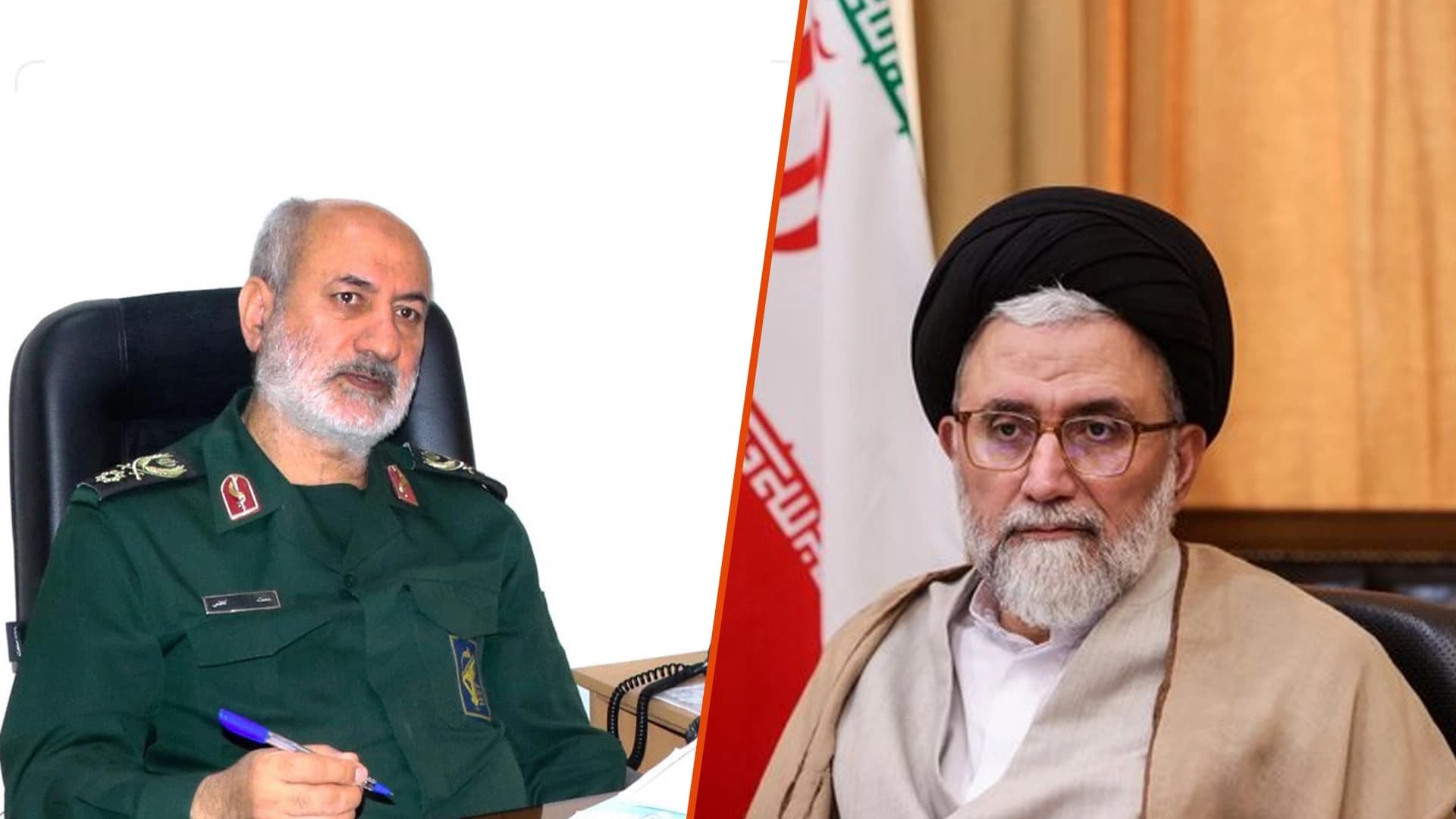
The meeting brought together Intelligence Minister Khatib, IRGC intelligence chief Mohammad Kazemi and IRGC commander Hossein Salami, highlighting the seriousness of the tensions. All three were killed in US-Israeli strikes during the 2025 and 2026 wars.
Successes against dissidents abroad
While Iran's intelligence has repeatedly failed to prevent Israeli infiltration, Iran's intelligence establishment has demonstrated an ability to track, abduct and forcibly return dissidents living abroad.
In October 2019, the IRGC lured dissident journalist Ruhollah Zam to Iraq, where he was abducted and transferred to Iran. He was executed in December 2020 following a trial condemned by human rights organizations as grossly unfair.
In another operation, Iranian-Swedish dissident Habib Chaab was lured to Turkey in October 2020, drugged and abducted by a network allegedly working for Iran's Intelligence Ministry.
Turkish authorities subsequently arrested 11 suspects connected to his abduction. Chaab was later executed in Iran.
German-Iranian dissident Jamshid Sharmahd was also abducted abroad in 2020 and forcibly transferred to Iran, according to Amnesty International.
Whether additional internal oversight will address the intelligence failures exposed by Israeli operations or further complicate an already fragmented security establishment is a question that the restructuring raises.
If approved by the parliament and the Guardian Council, the legislation would also strengthen the supreme leader's direct authority within a ministry traditionally headed by a presidential appointee.
The proposal has not yet become law, and the precise powers of the two planned organizations remain unclear.