
ERBIL, Kurdistan Region – At least 32 people have died and hundreds have suffered alcohol poisoning across five Iranian provinces over the past 10 days, Iranian police said Sunday, highlighting the dangers of an unregulated alcohol black market in a country where drinking has been largely prohibited since the 1979 Islamic Revolution.
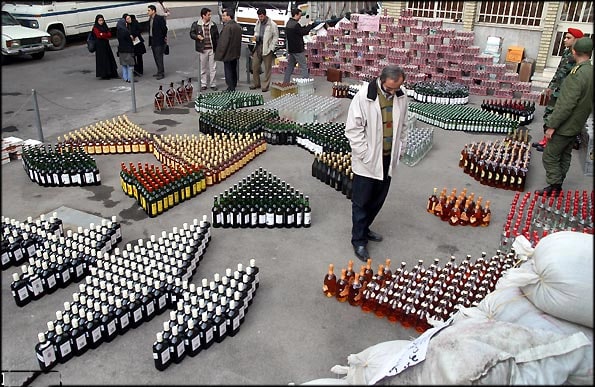
Saeed Montazeralmahdi, spokesperson for Iran’s Law Enforcement Command (FARAJA), said 466 people had suffered alcohol poisoning, with several remaining in intensive care. Police have arrested 30 individuals involved in producing and distributing homemade alcoholic beverages and confiscated approximately 27,000 liters in recent days.
Over the first eight months of the current Iranian calendar year, which began on March 21, police confiscated more than 4.5 million liters of homemade alcohol and 1.35 million bottles of foreign alcoholic beverages, arresting more than 41,000 people in connection with alcohol production and distribution, according to Montazeralmahdi.
For the past 47 years, the Islamic Republic has sought to discourage Iranians from drinking alcohol through religious teachings, public campaigns and criminal punishment. Under Article 265 of Iran’s Islamic Penal Code, consuming alcohol is punishable by 80 lashes, with limited exemptions for non-Muslims drinking in private.
Iran has previously imposed the death penalty on those involved in the production and distribution of bootleg alcohol. Four men were executed at Karaj Central Prison over their involvement in the production and distribution of alcoholic beverages that killed 17 people and poisoned another 191 in Alborz province in June 2023, according to Hamshahri Online, which is affiliated with the Tehran municipality.
Amid decades of prohibition, a thriving black market has emerged, supplied by both domestic producers and international smuggling networks. Iran’s western border with the Kurdistan Region has long served as an important conduit for foreign alcoholic beverages, with Kurdish border porters, known as kolbars, among those transporting goods across the frontier at great personal risk.
Iran’s ongoing reinforcement of its western borders, coupled with Baghdad’s recent efforts to tighten control over border crossings in the Kurdistan Region, could further restrict the flow of imported alcohol, driving more consumers towards cheaper, locally produced beverages and potentially increasing the risk of poisoning.
Despite the prohibition, there have also been reports of cafes and restaurants in Tehran discreetly serving alcoholic beverages. In September 2025, Iranian authorities shut down several establishments in the capital over allegations of serving alcohol and hosting mixed-gender parties.
Alcohol poisoning has become a recurring public health issue in Iran. In October 2024, at least 26 people died after consuming beverages containing toxic methanol and more than 700 people died from alcohol poisoning over several weeks during the coronavirus pandemic in 2020.
Montazeralmahdi warned that unregulated alcoholic beverages may contain methanol, a highly toxic substance that can cause irreversible neurological damage, blindness and death, vowing to intensify the police campaign against illegal producers and distributors.