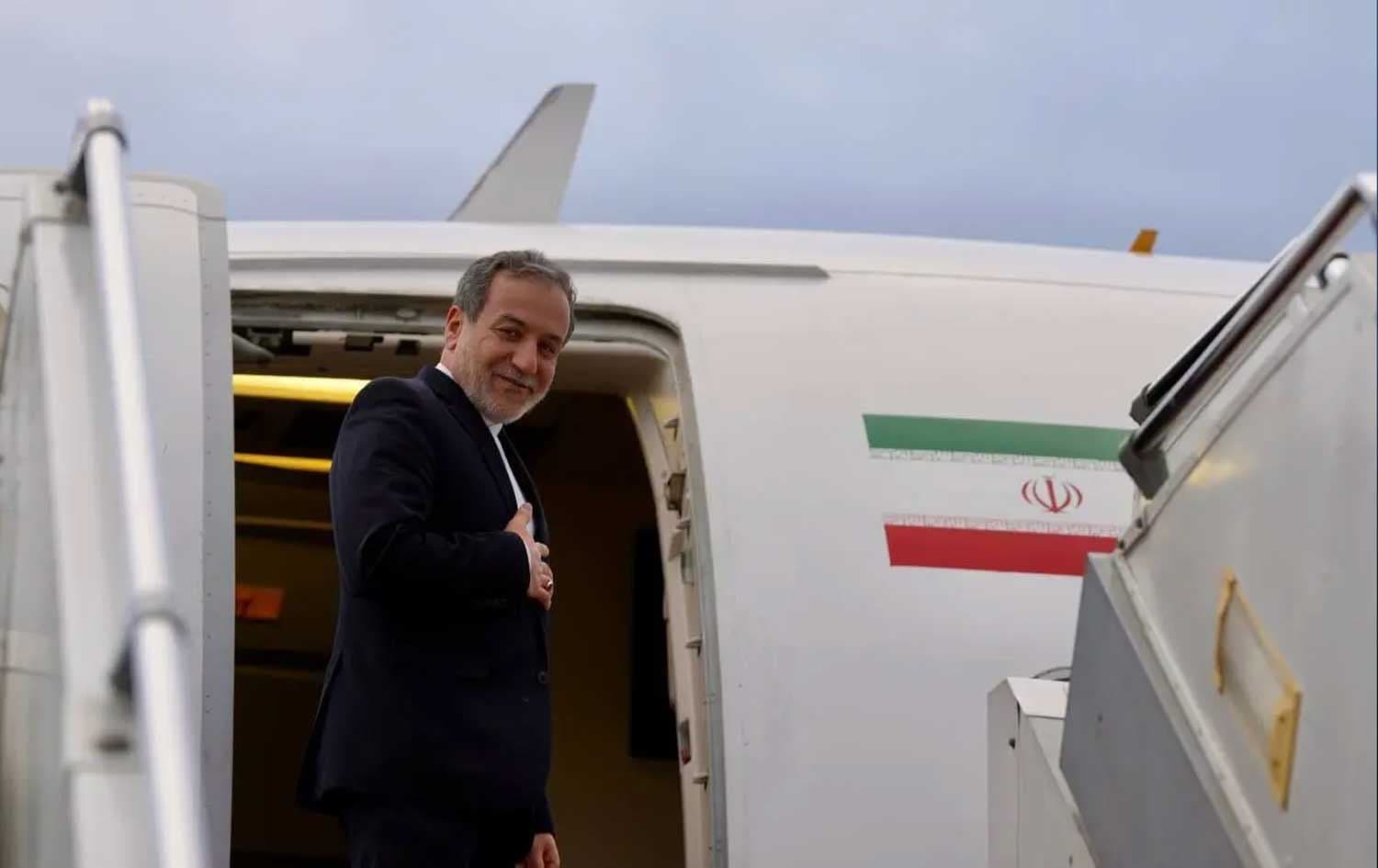

ERBIL, Kurdistan Region - Iranian Foreign Minister Abbas Araghchi arrived in Muscat early Friday to take part in a critical round of nuclear negotiations with the United States, amid signs of heightened regional coordination. The talks follow confirmation from the White House that while President Donald Trump “wants to see” if a deal with Iran can be struck, he has other options on the table.
Iran’s state news agency, the Islamic Republic News Agency (IRNA), reported that Araghchi was received by Omani officials at Muscat International Airport early Friday.
Shortly after his arrival, Iran’s chief nuclear negotiator wrote on X that “Iran enters diplomacy with open eyes and a steady memory of the past year. We engage in good faith and stand firm on our rights.”
He emphasized that “commitments need to be honored,” adding that “equal standing, mutual respect, and mutual interest are not rhetoric - they are a must and the pillars of a durable agreement.”
Hours earlier, Iranian Foreign Ministry spokesperson Esmaeil Baghaei said on X that the diplomatic engagement was being pursued “with confidence and strength,” with the goal of achieving “a fair, mutually satisfactory, and dignified understanding regarding the nuclear file.”
Referring to the 12-day war with Israel in June, which saw US airstrikes on Iranian nuclear sites, as well as what he described as “foreign interventions” during the nationwide protests in January, Baghaei said that “the bitter experiences of the past … are clearly before us.”
Nevertheless, he stressed that Iran “bears the responsibility of not missing any opportunity to make use of diplomacy in order to secure the interests of the Iranian people and preserve peace and calm in the region.”
Baghaei also expressed appreciation for “the efforts of all friendly neighboring countries and regional states” that have played a “responsible role” in facilitating the talks, and said he hoped “the American side will also participate in this process with a sense of responsibility, realism, and seriousness.”
In the hours leading up to the talks, signs of heightened regional coordination were noteworthy.
In a statement posted on X, Iran’s Foreign Ministry said Araghchi “held separate telephone conversations with his counterparts in Egypt, Oman, and Qatar, reviewing the latest regional and international developments.”
Earlier, the ministry reported that Araghchi also spoke with Saudi Foreign Minister Faisal bin Farhan, during which he “stressed the necessity of continuing consultations among regional countries to preserve peace and stability and safeguard the interests of all countries in the region.”
According to the statement, the Saudi foreign minister reaffirmed Riyadh’s “special commitment to regional peace and stability” and emphasized the need for “continued efforts to prevent an escalation of tensions.”
For her part, White House Press Secretary Karoline Leavitt in a Thursday briefing commented on the key talks stating that “diplomacy is always [President Trump’s] first option” and affirming that the US negotiating team includes Trump’s Special Envoy Steve Witkoff and son-in-law Jared Kushner will be representing the US side.
For her part, White House Press Secretary Karoline Leavitt commented on the key talks during a Thursday briefing, attended by Rudaw, stating that “diplomacy is always [Trump’s] first option.”
She further confirmed that the US negotiating team includes Special Envoy Steve Witkoff and that Trump’s son-in-law Jared Kushner.
Leavitt added that the focus of the talks will be on “diplomacy moving forward,” noting that Trump “has been quite clear in his demands of the Iranian regime,” including the requirement of “zero nuclear capabilities.”
The US president “wants to see if a deal can be struck,” she said, while reminding Tehran that as negotiations proceed, “the president has many options at his disposal, aside from diplomacy, as the commander-in-chief of the most powerful military.”
Of note, the talks between Washington and Tehran are set to resume despite logistical challenges and following a months-long hiatus triggered by the 12-day conflict between Tel Aviv and Tehran in June.
RELATED: Tehran-Washington talks to resume Friday as Trump issues new warning to Khamenei