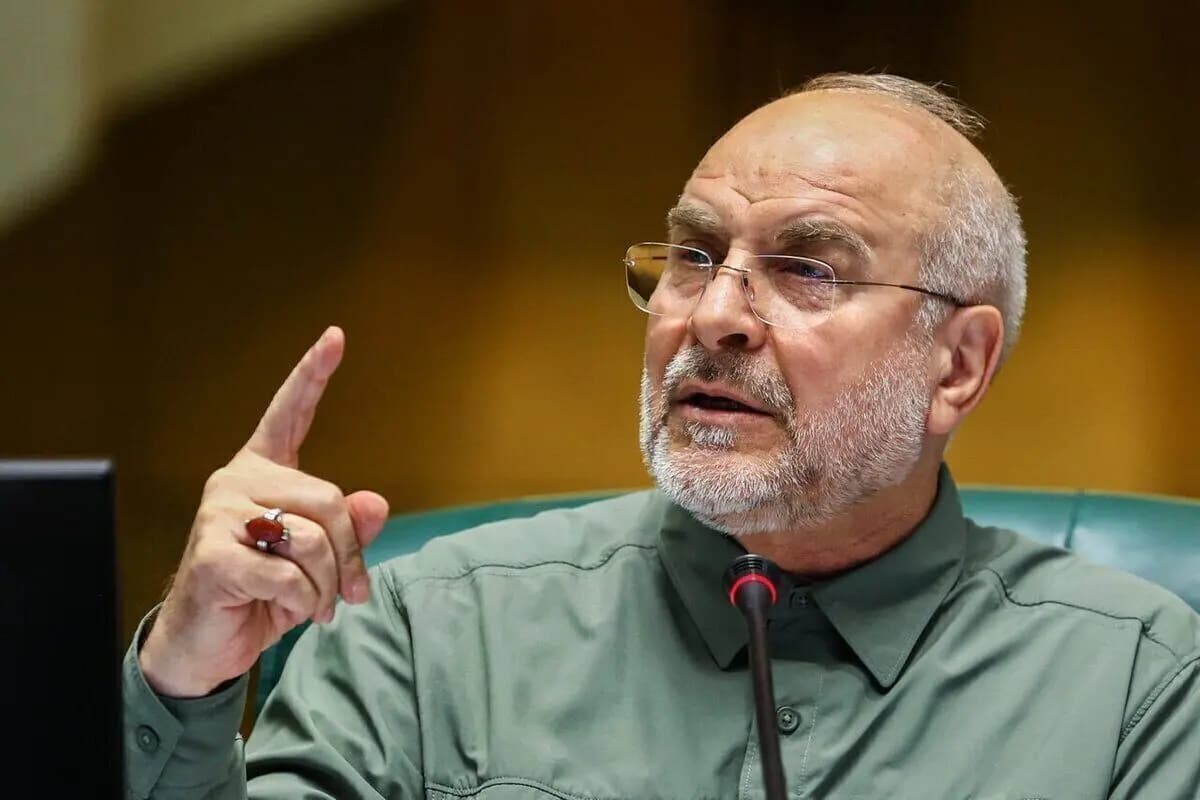
ERBIL, Kurdistan Region - Iran's chief negotiator Mohammad Bagher Ghalibaf said on Sunday that Tehran would not accept any agreement with the United States unless it guarantees what he described as the rights of the Iranian people, as the two sides continue exchanging proposals aimed at ending months of conflict.
"We will not approve any agreement until we are certain that the rights of the Iranian people have been upheld," Ghalibaf, who is also the speaker of the Iranian parliament, said in remarks broadcast on Iranian state television.
He added that Iranian negotiators "neither trust the enemy's words nor its promises."
The comments come as Tehran and Washington continue talks over a framework agreement to end the war that erupted on February 28 and spread across the Middle East.
On Saturday, the American website Axios reported that US President Donald Trump had returned a proposed framework to Tehran with what were described as tougher conditions. According to the report, Trump requested several amendments during a White House Situation Room meeting on Friday.
"Trump wants the deal and expects to finalize it soon, but is keen to strengthen several points that are important to him — particularly around Iran's nuclear material," Axios cited two US officials as saying.
Trump has repeatedly said that preventing Iran from developing nuclear weapons and reopening the Strait of Hormuz to commercial shipping remain key US objectives.
"The one guarantee that I have to have is that there will be no nuclear weapons. They've agreed to that, and it was very interesting," Trump said during an interview with Fox News on Saturday.
Trump also suggested military options remain on the table if negotiations fail. "I'm in no hurry," he said. "If we don't get what we want, we're going to end in a different way."
However, Tehran has challenged Trump's characterization of the talks. Iranian officials have reportedly demanded the release of $12 billion in frozen assets before entering substantive discussions on their nuclear program and have rejected claims that their stockpile of enriched uranium would be destroyed.
Iranian Foreign Ministry spokesperson Esmaeil Baghaei said on Friday that communications between Tehran and Washington remain ongoing, but stressed that no breakthrough has been achieved.
"None of the Western parties, when speaking about the Islamic Republic of Iran, can use the language of 'must'. We make our own decisions based on the interests and rights of the Iranian nation," Baghaei said on state television.
On the negotiations, he said that message exchanges were continuing but emphasized that "a final understanding has not been reached."
Separately, Iranian President Masoud Pezeshkian said the country was facing "an extremely sensitive situation and several challenges," calling for broader participation in decision-making and greater use of national expertise to address domestic problems.
"The circle of participation must be expanded, and all national capacities must be utilized," Pezeshkian said during a meeting with higher education officials on Sunday.
The US and Israel launched a large-scale aerial campaign against Iran in late February, striking thousands of targets across the country during six weeks of fighting. The conflict paused after a Pakistan-mediated ceasefire took effect on April 8. While an initial round of talks concluded on April 11 without a final agreement, a comprehensive settlement to the conflict remains unresolved.