ERBIL, Kurdistan Region - Iraq on Monday welcomed the understanding reached between Iran and the United States to end months of tensions, noting that it was among the countries most affected by the conflict, particularly by the closure of the Strait of Hormuz, while calling for the restoration of maritime traffic through the key waterway to enhance the stability of global energy markets.
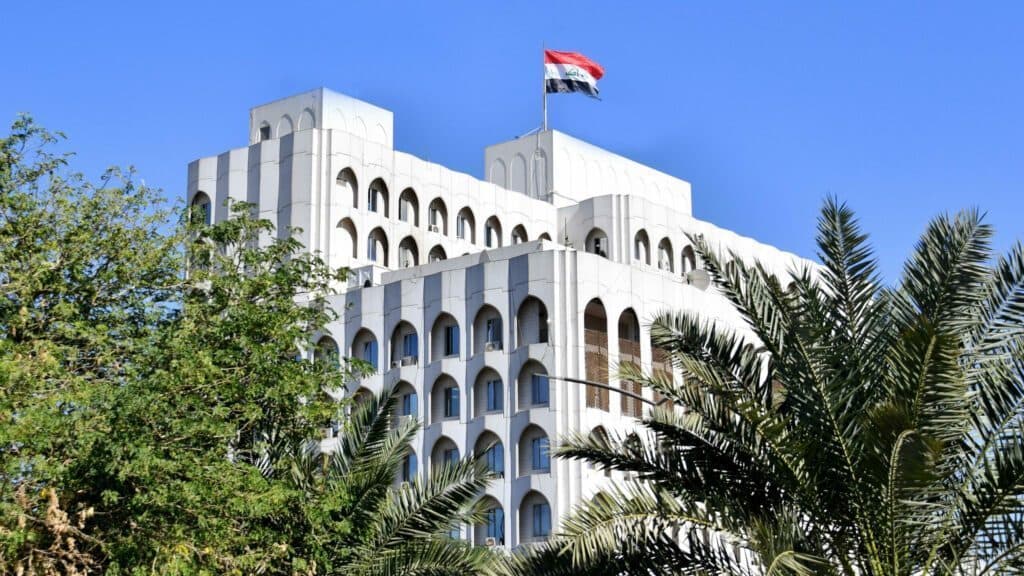
Baghdad affirmed its support for the memorandum of understanding reached between Tehran and Washington, as well as for “efforts to enhance dialogue and prioritize diplomatic solutions to address crises,” in what would “contribute to regional security and stability,” the Iraqi foreign ministry said in a statement.
The ministry also expressed Iraq’s “satisfaction with the imminent reopening of the Strait of Hormuz to normal maritime traffic,” stressing its “paramount importance in ensuring the smooth flow of oil and gas to global markets” and “enhancing the stability of international energy markets.”
Earlier on Monday, US President Donald Trump said that “the deal with the Islamic Republic of Iran is now complete,” including the “toll-free opening of the Strait of Hormuz” and the “immediate removal of the United States naval blockade” on Iranian ports.
In a separate post on Truth Social, he added that “ships are starting to move, many loaded up with oil, out of the Strait of Hormuz.”
Trump’s remarks come as Iran and the US have agreed on a framework to halt the war that began in late February and was temporarily paused by a Pakistan-mediated ceasefire in early April, as well as the ensuing maritime tit-for-tat between the two sides in regional waters.
The fate of Iran’s nuclear program remains subject to further negotiations, while an official signing ceremony for the memorandum of understanding is expected to take place in Switzerland on Friday.
For Iraq, the regional war and the closure of the Strait of Hormuz dealt a major blow to the country’s oil sector and broader economy, with Iraqi crude production falling from about 4.14 million barrels per day (bpd) before the crisis to 1.49 million bpd at the height of the blockade.
A prominent financial adviser to the Iraqi government, Mazhar Mohammed Salih, told Rudaw in early March that disruptions to oil exports were costing Iraq between $200 million and $255 million per day. He added that even if oil prices reached $150 per barrel, Iraq’s revenue could still fall from $7 billion to $1 billion per month.
Moreover, since the outbreak of the Iran war, Iraq has been drawn into the hostilities.
The US and Israel on February 28 launched a large-scale aerial campaign against Iran, striking thousands of targets across the country during six weeks of fighting.
In response, Iran carried out thousands of drone and missile strikes across the Middle East, targeting alleged US assets - particularly in Gulf Arab states - as well as launching retaliatory attacks against Israel.
The Iranian response also included strikes by factions aligned with the Tehran-led ‘Axis of Resistance,’ including shadowy armed groups in Iraq that have claimed numerous attacks against alleged US targets in the country and the wider region.
This placed Iraq in a tough position with its regional neighbors that saw the United Arab Emirates (UAE) in mid-April deliver a “strongly worded” protest letter to the chargé d’affaires at the Iraqi embassy, condemning what it described as “terrorist attacks” launched from Iraqi territory by Iran-aligned armed groups targeting facilities in Gulf Arab states, despite the ongoing truce.
Abu Dhabi then warned that the continuation of such attacks places ties with Baghdad “under highly sensitive strain.”
The Iraqi foreign ministry on Monday emphasized Baghdad’s “principled and firm stance” in rejecting the war and “adopting dialogue and peaceful means as the sole path to resolving disputes,” while stressing “the importance of intensifying international and regional efforts to prevent escalation and avoid sliding into new confrontations.”
The Iraqi foreign ministry on Monday emphasized Baghdad’s “principled and firm stance” in “rejecting war and adopting dialogue” as “the only path to resolving disputes,” while stressing the importance of intensifying international and regional efforts to prevent escalation and avoid new confrontations.
“Iraq will continue to play its customary role in bridging viewpoints among regional countries, driven by its balanced foreign policy and its ongoing pursuit of dialogue and regional understanding,” the ministry said.