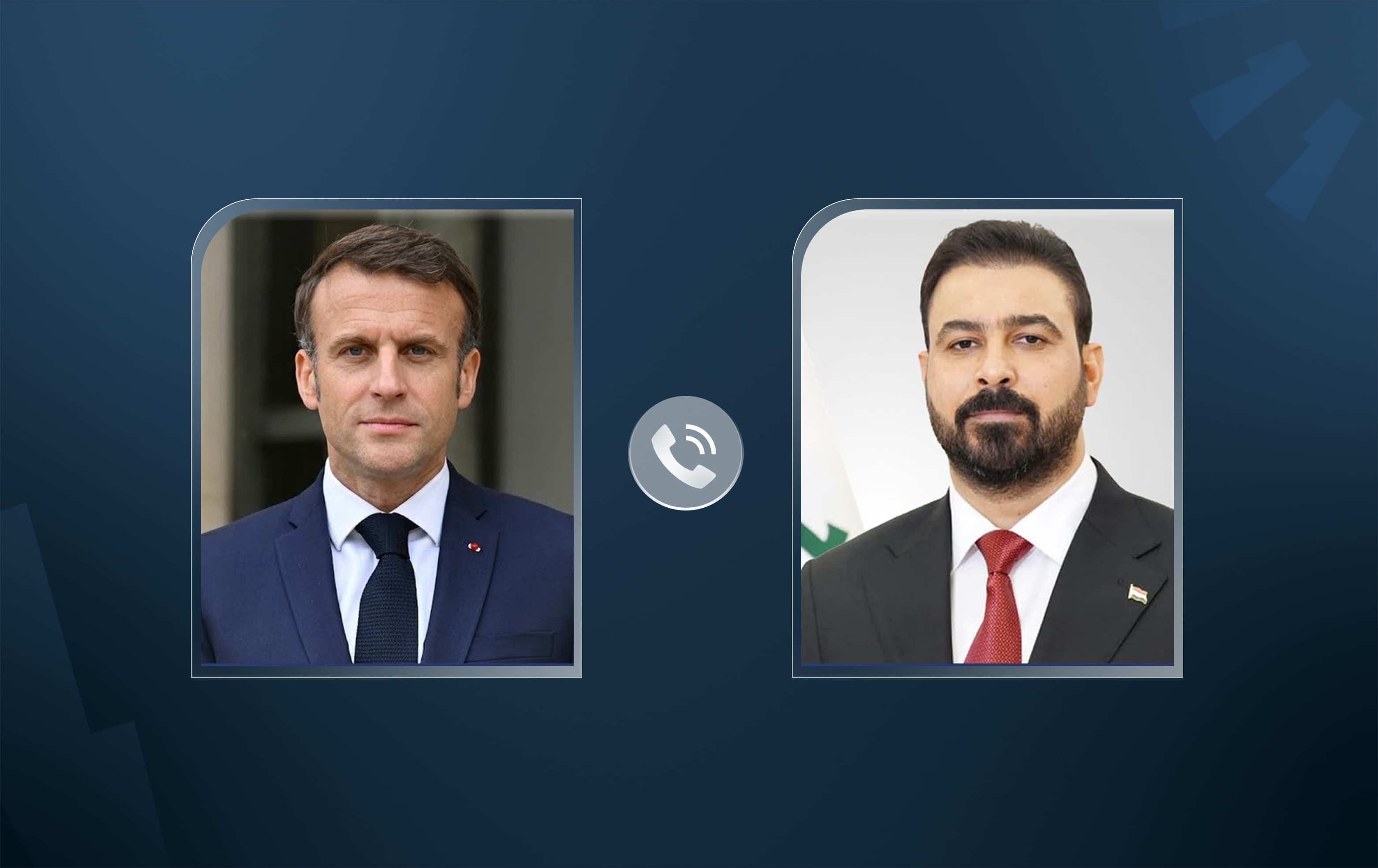
ERBIL, Kurdistan Region - Iraq must maintain its armed factions until it is fully capable of protecting its sovereignty and foreign forces completely leave the country, an official from a key political party within the ruling Shiite-led Coordination Framework announced Saturday.
"The state must possess a capable defense system that ensures full sovereignty over its waters, land, and airspace,” Ali al-Daffayi, spokesperson for the Islamic Supreme Council of Iraq (ISCI), an Iraqi Shiite political party led by Humam Hamoudi, told Rudaw’s Hawar Jalaladin.
However, he noted that “when there is a loophole or shortfall in addressing the issue of preserving the state's sovereignty and security, there must be an auxiliary force to achieve security and sovereignty."
ISCI is a member of the ruling Framework, which includes several political figures who lead factions within the state-sponsored and Iran-aligned Popular Mobilization Forces (PMF).
In early June, Iraqi Prime Minister Ali al-Zaidi ordered the formation of a committee to oversee the disengagement of political parties and armed factions from the PMF, amid a wider effort by the newly appointed premier to bring paramilitary groups and their arms under state control.
However, at least three factions, Kataib Hezbollah, Harakat Hezbollah al-Nujaba, and Kataib Sayyid al-Shuhada, have refused to comply.
"It is not merely a requirement of the present time; rather, it is a longstanding demand of the religious authority [Marja'iya], an established constitutional requirement, and a general direction for all Coordination Framework forces,” Daffayi said.
Zaidi has set September 30 as the deadline for the complete disarmament of armed factions, a date that coincides with the scheduled withdrawal of the US-led Coalition against Daesh (ISIS).
“There must be a genuine departure of foreign forces, American troops, and Coalition forces," the ISCI spokesperson said, adding that they are committed to restricting weapons to the state “if the US withdraws in accordance with the September 30 agreement: a real withdrawal, not a cosmetic one."
Daffayi’s remarks come less than two weeks after Washington and Riyadh launched a joint airstrike on PMF bases in late July, killing 20 PMF members, including five members of the Iranian armed forces present at the bases. While the US and Saudi Arabia claimed the joint operation was in response to strikes launched from Iraqi territory, Baghdad has rejected the claim.
Following the outbreak of the US-Iran war that began in late February, the Iraqi armed groups aligned with Iran launched hundreds of attacks on US military bases and diplomatic missions in the region.
During the six-week-long war, the Islamic Resistance in Iraq, an umbrella group that overlaps with the PMF and aligns with Iran, carried out roughly 700 attacks on US assets inside and outside Iraq. In response, US forces carried out around 140 strikes on PMF bases, killing at least 70 members and injuring 270 others, according to figures from the Iraqi government.