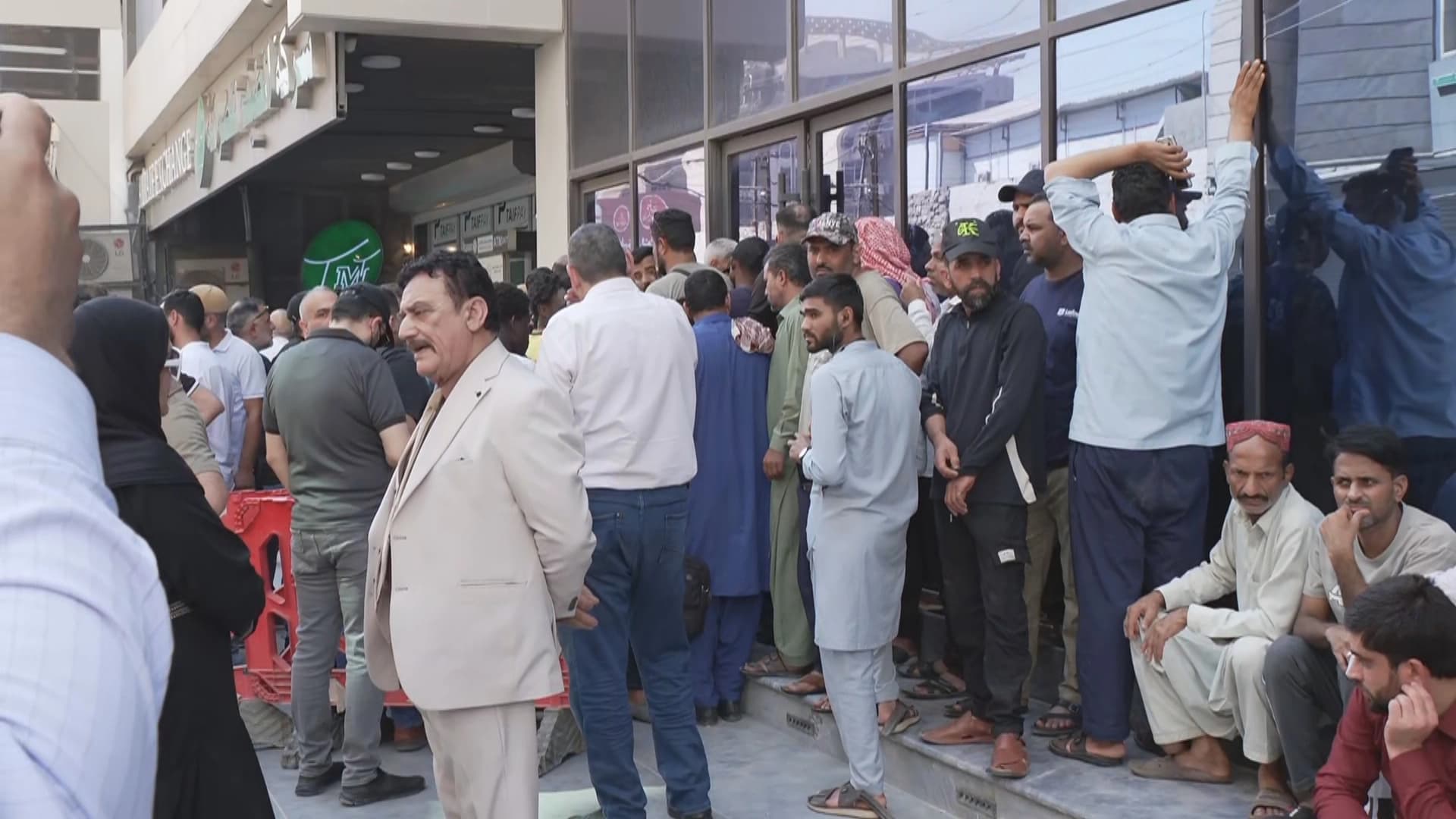

ERBIL, Kurdistan Region - Clients of the US-sanctioned Altaif Islamic Bank gathered outside its Baghdad headquarters on Sunday to demand access to their funds amid a liquidity crisis that prompted the Central Bank of Iraq (CBI) to place the institution under guardianship.
On Sunday, Iraqi and foreign clients, including nationals from Kenya and Pakistan, protested after being unable to withdraw their deposits or receive interest payouts. Some depositors had sold assets, including gold and secondary properties, to invest in the bank for its high interest rates.
"My problem is I have a deposit in this bank, and the bank doesn't let us withdraw anything," a female client who deposited 90 million Iraqi dinars (approximately $68,000) told Rudaw’s Ziyad Esmail outside the bank.
"We used to have quarterly payouts on our deposits. The bank hasn't consistently paid us our payouts for a while now. We don't know what the fate of our deposited money is. We don't want payouts or profits," she said.
"I am fearful that I will lose the 90 million. We are all thinking that our efforts for years will be for nothing," she added.
The clients noted that the bank had previously maintained its payouts despite being sanctioned by the US over the alleged smuggling of dollars to Iran. "Despite the sanctions, they still paid our payouts. They treated their clients well," the client said.
Altaif Islamic Bank is among 28 Iraqi banks barred from dealing in US dollars due to concerns over the funneling of USD to Iran and a lack of compliance with Iraqi banking sector reform policies.
Ibrahim Moussa, a Kenyan national, told Rudaw he has been waiting four weeks to withdraw his savings of 3 million dinars ($2,270) to send home. "My mom is sick. She needs surgery due to kidney failure. I want money to send it home, and there is no money. Why?" Moussa said.
Clients urged the CBI to intervene and protect their deposits. “The Iraqi Central Bank should have gotten ahead of this issue and taken measures to prevent this crisis from spiraling out. One bank after another, this issue surfaces,” a client said.
In a September 3 decree directed at ministries, governorates, and licensed financial institutions, the CBI announced it had imposed a board of conservators on Altaif Islamic Bank after “ascertaining the existence of severe violations that affected the financial center of the bank and the funds of depositors.”
The decree, issued under Article 59 of the amended 2004 Banking Law No. 94, appointed Imad Mohammed Hamad as the statutory conservator for 18 months.
In a statement on its Facebook page, Altaif confirmed the conservatorship, saying the board assumed administrative tasks on Sunday.
“We would like to inform you that the Conservator Board assigned by the Central Bank of Iraq assumed administrative tasks officially today at the Taif Islamic Bank,” the statement read.
“We confirm that work is ongoing in a stable manner, and money will be released to clients after the completion of necessary organizational measures,” the bank added, promising further updates.
On Saturday, the CBI clarified that imposing stewardship is a normal procedure and does not mean the bank is bankrupt.
“Central Bank of Iraq’s exercise of its jurisdiction in imposing direct boards of conservatorship of stewardship on a licensed bank doesn’t mean the bank’s bankruptcy, as circulating on social media,” the CBI said in a statement. "Rather, it is a precautionary legal oversight measure to ensure the bank’s health and stable operations in general and the protection of the rights of depositors in particular.”
The bank asserted that clients' funds were protected and that the safety of deposits was of high importance. “The Iraqi banking sector possesses sufficient liquidity to enable it to manage its affairs adequately and under all possible pressure,” the bank said, claiming that its ratio of liquid assets to short-term liabilities exceeded 60 percent.
However, clients warned of broader economic repercussions. “The government calls on citizens to keep their money in banks. Issues like this make citizens lose confidence in banks. This will result in a liquidity crisis, and right now, there is the whole issue of the economic crisis due to what is happening in the Strait of Hormuz," a client said, adding they did not know what their next step would be if the issue remained unresolved.
The lack of confidence in Iraq’s banking sector is reflected in the volume of cash held outside the system.
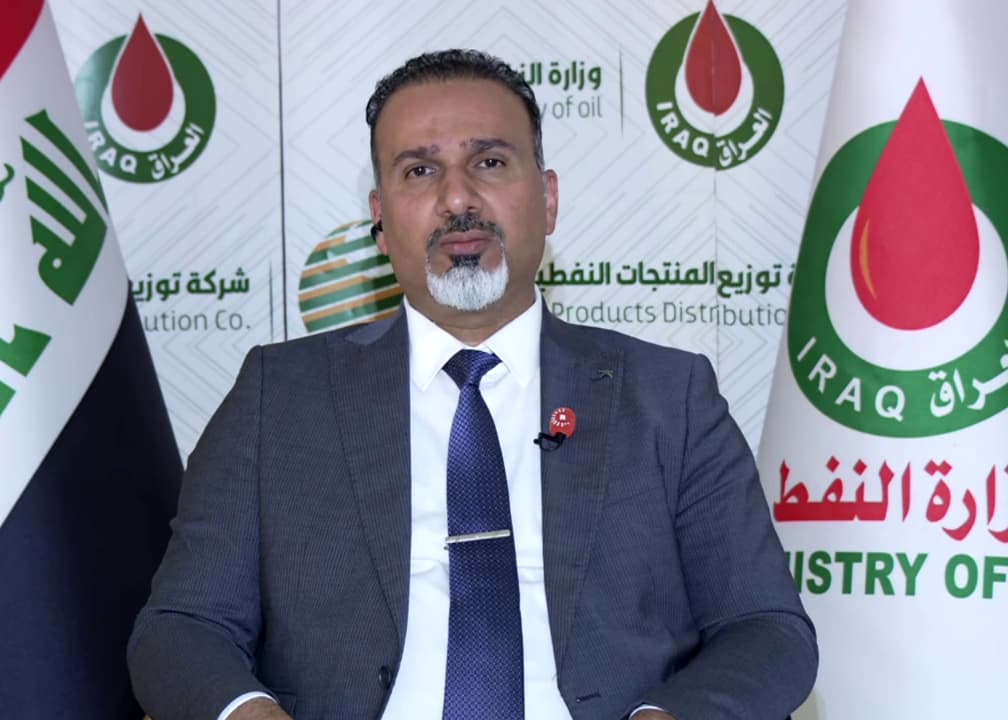
According to Dhiya Ta’ai, head of the Exchange Offices Syndicate, there is a shortage of money in circulation, with nearly 80 percent of printed cash remaining outside banks. “That is due to low trust in the banking system," Ta'ai said, estimating that nearly 90 trillion dinars (around $68 billion) is held by households, out of the 120 trillion dinars ($91 billion) printed.
"Despite efforts to remedy this, regional tensions [and] the conflict between Iran and US directly impact cash in circulation,” he added.
Ta'ai predicted it will take Iraq a year to recover from the economic deficit caused by the recent closure of the Strait of Hormuz.
"There is a slowdown in the currency market. The value of the Iraqi dinar against the USD remains impacted by regional conditions and domestic decisions, not supply and demand,” Ta’ai said.