
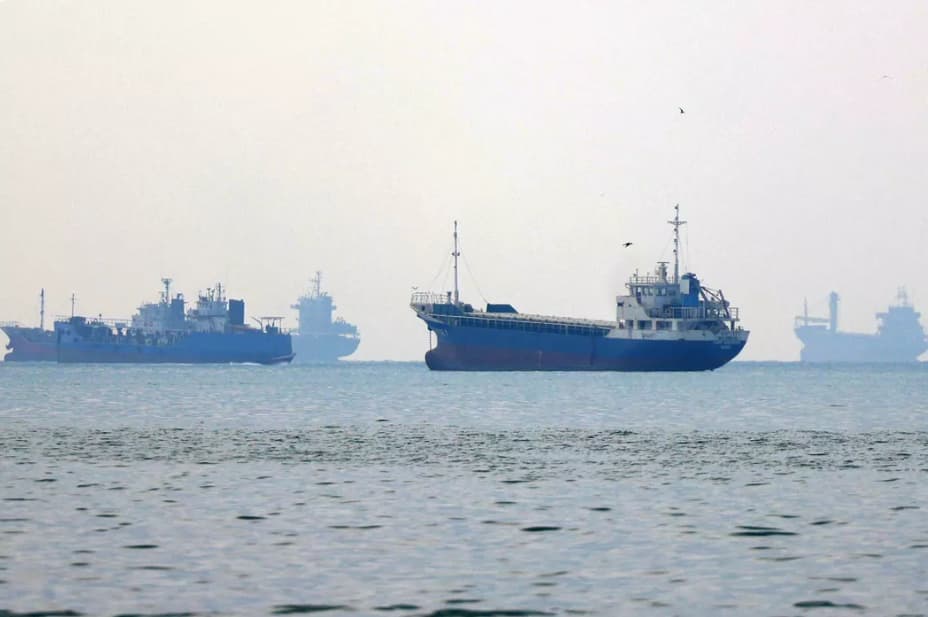

ERBIL, Kurdistan Region - Iraq continues to sell its crude oil at a discount of 10 to 20 percent as daily exports recover to around 3 million barrels, with higher shipping costs and security risks around the Strait of Hormuz weighing on sales.
“Discounts continue and vary per the buying company. The range is from 10 to 20 percent. The discount is a compensation for the security risks that exist in the Strait of Hormuz. Transport and insurance companies are given the discount,” Uday Awad, head of the federal parliamentary finance committee, told Rudaw’s Malik Mohammed on Sunday.
Awad said Iraq is currently exporting around 3 million barrels of oil per day and described the level as very good and close to pre-crisis volumes.
Iraq exported around 3.4 million barrels of oil per day in February, before the conflict disrupted shipping through the Strait of Hormuz. Most of Iraq’s crude exports pass through the strategic waterway.
The disruption sharply reduced Iraq’s exports and forced Baghdad to seek alternative routes and arrangements to keep its crude moving. Prime Minister Ali al-Zaidi said in Berlin last week that Iraq could not remain dependent on a single export corridor and that Baghadad was working to diversify its routes.
Shipping costs have also surged. The Financial Times reported this week that the cost of hiring a very large crude carrier (VLCC) capable of carrying around two million barrels has exceeded $1.2 million a day on Middle East-to-Asia routes. VLCC rates had generally ranged between $20,000 and $50,000 a day in 2025, while rates reached about $120,000 a day in February 2026 before the current conflict began, according to the Baltic Exchange, a UK-based maritime market information company.
Iraq is offering the discounts to buyers as it seeks to maintain exports despite the risks associated with shipping through Hormuz.
Awad said the continued flow of oil revenues was allowing the government to maintain salary payments.
“Salary payments continue, and there are no issues. The salaries of employees are protected and guaranteed,” he said.
Iraqi government spokesperson Haider al-Aboudi announced Saturday that Iraq had reached an agreement with the US to continue receiving cash dollar shipments, with a new shipment expected in the coming days. He attributed the agreement to improvements in Iraq’s monitoring of dollar distribution and the expansion of electronic payment systems.
Iraq’s oil revenues are held in dollar accounts at the Federal Reserve Bank of New York.The Central Bank of Iraq (CBI) has historically used the cash dollar shipments to meet domestic demand for dollars.
The dinar has also fluctuated against the US dollar amid mounting economic pressures. After trading at around 1,590 dinars to the dollar on the informal market last week, it strengthened to around 1,550 in Erbil on Sunday. The official exchange rate stands at 1,310 dinars to the dollar.
.jpg&w=3840&q=75)
