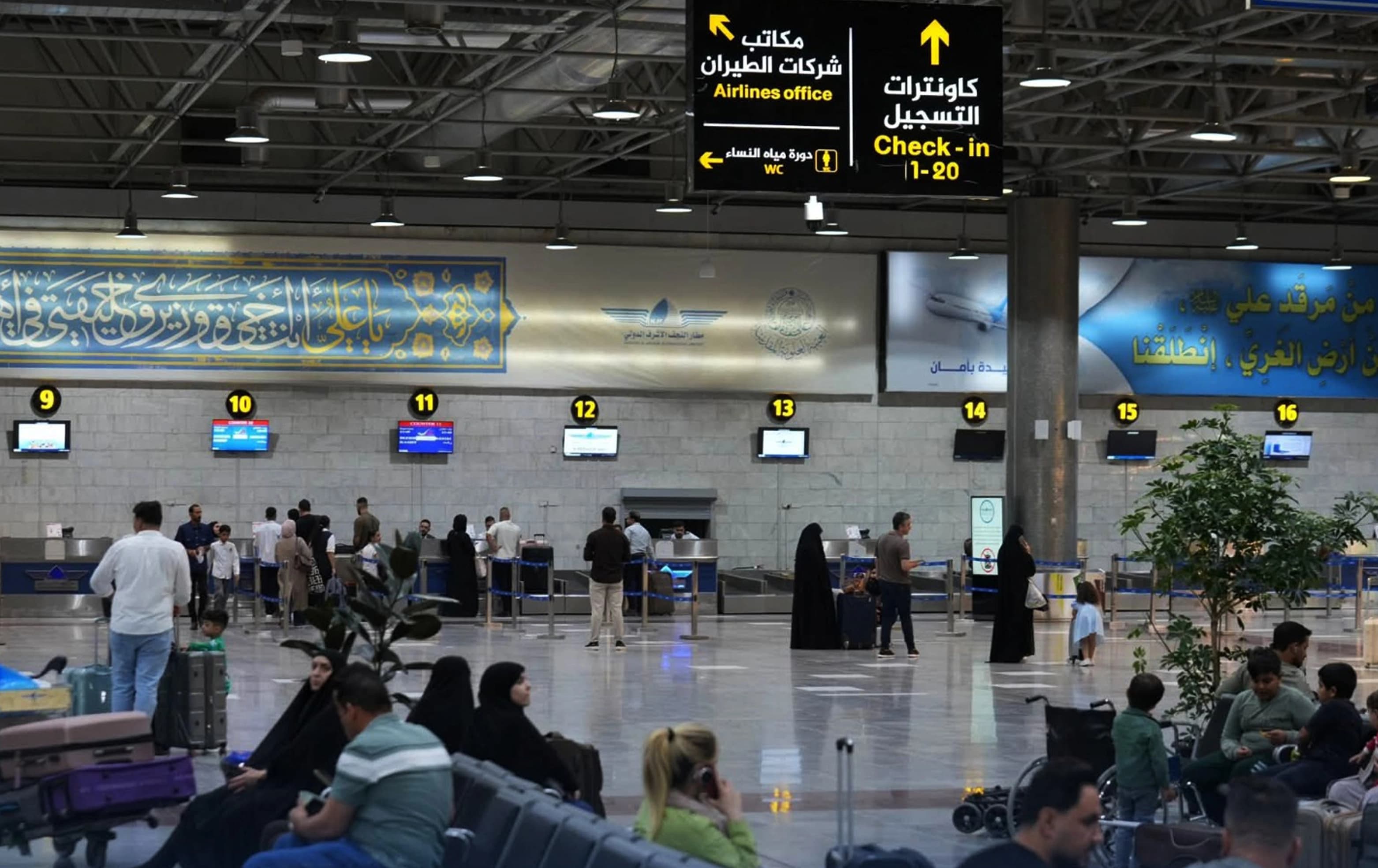

ERBIL, Kurdistan Region - Iraqi Airways will resume flights from Najaf in southern Iraq to at least three Iranian cities in the coming days, the state-owned carrier announced Monday, after Baghdad secured a US waiver allowing up to 40 daily flights to and from the shrine province despite tightened sanctions on Iran.
“The new operational plan will include regular daily flights” from Najaf International Airport to Isfahan, Mashhad, and Tehran on Thursday, Iraqi Airways said in a statement also shared by Baghdad’s transport ministry, citing efforts to “reactivate air traffic and strengthen air connectivity” between Iran and “various regional destinations.”
The arrangement will aid “smoother passenger travel and provide consistent air transport options between Iraq and Iranian cities,” the statement added.
The statement comes a day after a media official from Najaf airport told Rudaw on Sunday that the first Iranian civilian plane landed in Iraq since a US deadline for secondary sanctions on Iran's aviation sector took effect in late September.
“After a nine-day suspension of flights, the first plane belonging to Iran's Caspian Airlines arrived at Najaf airport from Tehran this evening,” Mustafa Kubba said.
Iraqi Prime Minister Ali al-Zaidi’s office announced Friday that the US had issued an exemption allowing up to 40 daily flights between Najaf and Iranian airports, though officials at the holy city’s airport say they cannot reach that number due to a fuel shortage.
Iraqi Foreign Minister Fuad Hussein followed with a statement from Washington, where he met US Treasury Secretary Scott Bessent to discuss “the sanctions imposed on Iran and their potential impacts on Iraq.”
“We discussed in depth the impact of the sanctions on Najaf Airport in particular, given its vital particularity for Iraq,” Hussein said in a post on X, adding that Bessent “understood” the request and “agreed to exempt flights to the holy sites from the sanctions.”
Airports across Iraq, including in the Kurdistan Region, have complied with the expanded US sanctions, part of the broader Operation Economic Outcast launched in August to step up economic pressure on Tehran.
As a result, companies providing ground-handling services at the airports have stopped servicing Iranian aircraft.
The suspension triggered demonstrations in several Iraqi provinces, including Baghdad, Basra, Maysan and Najaf, as passengers and Iran-backed groups called for flights to resume.