
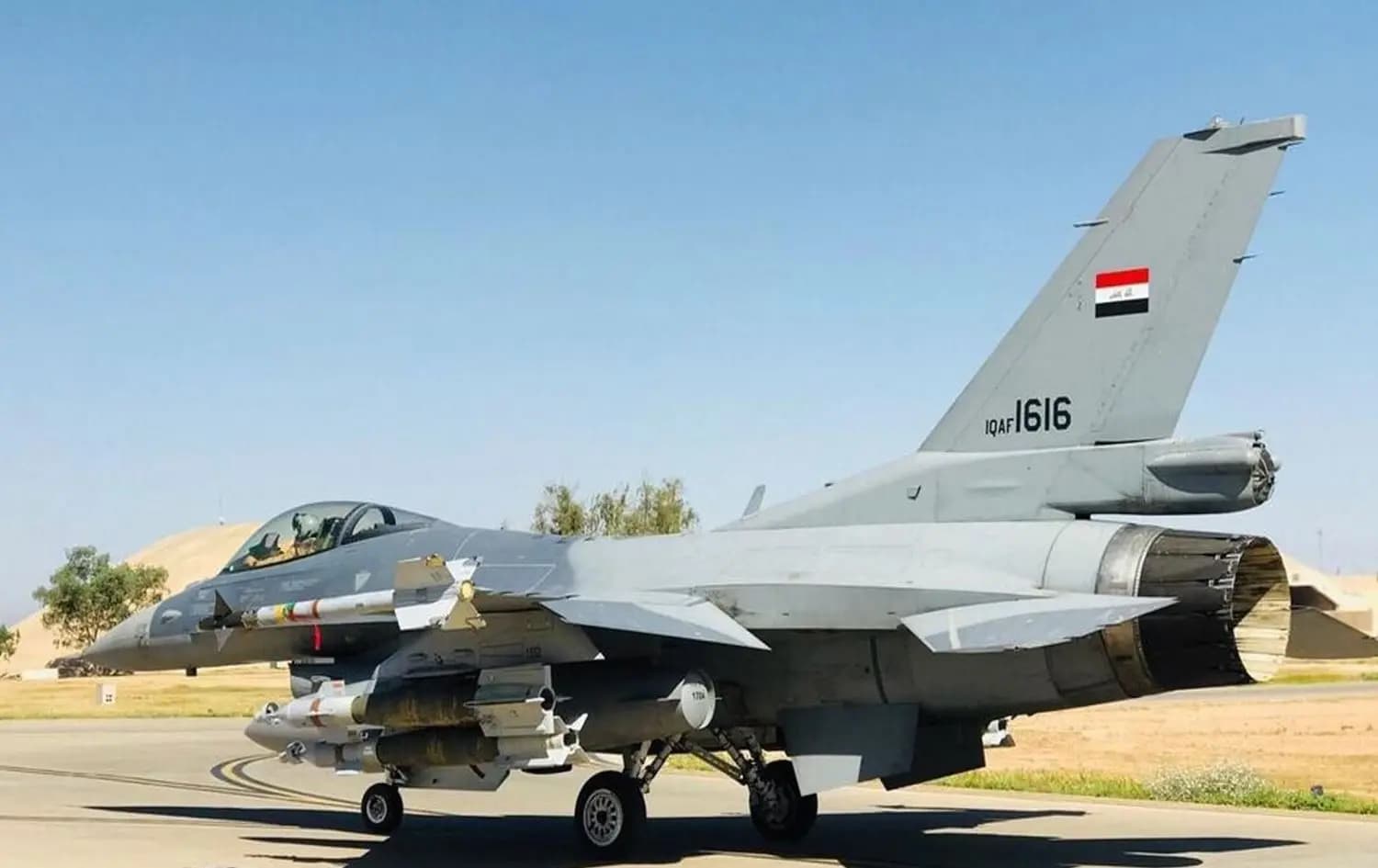

ERBIL, Kurdistan Region - Iraqi F-16 fighter jets carried out two airstrikes targeting an alleged Islamic State (ISIS) hideout in Diyala province late Sunday, destroying the site as concerns grow over the group’s movements in areas where security gaps persist between Iraqi forces and Kurdish Peshmerga.
The Security Media Cell said in a statement late Sunday that the strikes targeted a hideout belonging to ISIS remnants in the Narin area, within the Diyala Operations Command.
The hideout was “completely destroyed,” the cell said, adding that the operation was conducted based on “accurate and verified intelligence” provided by the Directorate of Military Intelligence, in coordination with the Air Reconnaissance and Surveillance Center under the Office of the Commander-in-Chief of the Armed Forces.
The strikes come amid renewed warnings about increased ISIS activity in disputed areas between Baghdad and the Kurdistan Region, particularly following the withdrawal of the US-led Global Coalition to Defeat ISIS from Iraq on September 30.
President Masoud Barzani warned before the US withdrawal on September 30 that there were no guarantees that ISIS would not re-emerge.
Mazen Gharib, a member of the Iraqi parliament’s Security and Defense Committee, told Rudaw’s Gashaw Khalid on Saturday that ISIS movements had intensified around Daquq and Hawija in Kirkuk province, where the group maintains active detachments.
He warned that the militants were exploiting the withdrawal of foreign forces to move more freely, while questioning the effectiveness of Iraqi military aircraft in deterring the group.
Gharib said ISIS militants were “only afraid of US and French warplanes because those aircraft fly at very high altitudes and are quiet. However, because Iraqi planes fly low and make noise, the militants easily detect them and hide.”
However, Major General Yahya Rasool, spokesperson for Iraq’s Ministry of Defense, dismissed the prospect of a repeat of the security collapse that accompanied ISIS’s territorial expansion in 2014.
“What happened in 2014 is impossible to repeat,” Rasool told Rudaw on Saturday, citing Iraq’s enhanced military capabilities and advanced drone technology.
ISIS seized large swathes of Iraqi territory in 2014 before being declared territorially defeated in 2017. The group has since continued to carry out bombings, hit-and-run attacks and abductions across several Iraqi provinces.
The coalition formally concluded its 12-year military mission in Iraq on September 30 under an agreement between Baghdad and Washington, with Iraqi officials describing the withdrawal as a step toward restoring national sovereignty while security challenges persist in disputed territories.
RELATED: ISIS exploits security gaps after coalition withdrawal: Lawmaker
