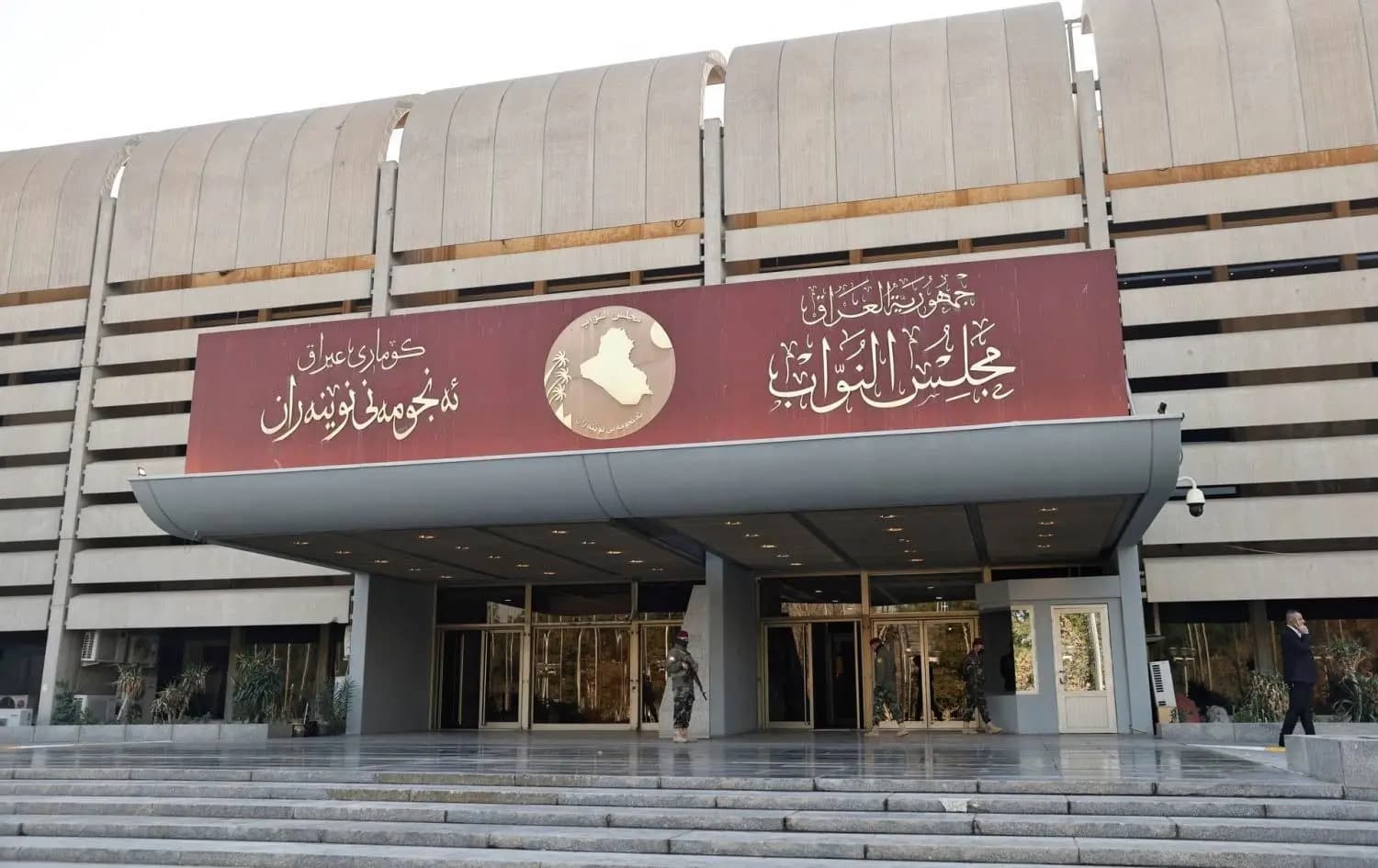

ERBIL, Kurdistan Region - Iraq's parliament is scheduled to vote Thursday on nominees for nine vacant ministries and four deputy prime minister posts, amid lingering disagreements over cabinet appointments and opposition from some Shiite factions to the creation of deputy prime minister positions.
“There are no problems so far. God willing, the remaining cabinet will be voted on today as scheduled,” Shaker Mahmoud, also known as Abu Turab, a lawmaker from the Badr bloc, told Rudaw's Arez Khalid on Thursday.
Mahmoud said disagreements over the defense and planning ministries appeared to have been resolved, according to information available to him. However, he acknowledged that voting on ministries still subject to disputes could be postponed until political parties reached an agreement.
The vote is intended to complete Prime Minister Ali al-Zaidi's cabinet, which has remained partially vacant since parliament approved his government on May 14. But a separate proposal to appoint four deputy prime ministers has exposed divisions within the ruling Shiite Coordination Framework, despite an agreement to distribute the posts among Iraq's major political blocs.
The nine vacant portfolios are interior, defense, higher education and scientific research, planning, labor and social affairs, youth and sports, culture, migration and displacement, and construction and housing.
Three have been allocated to Sunni parties, four to Shiite parties, one to Kurdish parties and one to Christian representatives.
Parliament is also expected to vote on four deputy prime minister nominees, with two positions allocated to Shiite parties and one each to Kurdish and Sunni parties.
According to information obtained by Rudaw, the nominees are Laith al-Khazali of the Sadiqoun Movement, the political wing of Asaib Ahl al-Haq; Mohsen al-Mandalawi, head of the Al-Asas Coalition; Mohammed Tamim of the Sunni Taqadum Party; and Fares al-Barifkani of the Kurdistan Democratic Party (KDP).
However, the proposal has drawn opposition from several Shiite factions, including the Huquq bloc, the political wing of Kataib Hezbollah, which announced Wednesday that it would boycott Thursday's parliamentary session.
The Nasr Coalition, another member of the Coordination Framework, has also objected to the appointments.
Nasr spokesperson Aqil al-Rudaini told Rudaw’s Hastyar Qadir that the proposed positions lacked clearly defined responsibilities and were not included in the cabinet's internal regulations. He also argued that creating additional posts contradicted government efforts to reduce spending.
The deputy prime minister positions were abolished in 2018. Iraq previously had two deputies, representing Kurdish and Sunni parties.
Seeking to address concerns over government spending, Zaidi said Tuesday that the four new positions would carry no salaries or allowances and that no additional employees would be recruited for their offices.
Rudaini dismissed the assurance, describing it as an attempt to mislead the public and insisting that anyone performing an administrative function would require compensation.
Despite the objections, he said the opposing factions were unlikely to secure enough votes to block the appointments.
The dispute could also affect voting on ministerial nominees.
Hussein Shaikhani, a member of Sadiqoun's political bureau, told Rudaw's Hastyar Qadir on Thursday that the deputy prime minister nominees would be presented first.
He warned that his bloc would not support ministerial candidates from parties that voted against its nominee for deputy prime minister.
“We are confident that our candidate will secure the necessary votes,” Shaikhani said, adding that Sadiqoun would closely monitor how other blocs voted.
Rudaw has also learned that some lawmakers from former Prime Minister Nouri al-Maliki's State of Law Coalition could vote against the deputy prime minister appointments.
Shaikhani told Rudaw that Sadiqoun had nominated Mohammed Raad Mousawi for the labor and social affairs ministry.
He said the State of Law Coalition had nominated Yasser al-Maliki for interior and Haider Bahadli for higher education and scientific research, both ministries allocated to the coalition under the government formation agreement.
Mahmoud said Badr strongly supported the State of Law candidate for interior, whom he identified as Sakheer, adding that the nominee had the backing of most Coordination Framework parties.
Rudaw obtained several other names from two senior sources within the Coordination Framework on Wednesday evening.
The Hikma Movement has nominated Safa Kinani for youth and sports, while the Sunni Azm Alliance has nominated Mohammed Nuaimi for planning.
The KDP has nominated Rebaz Hamlan for construction and housing.
For defense, the Sunni Hasm Alliance has presented Nayef Shammari and Ali al-Araji as candidates, while Zaid Ali and Yassin Issawi are under consideration for culture, a portfolio allocated to Azm.
Mohammed Fahdawi, an Azm spokesperson, told Rudaw that the alliance had submitted three candidates for each of its allocated ministries because it had not reached a final decision on its preferred nominees.
Mahmoud said Badr supported the candidates presented by Kurdish and Sunni parties, including the KDP nominee for construction and housing.
“We, as the Badr bloc, support the candidates of all the blocs and have no disagreements with any side,” he said, calling on political parties to resolve their differences before parliamentary sessions to prevent further delays.
The migration and displacement ministry remains unresolved because of disagreements among Christian parliamentary blocs over which faction should nominate the minister.
Sami Oshana Gorgis, a lawmaker from the Soyana bloc, told Rudaw that Zaidi had not yet requested a nomination from his faction.
Gorgis said Badr leader Hadi al-Amiri had met Christian representatives at the prime minister's request and presented three possible ways to resolve the dispute.
The options include awarding the ministry to the bloc endorsed by five Christian-quota lawmakers, allowing parliament to choose the nominee, or giving Zaidi the authority to nominate an independent Christian candidate.
Soyana holds three seats of the Christian quota, while the Babylon Movement holds the other two.
Gorgis claimed that Soyana had secured the necessary endorsements, including signatures from lawmakers representing Yazidi and Fayli Kurdish quota seats, and submitted them to parliament.
Kaldo Ramzi, head of the Soyana bloc, insisted that his faction was entitled to the ministry as the largest Christian parliamentary bloc.
He warned that Soyana would “take a stance” if denied the portfolio and rejected a proposal for parliament to choose between competing candidates.
Rudaw understands that Zaidi could nominate an independent Christian candidate if the factions fail to resolve their differences before the vote.
Separately, Shaikhani said political parties were discussing a proposal to create an additional ministry for artificial intelligence and the digital economy.
Rudaw has learned that Mohammed Sahib al-Darraji is among the leading candidates to head the proposed ministry if it is established.