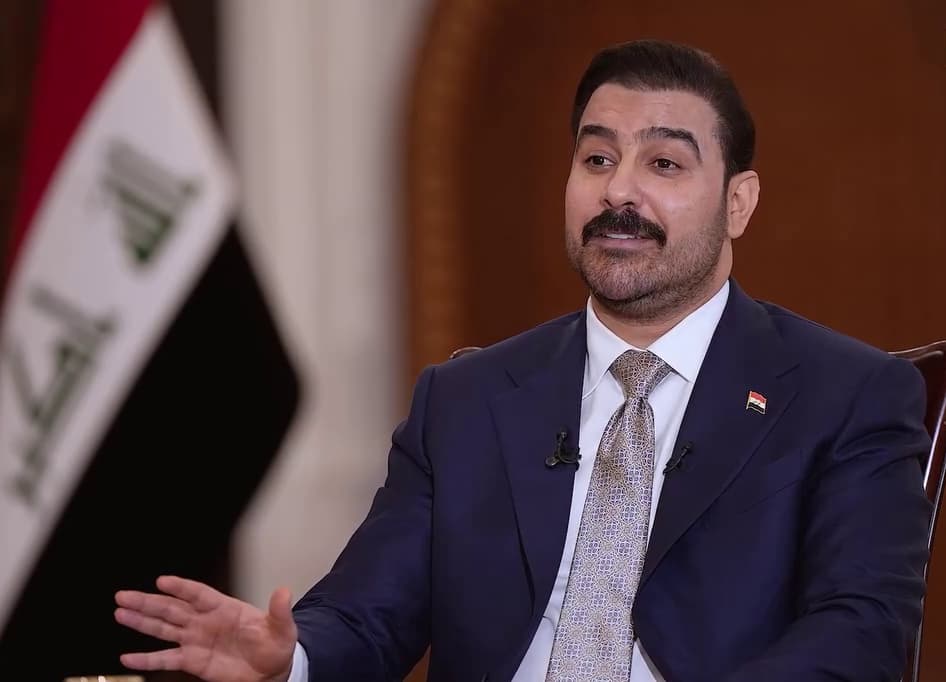

ERBIL, Kurdistan Region - Iraqi Prime Minister Ali al-Zaidi said Friday that Iraq would soon be free of armed groups, with weapons exclusively in the hands of state security forces, as he defended his government’s fiscal measures and anti-corruption campaign.
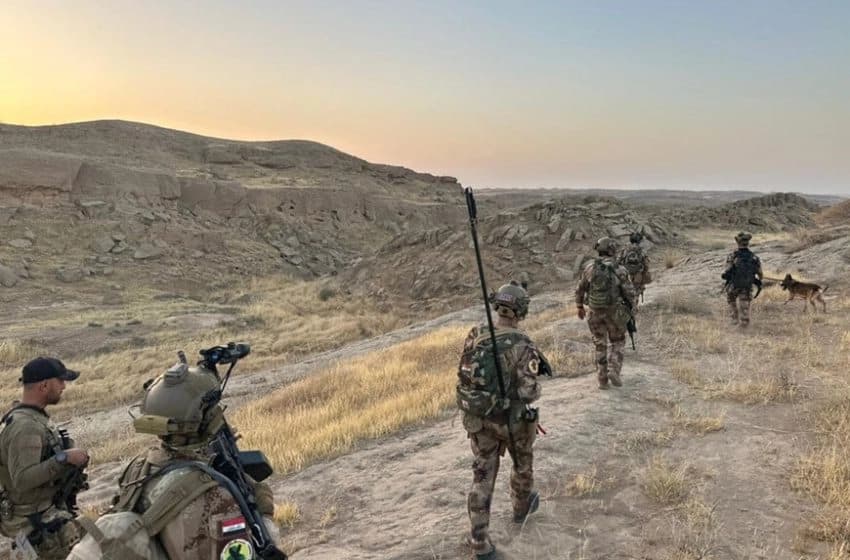
In an interview with the state-run Iraqi Media Network (IMN), Zaidi said that "By June 30, 2027, no weapons will remain outside the framework of the state," adding that "Iraq will soon, God willing, be a state free of factions, like other countries in the world, and weapons will be exclusively in the hands of the Iraqi security forces.”
His remarks come amid continuing disagreements between the Iraqi government and powerful pro-Iran armed factions over Baghdad's efforts to bring all weapons outside state control under government authority.
The government initially sought to resolve the issue by September 30, coinciding with the end of the US-led coalition's military mission in Iraq, but later extended the deadline to June 30, 2027. Several Iran-backed factions have disputed the timetable, saying that no final agreement has been reached.
Under a 2024 agreement between Washington and Baghdad, the US military formally ended its Operation Inherent Resolve mission in Iraq on September 30, concluding a 12-year campaign against the Islamic State (ISIS) from within the country and shifting bilateral security cooperation to a new framework.
"The absence of foreign forces means the absence of the justification that was presented for carrying weapons outside the framework of the state," Zaidi said, emphasizing that "there is currently no American soldier in Iraq, neither within combat forces nor in the capacity of military advisors.”
Zaidi revealed that understandings have been reached with five factions to lay down their arms, saying that work has been completed with three of them. “Work is underway to complete procedures with two other factions in the coming period," he said.
His remarks also come as armed factions remain divided over bringing weapons under state control. While Kataib Sayyid al-Shuhada offered conditional support for arms control frameworks, Harakat al-Nujaba and Kataib Hezbollah continue to reject compliance with the government's timetable.
The group previously launched hundreds of drone and missile strikes under the Islamic Resistance in Iraq umbrella against American targets and diplomatic facilities.
Fiscal policy and disruptions to oil exports
Turning to economic policy, Zaidi defended his cabinet's recent adjustments to the national currency's value against the US dollar to safeguard public finances.
"The choices before the government were all difficult, but we had to take the necessary measures to protect the financial situation," the prime minister stated, noting that "the mistake was not in the government's decision to raise the dollar exchange rate, but in the previously taken decision to lower the exchange rate.”
The new exchange rate comes amid mounting fiscal pressures, with Iraq recording a budget gap of more than 29 trillion dinars ($22.4 billion) in the first seven months of 2026, according to Finance Ministry figures published earlier this month.
In early October, Iraq’s Council of Ministers approved a de facto devaluation of the Iraqi dinar, raising the official exchange rate from 1,320 dinars per US dollar to 1,520 dinars per US dollar for final beneficiaries.
Alongside currency adjustments, Zaidi outlined long-term targets to diversify state income beyond the energy sector, stating that his government "aims to raise the contribution of non-oil revenues to 30 percent of total revenues over the remaining years of its term.”
Since the US-Israeli war against Iran began on February 28, Iraq has been working to restore oil revenues severely affected by disruptions to shipping through the Strait of Hormuz, the country’s principal oil export route.
Commenting on Tehran's actions in the maritime corridor, Zaidi stated that "the Iranian goal in closing the strait does not relate to Iraq specifically, but rather is to exert pressure by raising energy prices in global markets.”
Oil revenues account for at least 88 percent of Iraq’s total state income, while around 90 percent of its pre-war crude exports - approximately 3.5 million barrels per day - passed through the Strait of Hormuz via the country’s southern ports.
Addressing the impact of the Strait of Hormuz closure on Iraq’s crude exports, Zaidi stressed the need to overhaul the country’s export infrastructure to prevent similar disruptions in the future.
"The current crisis provided an important lesson for Iraq, and it must be utilized to build an integrated system for transporting and exporting oil, so the repercussions the country faced are not repeated," he said.
Baghdad has sought to mitigate the disruption by diversifying export routes, including resuming shipments of Kirkuk crude through the Kurdistan Region to Turkey's Ceyhan port and transporting smaller volumes by tanker trucks through Syria.
"The government has laid out a plan to gradually raise Iraqi oil production capacity... targeting a production of 10 million barrels per day by 2032," Zaidi stated.
Zaidi said closing the Iraqi-Iranian border would harm both countries, warning that such a move amid the current crisis would amount to Iraq imposing an economic blockade on itself rather than on Iran. “Closing the Iraqi-Iranian borders is not in the interest of Iraq nor in the interest of Iran,” he said.
Anti-corruption efforts
Zaidi addressed the personal and political toll of his administration's ongoing anti-graft drive, stating the continuation of Operation Dawn "will cost me the loss of many friends and loved ones.”
"An official is faced with two choices: either preserve their relationships and friends and overlook the people's money, or draw clear lines for everyone when it comes to public funds," he stated.
"The government adopted the principle of 'prevention is better than cure' and worked through the Federal Board of Supreme Audit and the Federal Commission of Integrity to weaken opportunities for corruption and prevent it from occurring in the first place," Zaidi said.
Zaidi's statements come months after Operation Dawn, a large-scale nationwide anti-corruption campaign launched in late June by the prime minister in coordination with the Federal Commission of Integrity (FCoI).
In late August, government spokesperson Haider al-Aboudi detailed the financial results of the crackdown in comments to state media.
"The value of the funds, assets, or real estate recovered within the framework of the anti-corruption campaign is estimated at over 1.359 trillion dinars (over one billion dollars)," Aboudi told state media at the time.
Iraq ranked 136th out of 182 countries and territories in Transparency International's 2025 Corruption Perceptions Index, scoring 28 out of 100.