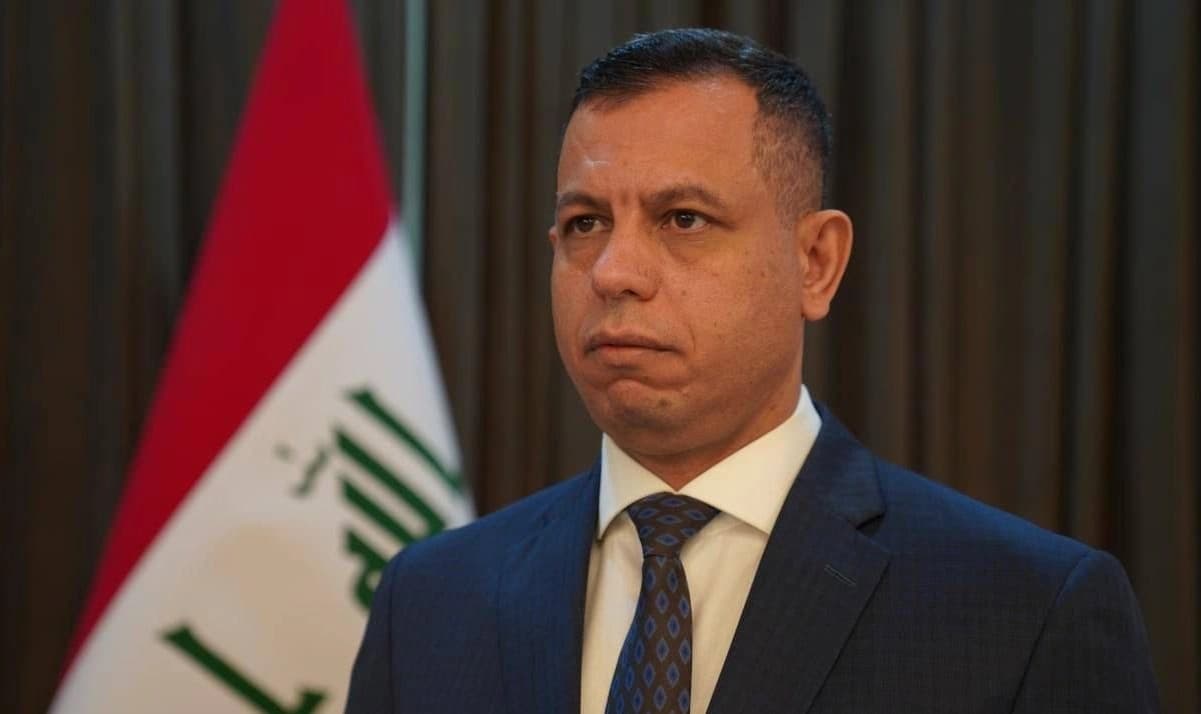

ERBIL, Kurdistan Region - Iraqi Prime Minister Ali al-Zaidi’s decision to remove Iraqi National Intelligence Service (INIS) chief Hamid al-Shatri on Monday is an effort by the premier to consolidate control over the country's most sensitive security posts rather than a reflection of the intelligence head's performance, an analyst specializing in Iraqi affairs said on Tuesday.
“This looks less like a verdict on Shatri's performance than a new prime minister taking control of the most sensitive posts in the state,” stated Arran Robert Walshe, adding that “on the same day, Zaidi replaced the director of his office and ended contracts of dozens of advisors, which reads as a new prime minister clearing the decks.”
The prime minister’s office on Monday ordered Shatri’s removal as head of Iraq's top intelligence agency, effective immediately. The document was signed by Rashad Hashim, head of the prime minister's office.
Shatri has led the Iraqi National Intelligence Service (INIS) since December 2024, following his appointment by then-Prime Minister Mohammed Shia al-Sudani. Despite holding sensitive security positions, he remains largely unknown to the general public.
He was among the leading candidates for the premiership and reportedly enjoyed broad political support for his bid. However, Zaidi ultimately secured the election and was formally appointed in May.
Walshe pointed to a broader trend of heading the INIS, noting that former Prime Minister Mustafa al-Kadhimi (2020 - 2022) retained control of the intelligence agency upon taking office, while his successor, Sudani, personally managed the service before appointing Shatri.
“This is in keeping with recent tradition rather than a break with it,” Walshe said, noting that other security leadership positions were reshuffled in June.
In June, Iraq’s former National Security Advisor Qasim al-Araji (July 2020 - June 2026) was removed from his position and replaced by Qasim al-Aboudi, while Araji was appointed as Zaidi’s security advisor.
“Shatri lasting this long is arguably the surprise,” said Walsh.
Shatri had several visits to Damascus during his career as the head of the INIS specifically following the ousting of the Syrian Dictator Bashar al-Assad in December of 2024. He also has played a major role in coordination with Riyadh following the late June US-Saudi joint airstrikes on Popular Mobilization Forces positions in Iraq.
“Shatri was Baghdad's main channel to Damascus and an interlocutor for Washington, so whoever replaces him inherits those files,” the analyst stated, noting that “no successor has been named …other than Zaidi taking up the post.”
Online reports suggest the post could go to a Sunni politician as part of an agreement among governing parties, with several candidates named, Walshe stated, explaining that “If that claim holds, the profile would be a Sunni figure acceptable to the Shiite Coordination Framework.”
Iraq's Shia-majority Coordination Framework bloc holds an outright majority of 175 seats in the 329-seat parliament. As the largest parliamentary bloc, the Framework controls the legislative agenda and remains the primary faction responsible for nominating the country's prime minister.
The Badr Organization, led by Hadi al-Amiri, is one of the oldest, largest, and most heavily integrated political and paramilitary factions within Iraq's ruling Shiite Coordination Framework.
“Badr has long had a strong hand in Iraq's security services, above all through the Interior Ministry, where Shatri himself headed intelligence and counter-terrorism in 2021,” said Walsh.
The analyst explained that prime ministers have typically kept the agency under close control, with some viewing it as a "check on Iran-aligned groups rather than an instrument of them," adding that Shatri's 2024 outreach to Damascus drew public criticism from senior Badr figures.
In January 2021, then-Prime Minister Kadhimi appointed Shatri as Director-General of Intelligence and Counter-Terrorism at the Ministry of Interior including oversight of the elite Falcons Intelligence Cell.
The removal of Shatri comes as the country navigates the regional conflict with Zaidi as Iraq stands at a delicate equilibrium during one of the most critical junctures in its modern history.
“The government is managing the country in exceedingly difficult economic circumstances, coinciding with a conflict among regional and international powers and complex security and political repercussions," Zaidi stated in an interview aired on the state-run Iraqi Media Network on Friday.