ERBIL, Kurdistan Region - Iraq's Security Media Cell on Thursday warned that legal action could be taken against people spreading sectarian rhetoric over the killing of former Sunni lawmaker Ahmed al-Alwani in Beirut, as Iraqi authorities disclosed further details about his final movements.
Iraq's Security Media Cell said its national committee tasked with combating sectarian, ethnic and racial incitement had monitored inflammatory statements surrounding the case and would “take the necessary legal measures against anyone proven to be involved in broadcasting or promoting speech that targets societal components, incites hatred and hostility, or threatens societal peace.”
“Anyone who violates the law and seeks to disrupt civil peace will be subject to legal accountability without exception or leniency,” the statement read.
“We regret Alwani's death, but it is not right to exploit people's blood to achieve interests at the expense of the country's security,” said Security Media Cell spokesperson Saad Maan according to statements carried by state-run Iraqi News Agency (INA).
Alwani, 57, was a prominent Sunni politician from Anbar who played a leading role in the 2012-2013 protests against the government of then-Prime Minister Nouri al-Maliki.
He was arrested in December 2013, sentenced to death in 2014, and released in April 2025 under Iraq's General Amnesty Law after more than a decade in prison.
Maan told the INA on Thursday that authorities had established details of Alwani's movements in Beirut through coordination with Iraq's ambassador and Lebanese security agencies.
Alwani traveled from Erbil to Beirut on Thursday and took a taxi from the airport to a hotel near the city's Raouche area, where he checked into a room, Maan relayed.
“Less than an hour later, he left the room and checked out of the hotel,” Maan said, adding that when staff asked why he was leaving, Alwani replied that “friends had arrived and he would go with them.”
Hotel employees told investigators that the individuals spoke with a Syrian accent and that Alwani left with them in a white Range Rover. “This indicates that the people he left with knew him or had a friendship with him,” Maan said.
Alwani later contacted his family twice. His last call came from an apartment in Beirut's Tariq al-Jadida neighborhood, which Maan described as a predominantly Sunni area.
The Iraqi embassy became involved after Alwani's cousin, Azhar al-Alwani, contacted the ambassador on Tuesday morning to report that the former lawmaker was missing.
The embassy asked the family about his last contact with him, including “when the last call took place and whether it was audio only or a video call,” Maan said.
The embassy subsequently contacted Lebanese security agencies and filed an official report to initiate an investigation.
“At that point, there were no indications that he had been killed,” Maan said, explaining that the authorities needed to formally register his disappearance.
Later that day, Lebanon's director general of public security informed the Iraqi ambassador that investigators had found a body inside an apartment in the Beirut area of Jadida. Initial information suggested the deceased was Syrian because the apartment had been rented by a Syrian national, Maan said.
The Iraqi ambassador, accompanied by Alwani's relatives, the consul and embassy officials, traveled to a government hospital in Zahle to examine the body, which had begun decomposing and had lost some of its features.
Lebanese investigative judge Ahmed Rami al-Hajj ordered further procedures, including DNA testing, to establish the body's identity. Alwani's relatives subsequently identified him, and his son arrived in Lebanon on Wednesday to provide a DNA sample.
Iraqi authorities were awaiting the test results before arranging the transfer of Alwani's body to Iraq, Maan said.
The Lebanese owner of the apartment has also been detained as a precautionary measure.
According to Maan, the owner told investigators that the tenants had promised to provide their identification documents later and paid him $200 per night, twice the usual rate. He said the owner returned on Sunday and Monday but found nobody at the apartment before reporting an unusual smell to police.
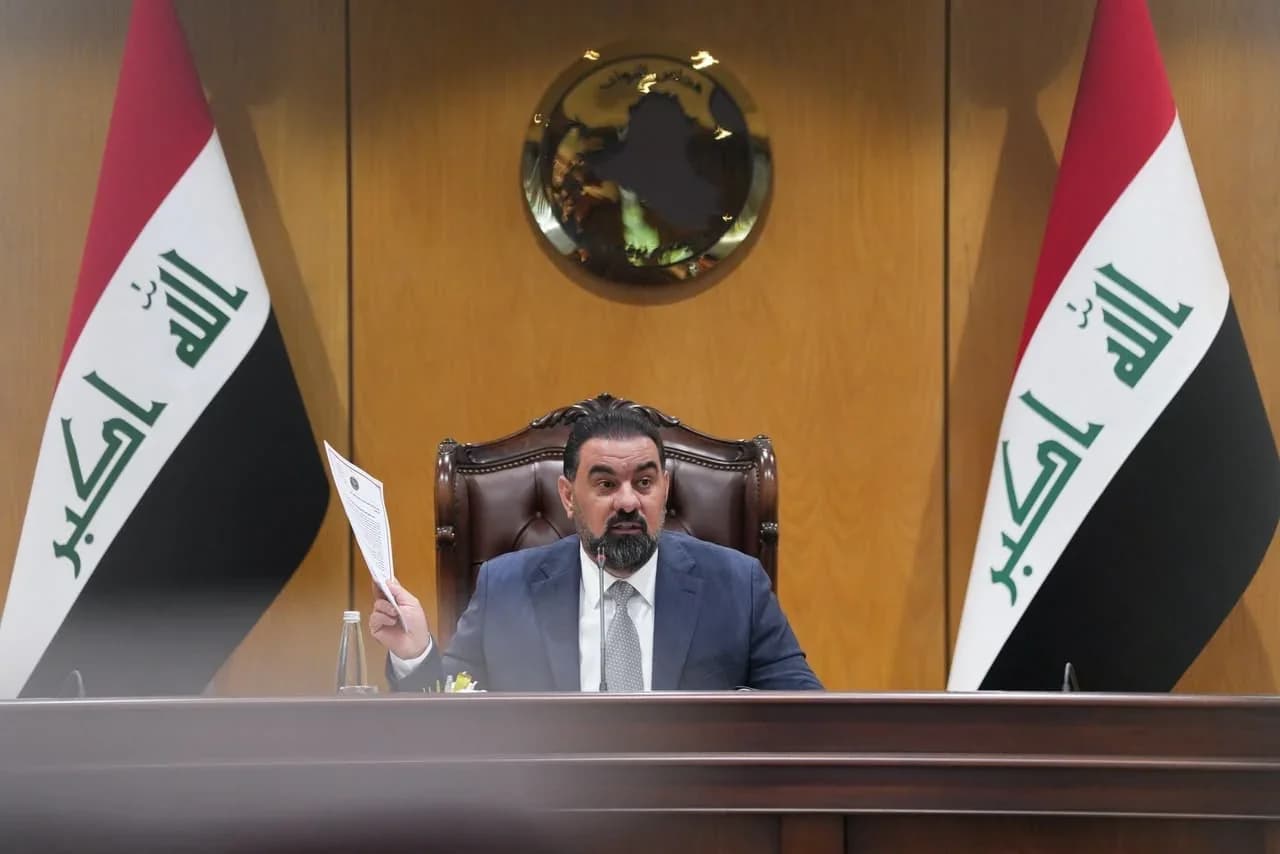
The killing has drawn strong reactions from Sunni political figures in Iraq, with Parliament Speaker Haibat al-Halbousi and other politicians calling for accountability from Baghdad and Beirut and demanding that the circumstances be established.