
ERBIL, Kurdistan Region - An Iraqi judicial committee accompanied by government investigators headed to Jurf al-Sakhr on Tuesday to examine alleged oil smuggling operations. A senior figure of Kata'ib Hezbollah - one of the most powerful Iran-aligned factions in Iraq which maintains a heavy presence in the town - warned that the issue could ignite tensions, while a Shiite political official claimed an agreement had been reached to replace the faction's forces within two weeks.
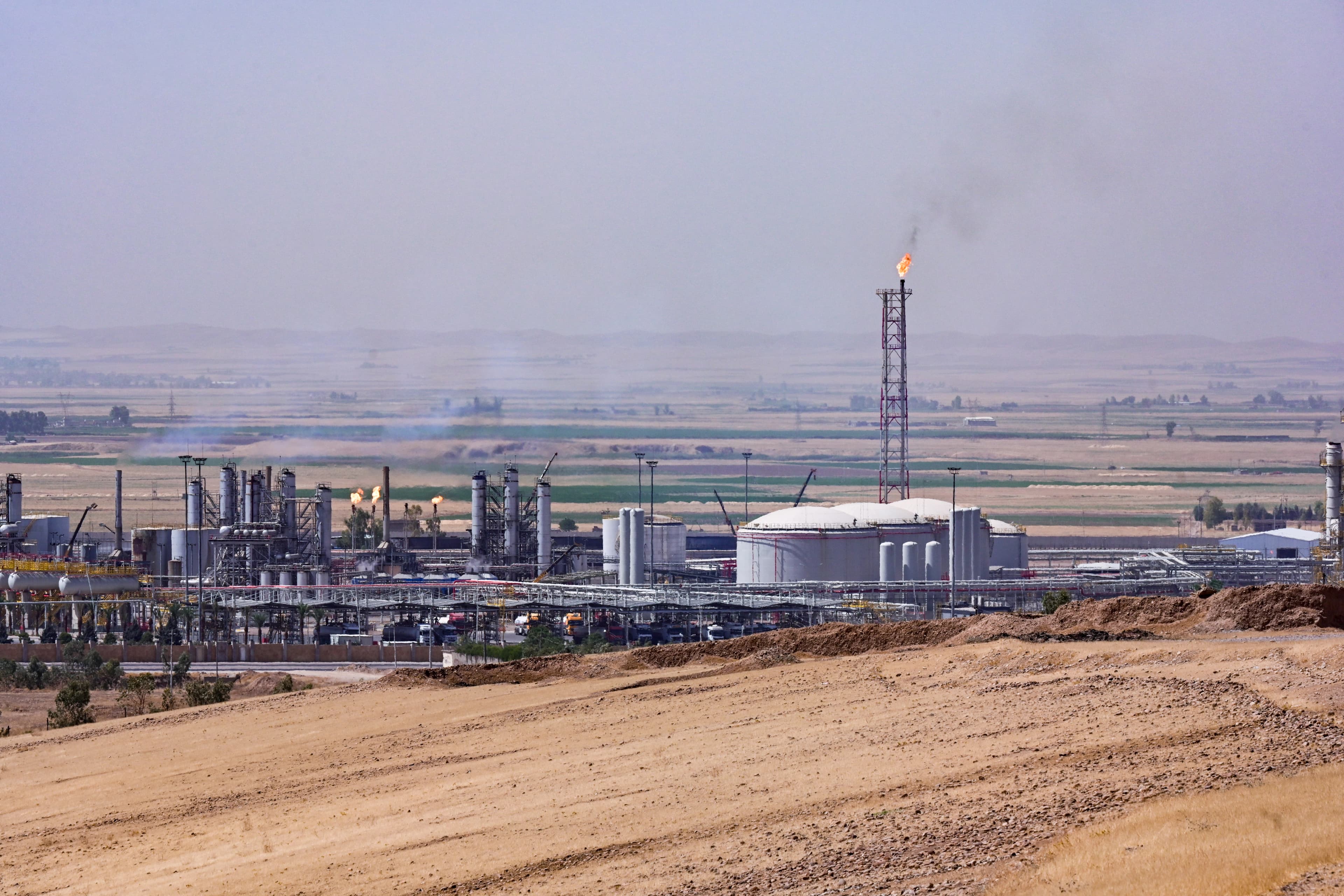
“The judicial committee, accompanied by the government committee, headed to Jurf al-Nasr in Babil province just south of Baghdad to conduct an on-site inspection concerning the oil smuggling case, investigate the circumstances and identify the locations of violations,” an official told the state-run Iraqi News Agency (INA).
Jurf al-Sakhr, also known as Jurf al-Nasr, has remained a stronghold of Kata'ib Hezbollah since its recapture from the Islamic State (ISIS) in 2014. The government has intensified efforts to reassert authority over the area following the publication last week of intelligence reports alleging organized oil theft.
Meanwhile, Sheikh Abu Talib al-Saeedi, a senior figure in Kata'ib Hezbollah, warned during remarks to reporters in Jurf al-Sakhr on Tuesday that the standoff between Prime Minister Ali al-Zaidi's government and the pro-Iran faction risked plunging Iraq into further turmoil.
“Iraq is on the cusp of a major crisis, and some want this crisis exacerbated,” Saeedi said, warning that political decisions could lead to "bloodshed" between Kata'ib Hezbollah fighters and Iraqi security forces.
He accused Zaidi of engaging in “political adventurism” that risked pitting forces that had fought alongside one another against ISIS.
“Over the past 12 years, since the fatwa of Grand Ayatollah Sistani … until now, we have been on the same side,” Saeedi said, referring to the 2014 religious decree calling on Iraqis to defend the country against ISIS.
He recalled that Kata'ib Hezbollah fighters had participated alongside the Federal Police, Iraqi army and Counter-Terrorism Service in recapturing Jurf al-Sakhar.
“Back then, we didn't distinguish among ourselves,” he said.
Saeedi maintained that Kata'ib Hezbollah would not engage in armed confrontation with government forces, saying the “dream of ambitious politicians” seeking such a conflict would not materialize.
He also rejected accusations by government spokesperson Haider al-Aboudi that the faction had obstructed or provoked members of the technical committee dispatched to investigate alleged oil smuggling last week.
There will “absolutely and definitively” be no internal strife, Saeedi stated, adding that influential figures were working to resolve the confrontation.
His remarks came a day after a contentious meeting between Zaidi and leaders of the ruling Shiite Coordination Framework. Iraqi media reported heated disagreements over the government's demand that Kata'ib Hezbollah relinquish control of Jurf al-Sakhr and the possibility of confrontations.
‘No military intervention’
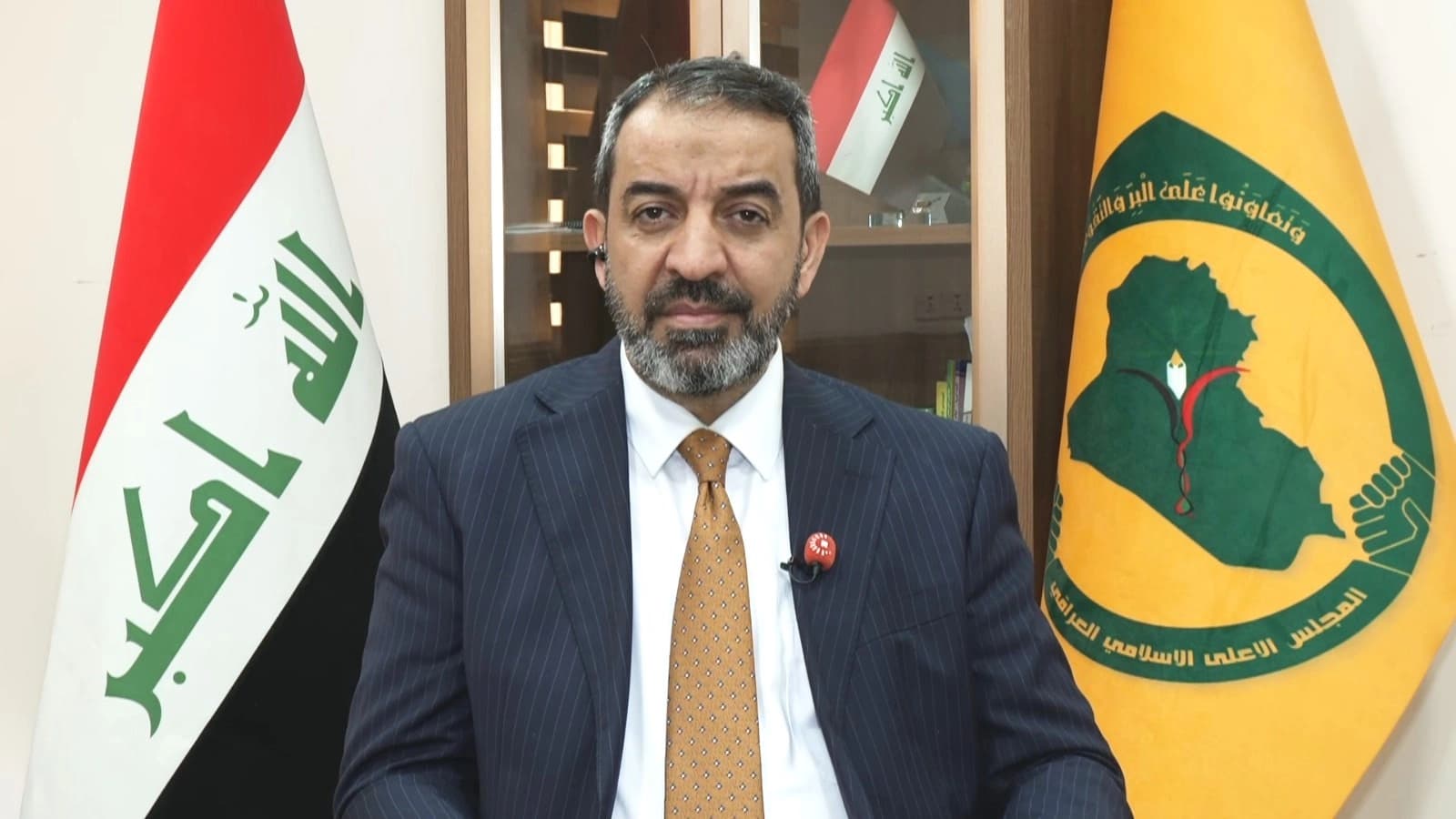
Ali al-Difai, spokesperson and political bureau member of the Islamic Supreme Council of Iraq, whose leader hosted the coalition in the Monday meeting, told Rudaw's Arez Khalid on Tuesday that the Coordination Framework had reached an understanding with Zaidi to replace Kata'ib Hezbollah's forces with another formation from the Popular Mobilization Forces (PMF), rather than deploy forces from the regular army.
“There will not be military intervention in Jurf al-Nasr in any shape or form. That is what the Framework agreed upon with Mr. Zaidi,” Difai stated. While there would be a change in troops, “the forces in control there will be replaced by another force of Hashed al-Shaabi,” he said, using the Arabic name for the PMF.
Whereas the PMF is formally part of Iraq's armed forces, several of its constituent factions maintain separate political and organizational loyalties.
Difai said the main disagreement concerned the deadline for replacing the forces, rather than whether the handover would take place, whose implementation he extended to “between 10 and 14 days,” up from the two to days he claimed were agreed upon between Zaidi and the Coordination Framework.
He also maintained that the decision was binding, without identifying which PMF brigade or faction would assume control of the area.
His account contrasts with reports from Iraqi media outlets, which cited unnamed sources on Monday saying the Coordination Framework meeting had ended without an agreement.
According to the reports, Zaidi insisted on maintaining a deadline expiring Friday for Kata'ib Hezbollah to withdraw, while Badr Organization leader Hadi al-Ameri and other faction leaders opposed a military operation and called for further negotiations.
Local media reported heated exchanges between Zaidi and Ameri, with the prime minister leaving the meeting without a settlement.
Difai rejected the accounts, maintaining that the meeting had successfully “defused the crisis” and that there had been no disagreement among the Coordination Framework's leaders over the outcome.
He said Zaidi left after the meeting concluded at around 8:00 pm due to a prior commitment, while the Framework subsequently received a delegation comprising Iraqi President Nizar Amidi, Patriotic Union of Kurdistan (PUK) leader Bafel Talabani and New Generation Movement leader Shaswar Abdulwahid.
The Coordination Framework's official statement confirmed the meetings but did not announce an agreement concerning Jurf al-Sakhr or specify arrangements for replacing the forces stationed there.
Meanwhile, Iraqi media reported Tuesday that Esmail Qaani, commander of Iran's Islamic Revolutionary Guard Corps (IRGC) Quds Force, had arrived in Iraq to mediate between Zaidi and Kata'ib Hezbollah.
Neither Qaani's visit nor the reported negotiations have been officially confirmed.
Difai also defended the government's investigation into alleged oil smuggling in Jurf al-Sakhr, saying the Coordination Framework unanimously supported protecting public funds and holding those responsible for violations accountable through the judiciary.
“Admittedly, the government of Mr. Zaidi took a courageous and bold step to protect public funds after the technical committee proved that there were transgressions on the oil pipeline,” he said.
“What we are dealing with is a crime that courts need to deal with.”
On Saturday, Zaidi dismissed nine senior security and administrative officials, including personnel from the PMF, police, intelligence agencies and oil sector, following the findings of the government investigation. He also ordered suspects implicated in the alleged smuggling operations to be referred to the judiciary.
Kata'ib Hezbollah has rejected the allegations, describing the intelligence reports as fabricated and maintaining that investigators found no unauthorized interference with oil pipelines. It said facilities identified in the area were used to supply fuel to military vehicles and equipment.
Difai maintained that the proposed replacement of forces would be carried out under the authority of the commander-in-chief of the armed forces in which “one armed force replaces another,” and that “there won't be any escalation or confrontation.”
Meanwhile, a Kata'ib Hezbollah commander told AFP on Tuesday that the group will not leave its stronghold near Baghdad.
"That will not happen, not even over our dead bodies," Abu Taleb al-Saidi said during a press visit to Jurf al-Sakhr.
Despite the assurances from Difai and Saeedi, it remains unclear whether Baghdad and Kata'ib Hezbollah have reached a binding agreement on the withdrawal, which PMF formation would replace the faction's fighters, and whether the arrangement will end Kata'ib Hezbollah's influence over the area.