
ERBIL, Kurdistan Region - An increase in the price of bread, caused by hikes in costs for fuel and imported flour, is alarming bakers and consumers in the Kurdistan Region.
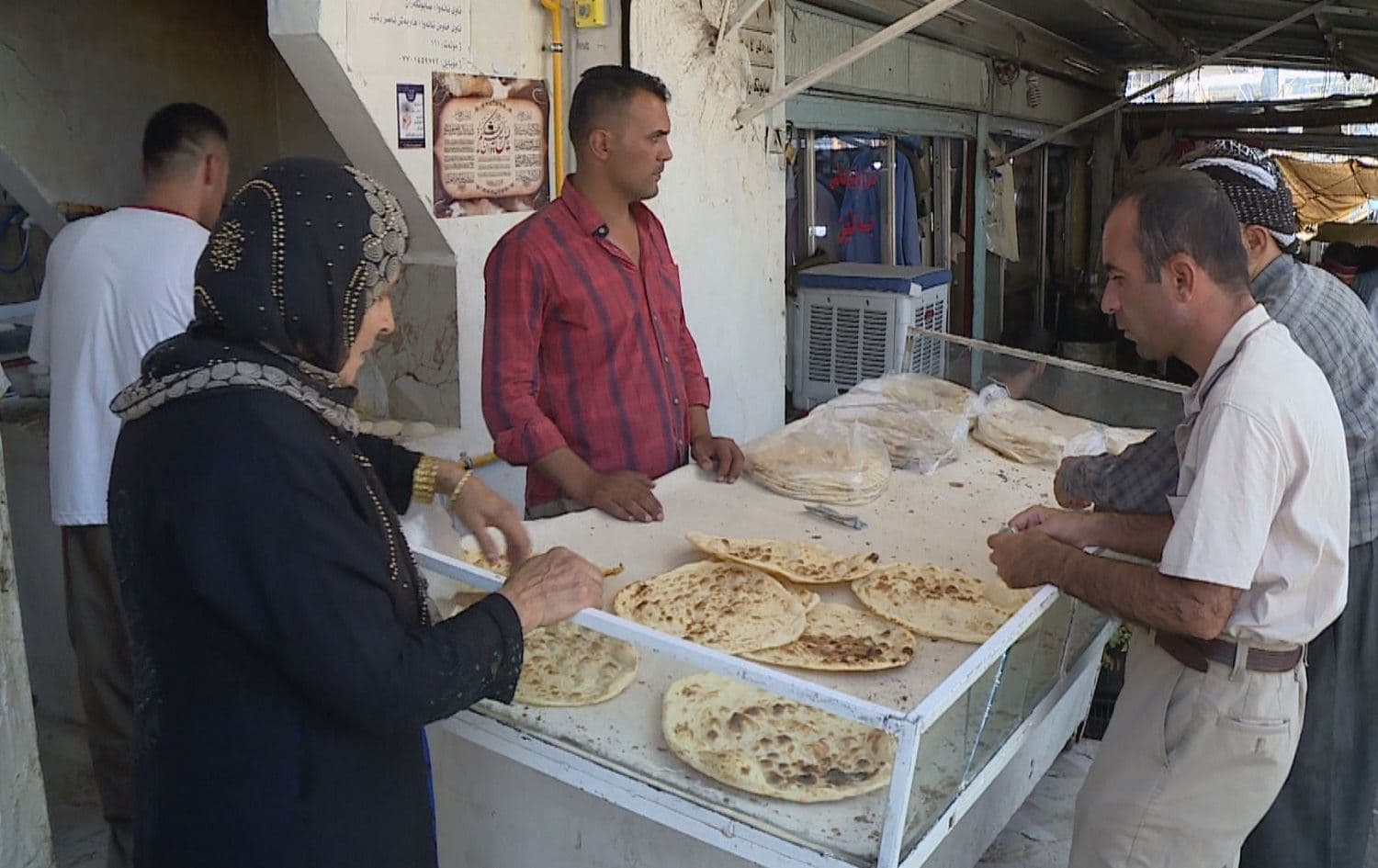
Sulaimani bakers on Saturday raised the price of bread by 33 percent, selling six pieces for 1,000 dinars ($0.68), while previously customers could buy eight pieces for the same price.
If the higher prices stay, "I won't continue to buy bread. I can't," said shopper Sargul Hassan.
Increases in the price of flour imported from Turkey, higher fuel prices, and the devaluation of the dinar are contributing factors.
Haji Osman, a baker in Sulaimani who has been making Kurdish bread since he was 11, said he hasn’t seen such an increase in flour prices in the Kurdistan Region since the 1990s.
"I would rather make a loss than sell six pieces of bread for 1,000 dinars because the poor buy the bread,” he said. "If someone is rich, they don’t care. They would buy one piece of bread for 1,000 dinars while the poor cannot afford it.”
Domestically produced flour is cheaper than imports from Turkey, but bakers complain about the quality.
“To date, we have only used Turkish flour to make bread and loaves. The flour price has gone up without the bakery shops being responsible. Domestic flour cannot be used to make bread. The wheat is weak [for making dough]. Bakeries can't make bread and loaves from it," Azad Ramazan, an owner of a Sulaimani bakery, said on Saturday.
A 50-kg-sack of Turkish flour previously sold for 27,000 dinars. Bakeries now have to pay 42,000 dinars as the price of wheat spiked in international markets after the US Department of Agriculture slashed its forecast for the global wheat crop.
"The increase of flour prices in the Kurdistan Region is mainly a result of the prices in Turkey where every ton has seen an increase of 100-150 dollars," Sulaimani’s director of trade monitoring Soran Abdulghafoor said on Saturday.
Annually, the Kurdistan Region consumes 1.6 million tons of flour. Nearly one million tons are imported from Turkey, Iran, and Russia.
In Erbil, bakers gathered in front of the governorate building on Saturday to ask for help.
Shahab Ahmed, a representative of Erbil's bakery owners, said the government is to blame for the increase in prices. "The government has no control over bread or loaves. The tax at the Ibrahim Khalil [border] crossing was greatly increased. A ton of flour now costs $32 more. In addition, they don't provide fuel or gas," he said.
“If we sell eight pieces of bread for 1,000 dinars, we will make a loss. We need flour and fuel from the government. Since the war against ISIS, we have not received fuel. We have requested flour from Erbil's mayor,” he said.
Ahmed estimated that without assistance, bakers will lose 60,000 to 70,000 dinars daily. He said locally-milled flour is “too dark and weak for bread.”
The Kurdistan Regional Government (KRG) is building plants to receive and process locally-grown wheat and reduce reliance on flour imports. A complex in Erbil was opened in May and construction on another in Sulaimani has begun.
Flour production in Erbil will begin in a couple of weeks and should stabilize market prices, according to Rezhin Siddiq Abdulrahman, a quality control official Ministry of Agriculture and Water Resources.
"In the next 15-20 days, the companies will produce 1,000 tons of flour every day. In the next two months, it will increase to 2,000 tons. Consequently, this will have an impact on markets since the price that will be set by the agriculture ministry will be lower than that of Turkey. This flour production will effectively decrease the price of imported flour," he said.
Additional reporting by Peshawa Bakhtiyar in Sulaimani