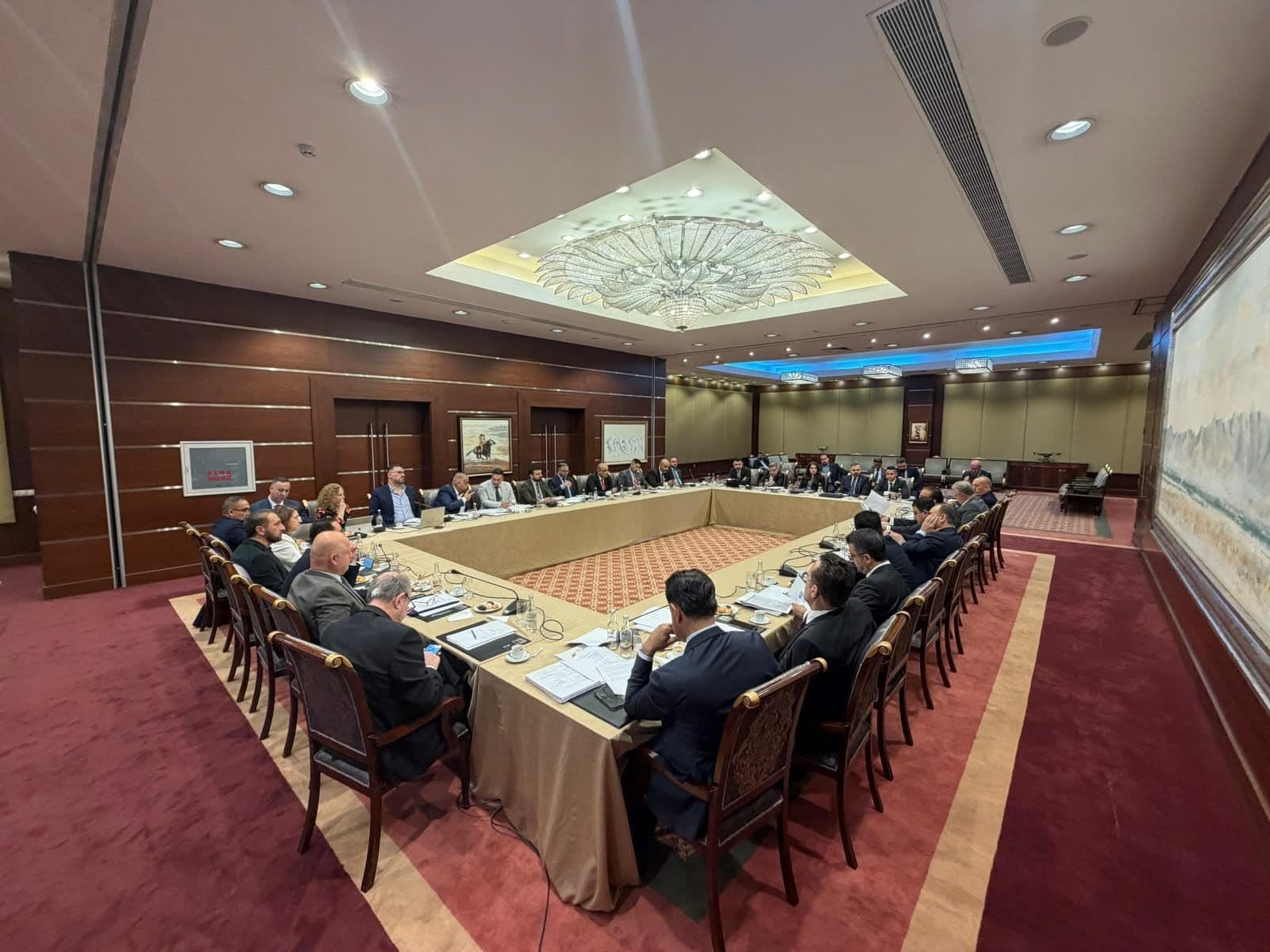

ERBIL, Kurdistan Region - A Kurdistan Region delegation specializing in digital customs integration systems signed a 16-point Letter of Agreement (LOA) with officials from the Iraqi General Commission of Customs on Thursday in Baghdad, resolving months of outstanding issues regarding the management of international trade through the Kurdistan Region’s border crossings.
Duhok Chamber of Commerce President Shukri Jamil told Rudaw that "the signed memorandum of understanding consists of 16 points," adding that "the letter must be approved by the Ministerial Council for Economy before it can go into effect."
ASYCUDA, an electronic customs platform developed by the United Nations Conference on Trade and Development (UNCTAD) in the early 1980s, is a system that digitizes and standardizes customs procedures and is currently used at all 22 federal border crossings in Iraq.
While Baghdad viewed ASYCUDA as a mechanism to improve transparency and boost revenue collection, its implementation in the Kurdistan Region had raised concerns among Kurdish officials, who feared it could reduce the Region’s administrative authority over its border crossings.
Under the system, importers are required to obtain federal approval, pay customs duties in advance, and access foreign currency at the official exchange rate through the Central Bank of Iraq– an advantage that Kurdistan Region merchants will now be granted access to.
An informed source within the Kurdistan Regional Government (KRG) told Rudaw on Thursday that "the implementation of this Letter of Agreement requires some remaining procedures and time.” He noted that “the most important point is that Kurdistan Region merchants will have access to dollars at the Central Bank's rate."
According to the LOA, full authority is granted to the Kurdistan Region to register companies in the ASYCUDA system, the Kurdish language will be added to the system, the customs tariff will be unified between both sides, and a joint committee will be formed to resolve the issue of the Kurdistan Region's border crossings that have not yet been officially recognized.
Another point of the letter is the quality control inspection of both sides for imported goods.
Until now, the ASYCUDA system has been implemented in Iraq, and according to the federal government's procedures, to obtain Central Bank dollars at the official rate, merchants had to pay customs in advance through the system to the federal government to be allowed to receive dollars at the official rate for importing goods. Consequently, Kurdistan Region merchants were deprived of those dollars.
RELATED: Erbil delegation heads to Baghdad to discuss ASYCUDA agreement