ERBIL, Kurdistan Region - The Kurdistan Regional Government's (KRG) Ministry of Peshmerga on Tuesday launched the first joint training course for their Area Command 1 and Area Command 2 units. The Peshmerga Minister hailed the achievement as a major milestone in the force's long-running reform and unification process under a single government formation, expressing hopes for renewed US cooperation.
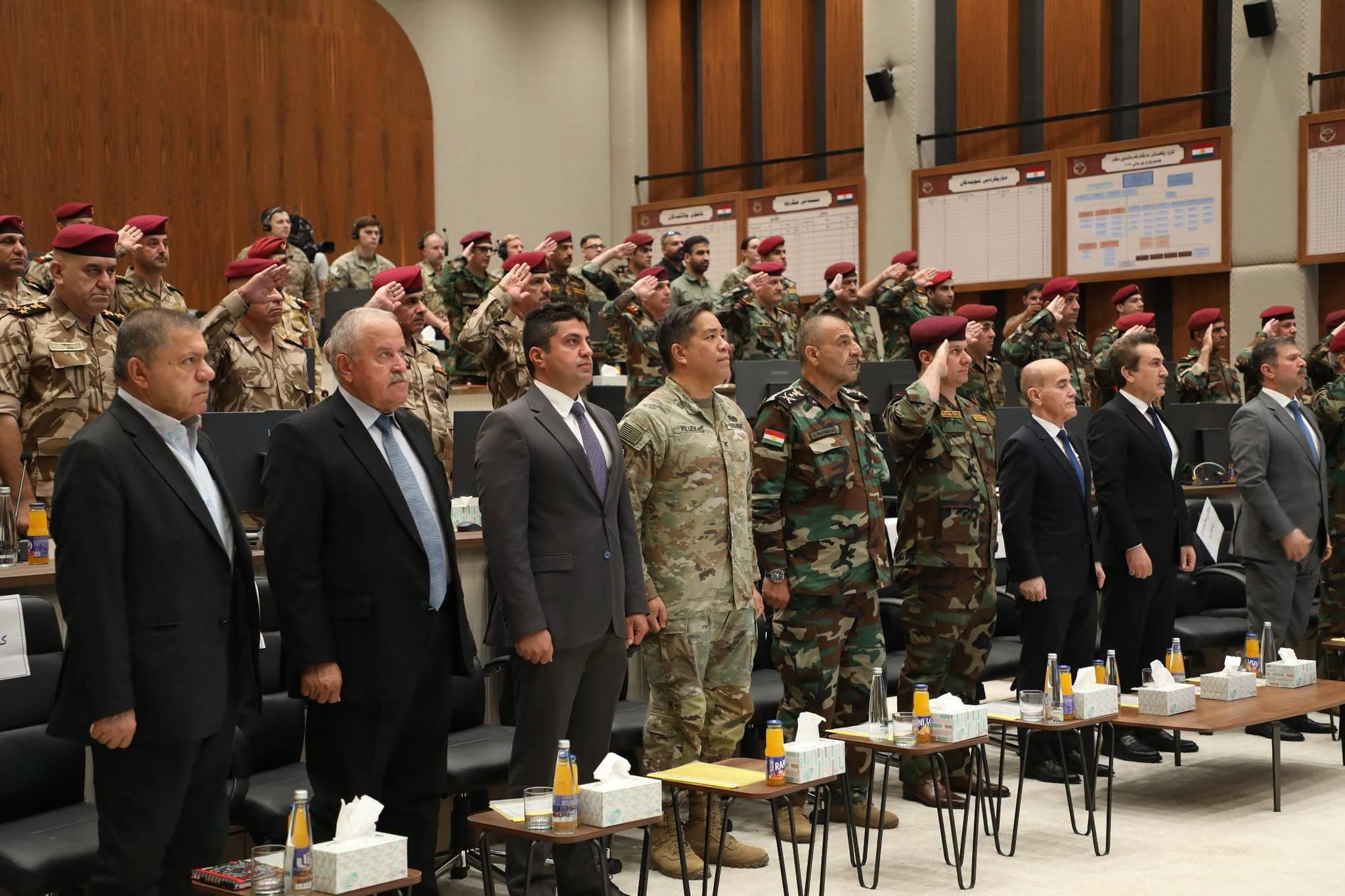
The course on "Military Decision-Making Processes" commenced at the Area Command 1 headquarters in Erbil, bringing together senior commanders from both forces, Ministry of Peshmerga officials, and representatives of the US-led Global Coalition to Defeat the Islamic State (ISIS).
"This military training organized for the senior officers of both Area Command 1 and Area Command 2 is a historic turning point and a strategic step toward the unification and reorganization of the Peshmerga forces and the building of a unified national army," Peshmerga Minister Shoresh Ismail said in a press conference.
Peshmerga forces played a monumental role in securing the defeat of the Islamic State (ISIS) from 2014 to 2017. The US, UK, Germany, and France established a multinational advisory group to aid in the integration and unification of the forces into a single security apparatus.
The joint course marks the beginning of closer military cooperation between the two newly established commands toward building a unified national force, an effort that the US-led Coalition has long supported.
The ruling Kurdistan Democratic Party (KDP) and Patriotic Union of Kurdistan (PUK) have historically maintained separate partisan military formations - Unit 80 and Unit 70, respectively. Around 100,000 troops have served under the two forces, receiving salaries and administrative orders through separate party chains of command rather than a unified structure under the ministry, despite occasional tensions between the rival leaderships.
In February, Kurdistan Region President Nechirvan Barzani signed a decree authorizing the formation of the authority of Area Command 1 and Area Command 2, under which Units 70 and 80 are to be reorganized into 10 divisions. Prime Minister Masrour Barzani later issued an executive order outlining the commands’ legal authority and budget responsibilities.
Ismail described the exercise as a historic step toward creating a unified force.
He added that the Peshmerga force “is the national and ethnic identity of the people of Kurdistan,” and that a unified Peshmerga “directly translates to peace and security stability in the entire region."
Generals from the US military affirmed that the exercise reflects Washington's continued support for Peshmerga reform.
"This step expresses our full commitment to the reform process we started together with the Ministry of Peshmerga; our main goal is the success of the reforms and the unification of the Peshmerga forces, which we hope to see the fruits of in the very near future," Colonel Pongpat Piluek, the senior US military advisor in the Kurdistan Region, said during the ceremony.
Ismail said the Peshmerga reform process has now completed more than 95 percent of its planned steps, in a statement to the press. He added that while reform would continue, the force has entered its final stage of reorganization.
Ismail clarified that although the four-year agreement between the Ministry of Peshmerga and the US Department of Defense was due to expire in September, cooperation with the US-led Coalition would continue, stressing that its expiration “is not related to a new decision by the US to withdraw or cut aid.”
"We are working to ensure that this cooperation and support from the Coalition continues in a different form, and it will continue," Ismail added.
In an interview with Rudaw on June 7, Ismail expressed hope that a security agreement with the US aimed at unifying and enhancing the capabilities of the Kurdish forces “would be renewed” before its expiration, voicing concern that the ongoing political deadlock in the Region could jeopardize efforts to secure continued support.
“We continue to hold that hope while pursuing every possible avenue to secure its extension,” stressing that renewing the deal requires broader “diplomatic efforts.”
RELATED: Kurdish Peshmerga minister hopeful on US pact extension, urges stronger diplomatic efforts