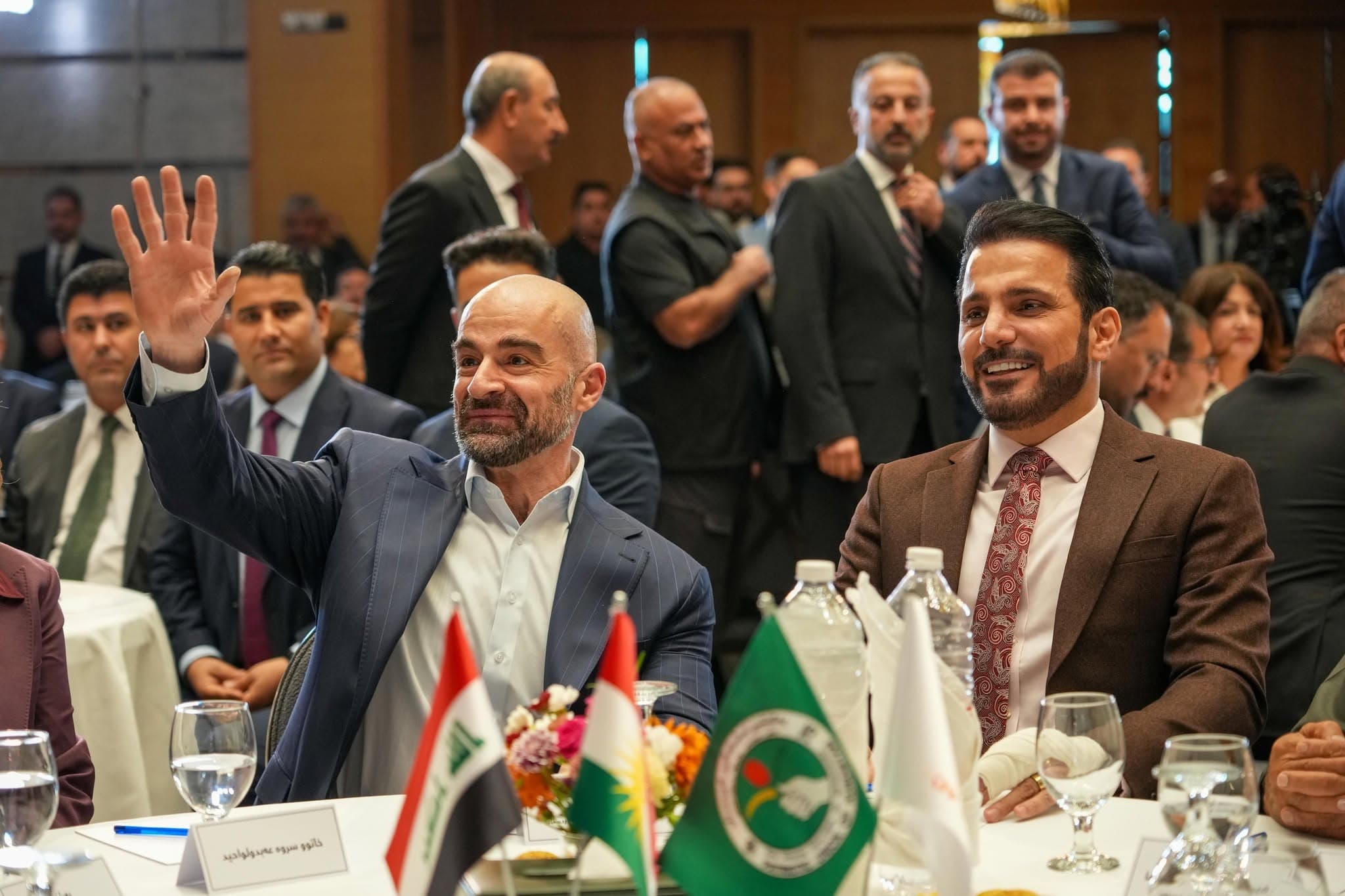

ERBIL, Kurdistan Region - The Patriotic Union of Kurdistan (PUK) and the New Generation Movement on Thursday inked an agreement aimed at making "reforms" in the Kurdistan Region's institutions and passing a budget law in the parliament for the first time.
The agreement, which is the outcome of months of talks between both parties following their initial deal earlier this year, aims at "restoring balance" among political parties and launching comprehensive reform programs, including institutional ones.
The following is the full text of the agreement between the PUK and the New Generation Movement:
Democracy, and the protection and realization of citizens' rights, and improving their lives and livelihoods, and improving governance — both parties (the New Generation Movement and the Patriotic Union of Kurdistan) sign a strategic political agreement to restore balance and reorganize the balance of power in the political landscape of the Kurdistan Region, and to strengthen national partnership in a way that serves citizens' interests without discrimination, and to ensure just and transparent management of public resources.
This agreement is a response to the current political and economic complexities of the Kurdistan Region and Iraq, and an effort to build a new model of governance founded on justice, institutional balance, and transparency in the management of financial revenues — and to increase citizens' trust in official institutions, and for institutions to work toward improving livelihoods, salaries, and providing the best services to citizens.
Foundations of the Agreement:
First: Objectives of the Agreement
1. Restoring balance among political forces in the Kurdistan Region through cooperation between governance institutions, parliament, and political actors, and forming a single political bloc for this stage.
2. Strengthening joint work to build official institutions based on agreement and balance.
3. Establishing the principles of justice and transparency in managing resources and financial revenues, most importantly passing a budget law for the Kurdistan Region.
4. Developing an institutional governance system that limits and prevents monopolization of power, and strengthens oversight and accountability.
5. Establishing the principle of separation of legislative, oversight, executive, and judicial powers from one another, and respecting the independence and impartiality of the judiciary.
Second: Cooperation at the Level of the Kurdistan Parliament
1. Coordination and a unified stance within the Kurdistan Parliament and the Iraqi Council of Representatives to support political and institutional reform, and to support joint and important projects toward their legalization.
2. Support for laws that increase financial transparency and oversight of public revenues.
3. Formation of a joint committee to oversee the implementation of reforms and evaluate performance.
4. Strengthening the role of the Kurdistan Parliament as an oversight and legislative authority.
5. Agreement on preparing draft laws and their approval by parliament and legislative bodies.
6. Working to review and amend laws that need amendment, and [addressing] decisions issued outside parliamentary laws that have harmed the lives and livelihoods of various classes and segments of citizens.
7. Preparing draft laws that improve citizens' standard of living and passing them, particularly in the fields of health, education, all service sectors, and taxes and fees.
8. The alliance will work together within the next Kurdistan Regional Government cabinet to establish and implement the following points:
a. Returning a portion of savings deductions to salaries of civil servants and opening bank accounts for them.
b. Providing marriage loans to youth.
c. Reducing the price of electricity and other services.
d. Reducing taxes and fees on business owners.
e. Finding job opportunities for university and institute graduates and establishing an institution for employment and job opportunities.
f. Resolving the issue of teachers and temporary/contract employees.
Third: Cooperation at the Level of the Iraqi Council of Representatives
1. Unifying political positions within the Iraqi Council of Representatives regarding the rights of the Region, particularly the budget and financial rights and entitlements of the citizens of the Kurdistan Region, and the issue of disputed territories and the Peshmerga.
2. Joint work to ensure the protection of the constitutional rights of the Kurdistan Region within the framework of the federal system.
Fourth: Principles for Forming the Kurdistan Regional Government
1. Working toward forming a government based on the balance of power and on the basis of genuine political balance and partnership.
2. Working toward distributing positions on the basis of justice in government responsibilities.
3. Ensuring complete transparency in managing and collecting oil and non-oil revenues.
4. Creating an independent financial oversight mechanism to protect transparency and accountability.
5. Strengthening the role of oversight, judicial, and integrity institutions, free from party interference.
6. Establishing the requirement of having a budget law approved by the Kurdistan Parliament, to be implemented under its oversight by the Regional Government, provided that it ensures justice for all areas.
Fifth: General Principles
1. Both parties commit to joint work to reorganize the direction of governance in the Kurdistan Region in a way that strengthens the principles of democracy and institutional balance.
2. Launching a comprehensive reform program to reorganize government and parliamentary decision-making mechanisms transparently, and defining the powers of the prime minister, deputy prime minister, and ministers.
3. Strengthening the independence of the legislative and judicial powers and ensuring separation and distinction between powers.
4. Working with all political parties and relevant institutions to prepare and approve a constitution for the Kurdistan Region that protects the entity, rights, and entitlements of citizens, and guarantees the democratic process and civil rights.
5. Reviewing financial and administrative policies in a way that ensures fair management of revenue and creates a balanced distribution between institutions and regions.
6. Following good governance standards in appointing senior officials.
7. Opening the door for participation of political and social forces in the reform process to ensure political continuity and institutional stability.
Sixth: Mechanisms for Implementation and Follow-up of This Agreement
1. Forming a joint committee from both sides to oversee the implementation of the articles and clauses of this agreement.
2. Holding periodic meetings to evaluate and identify shortcomings, if any exist.
Conclusion
Both parties affirm that this agreement is a strategic step toward creating a new political phase in the Kurdistan Region, built on the foundation of restoring balance and the balance of power, justice, and strengthening citizens' trust in institutions, and joint work toward a stable and developed future in service of the citizens.