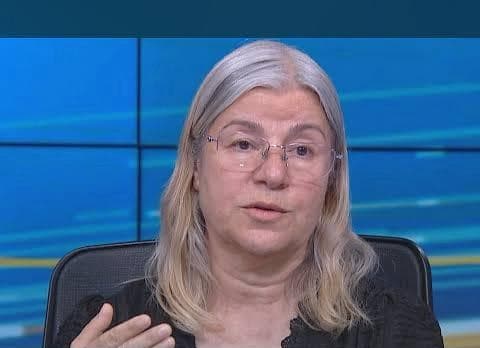

ERBIL, Kurdistan Region - An Erbil court released a prominent women's rights activist on bail late Wednesday after issuing an arrest warrant against her over accusations of insulting Quranic verses that permit polygamy. The activist has denied the allegations and launched a counter-suit for defamation.
Ali stated that the lawsuit was filed "exclusively" due to her appearance on Rudaw television in 2024 in which she defended the Kurdistan Region’s progressive amendments to the Iraqi Personal Status Law.
"They turned to the public prosecutor to initiate a lawsuit against me for insulting sacred texts," Ali said. "I did no such thing. I merely defended the laws enforced here in the Kurdistan Region."
Bahar Ali is an outspoken activist and director of Emma Organization for Human Development in Erbil, known for her role in the implementation of UN Council Security Resolution 1325 (Women, Peace, and Security) as well as for her national and international advocacy efforts in developing strategies for ending violence against women in Kurdistan.
Ali, who was taken into custody after failing to appear for a scheduled court hearing on Sunday, told Rudaw English that she missed the hearing because she never received an official court notification. After her lawyer clarified the oversight to the judge, she was granted bail. The court has scheduled the next hearing for September 1.
In response to the charges, Ali confirmed that she has filed libel and defamation lawsuits against her accusers, which she expects the court to act upon soon.
The lawsuit was initiated by the Erbil-based Didar Organization. Mohammed Khayat, who leads the organization, told Rudaw English that they took legal action based on "several statements and social media posts that insult the sacred religion of Islam."
When asked about the main duties of the organization, he said that they "file lawsuits against whoever insults any religion or ethnic group in the Kurdistan Region."
While Khayat acknowledged that the lawsuit was originally filed in 2024, he disputed Ali's timeline, claiming the legal action was not triggered by the Rudaw interview. Refusing to mention Ali by name, Khayat added that the court ordered her arrest strictly because she failed to appear on Sunday.
The case highlights the ongoing tension between conservative groups and women's rights advocates in the Kurdistan Region, where activists are frequently targeted or stigmatized for opposing polygamy - a practice championed by some local religious figures.
The Kurdistan Region maintains a significantly more progressive legal framework for women compared to federal Iraq. Under the Region's modified Personal Status Law, polygamy is heavily restricted. A husband seeking a subsequent marriage must meet strict legal criteria, present justifiable medical or financial grounds, and obtain the explicit consent of his first wife.
.png&w=3840&q=75)