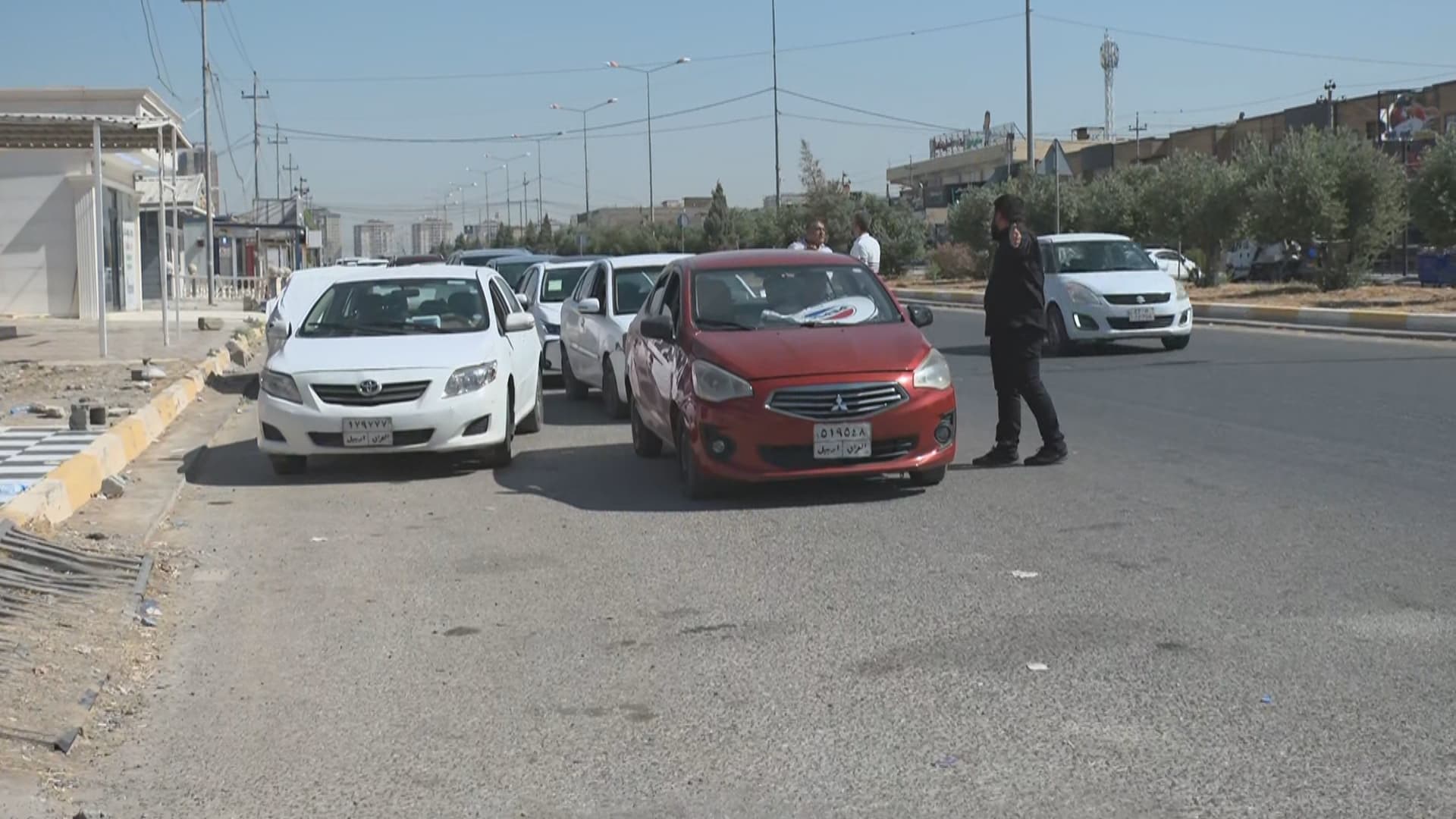

ERBIL, Kurdistan Region - Authorities in Erbil on Monday began distributing subsidized gasoline through an electronic card system at a single gas station as part of a pilot program aimed at easing long queues amid an ongoing fuel shortage in the Kurdistan Region.
The Erbil Directorate of Oil and Minerals announced the trial on Sunday, saying the subsidized gasoline would be distributed at 750 Iraqi dinars ($0.57) per liter in a bid to reduce congestion and organize vehicle queues.
Some drivers reportedly benefited from the subsidized gasoline more than once in a single day, triggering demands from citizens for fair distribution.
Salar Mohammed, head of the inspection and follow-up committee at the directorate, told Rudaw's Farhad Dolamari on Monday that "the process is being conducted on a trial basis to identify any potential issues," noting that it is proceeding in an orderly manner and that every driver receives their gasoline quickly.
The pilot comes after the Kurdistan Regional Government (KRG) imposed fuel price caps last week to stabilize the market following a sharp rise in gasoline prices. Authorities capped regular-grade gasoline at 850 Iraqi dinars ($0.64) per liter before extending the limits to 1,000 dinars ($0.76) for enhanced fuel and 1,200 dinars ($0.91) for super-grade gasoline.
The move triggered a major gasoline crisis in Erbil and Duhok provinces, forcing many filling station owners to shut down. Sulaimani and Halabja provinces were spared the shortage crisis, as fuel station owners there refused to comply with the price caps and prices have remained high in both provinces.
The KRG held a meeting with filling station owners on Sunday in hopes of resolving the issue. Unconfirmed reports have suggested the government plans to raise the price caps as part of efforts to end the crisis.
The fuel shortages follow a wave of Iranian drone attacks and heightened tensions between the United States and Iran, which disrupted operations at several international energy companies in the Kurdistan Region. The situation has also been exacerbated by reduced Iranian fuel imports and what Kurdish officials say is an insufficient allocation of crude oil from the Iraqi federal government for domestic refining.
On Sunday, Mohammed said residents will not need to obtain new cards. Instead, they can use the same electronic cards already issued for domestic heating fuel.
He noted that "40 liters of gasoline will be allocated per vehicle" at the station.
The directorate described the initiative as a testing phase to assess the effectiveness of the new distribution system before deciding whether to expand it.
On Saturday, Rebin Zangana, chief of staff at the KRG's Ministry of Natural Resources, said the federal government supplies the Kurdistan Region with only 50,000 barrels of crude oil per day for domestic consumption. "It is not enough," Zangana told Rudaw, adding that the Kurdistan Region requires around six million liters of gasoline each day, leaving a shortfall of nearly 4.5 million liters. He said Erbil has asked Baghdad to increase its crude oil allocation.