
ERBIL, Kurdistan Region - American, British, French and German forces have withdrawn hundreds of troops and key air-defense systems from Erbil International Airport in a surprise 72-hour pull-out that has left the Kurdistan Region badly exposed to intensifying Iranian and militia attacks, Rudaw understands.
Several large military transport aircraft arrived at the airport last weekend, including US C-17 Globemaster III and British Airbus A400M Atlas planes.
Kurdish authorities initially believed the aircraft were delivering interceptor missiles and other military equipment to reinforce the US-led base, which has faced sustained drone and missile attacks from Iran and Iran-backed Shiite militias in Iraq.
Instead, the planes were used to remove troops and air defense systems from the base. US forces on Saturday also took down the high-altitude and tethered surveillance balloons (aerostats) from the sky above Erbil permanently.
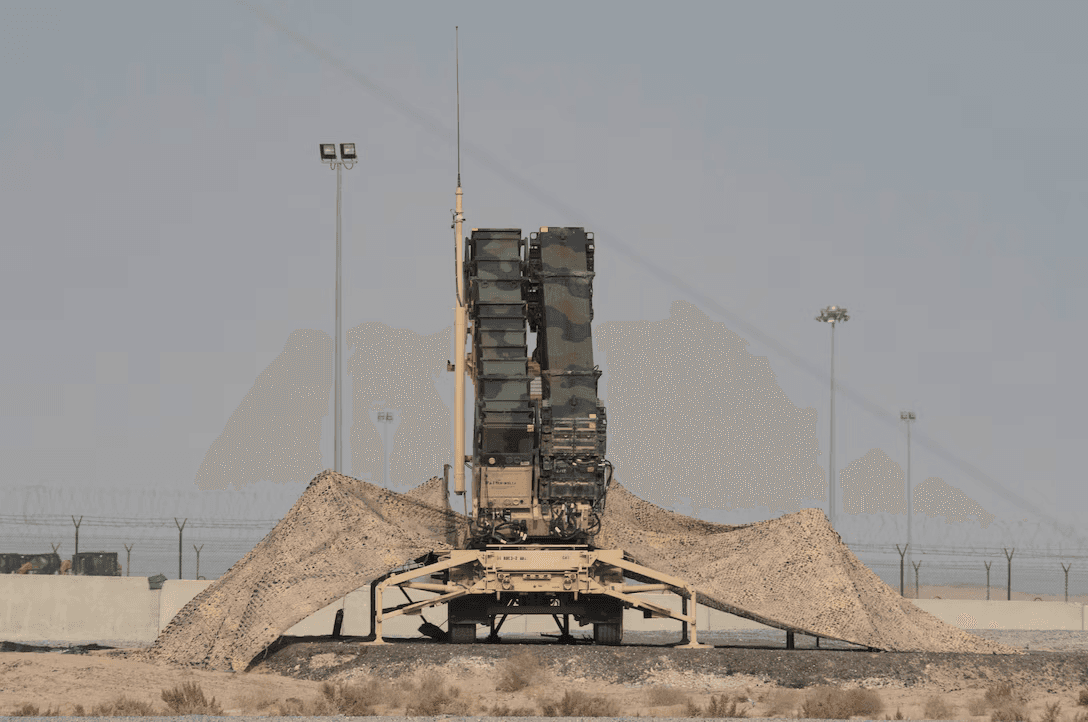
Within three days, the United States relocated eight Patriot surface-to-air missile batteries to Jordan, while Britain transferred its Rapid Sentry system to Cyprus. British forces withdrew completely, while the United States, France and Germany retained only small contingents in the Kurdistan Region, according to sources familiar with the movements.
Kurdish authorities were not informed in advance and were largely kept in the dark regarding activity inside the base.
The withdrawal of the US Patriot batteries was first reported by Al-Monitor’s Amberin Zaman. The removal of British assets and troops, as well as the reduction of the French and German contingents, have not previously been reported.
The sudden move comes as attacks by Iran and its allied militias have intensified over the past two weeks in addition to the renewed flare-up between the US and Iran, raising serious questions about how Erbil and other parts of the Kurdistan Region will be protected from further strikes.
US and British forces had defended the airport and surrounding areas using anti-missile and counter-drone systems stationed at the base. Despite those defenses, at least five American soldiers and contractors were killed in attacks in the preceding months, Rudaw understands.
Residents of Erbil have grown accustomed to seeing missile interceptions in the skies above the city and surrounding areas. Several Kurdish civilians as well as Peshmerga fighters of the Kurdistan Regional government (KRG) have also been killed in Iranian drone and missile strikes.
The Patriot batteries, the Counter-Rocket, Artillery and Mortar system known as C-RAM, and the British Rapid Sentry system had intercepted hundreds of one-way attack drones and missiles launched by Iran and Iran-backed groups since February 28, when the United States and Israel launched an aerial campaign against Iran.
Although US forces are expected to withdraw from Iraq under an agreement with Baghdad by September 30, the speed and secrecy of the latest move have left Kurdish officials unsettled.
For some Kurds, it has revived memories of the US withdrawal from Kurdish-held northeast Syria, known as Rojava, earlier this year - a pull-out that left Kurdish positions exposed to an offensive by forces loyal to Syrian President Ahmed al-Sharaa.
British, French and German forces, who rely on US protection, began reducing their presence from Erbil on the same day as the Americans, Rudaw understands.
The three European contingents had relied heavily on US air-defense assets in the previous six months as Iran and its allied militias repeatedly targeted Erbil airport. French and German forces had no independent systems capable of intercepting incoming missiles and drones. British forces used the Rapid Sentry system to support American defenses against projectiles targeting the base.
Britain has now withdrawn its forces completely, while France and Germany have left only small contingents. A limited number of US troops also remain.
The United States, Britain, France and Germany have maintained forces in the Kurdistan Region for more than a decade at the invitation of the Iraqi government as part of the international coalition against the Islamic State.
Following the territorial defeat of ISIS in Iraq in 2017, coalition forces continued to train and support Iraqi and Kurdish security forces in operations against remnants of the group entrenched in rugged mountain areas across northern Iraq.
The United States fortified its base at Erbil International Airport in 2019 and later deployed Patriot systems to protect its personnel and facilities, which can detect aircrafts for up to 62 miles and tactical ballistic missiles for up to 100 miles.
The killing of Iranian General Qasem Soleimani by US-led strikes in Baghdad in January 2, 2020 sharply escalated tensions, leading to an increase in attacks from Iran-backed Shiite militias on American bases in Iraq and the Kurdistan Region.
The United States moved to deploy Patriot air-defense systems to Iraq after Iran retaliated by launching 16 ballistic missiles at bases housing US forces.
Eleven struck Ain al-Asad and one hit Erbil, while four failed in flight, according to the Pentagon. No American troops were killed, although dozens later suffered traumatic brain injuries.
Attacks intensified again after the Hamas-led assault on Israel on October 7, 2023, and ensuing regional escalations.
The United States became directly involved in defending Israel after Iran retaliated for the killing of senior Iranian military and intelligence commanders at its consulate compound in Damascus on April 1, 2024.
The following year, the United States and Israel carried out a 12-day aerial campaign against Iran, targeting nuclear and military sites, to which Iran responded by attacking US bases across the region, including in the Kurdistan Region.
After negotiations over Iran’s nuclear program were later abandoned, the United States and Israel launched another campaign against Iran in late February lasting nearly six weeks. Iran retaliated by targeting American facilities across the Middle East.
The Kurdistan Region has been targeted nearly 1,000 times since February 28 with one-way drones, cruise missiles and ballistic missiles, according to information obtained by Rudaw.
US forces intercepted approximately 75 percent of the projectiles fired towards the Kurdistan Region, Rudaw English has been told. The rate of interception was considerably higher in the province of Erbil than in Sulaimani, as the bulk of the air defense systems were based in Erbil.
Iran intensified attacks to the extent of targeting the residences of top Kurdish officials on several occasions.
Kurdish authorities repeatedly condemned the attacks and expressed appreciation for the international coalition’s role in intercepting incoming drones and missiles.
Iranian Kurdish opposition groups based in the Kurdistan Region also partly relied on the coalition’s air defenses as their camps came under repeated Iranian attacks.
Their positions, along with Kurdish cities and coalition facilities, are now more vulnerable following the removal of the Patriot and Rapid Sentry systems.
Rudaw contacted US Central Command for comment. A defense official on background stated "U.S. Central Command regularly rotates and repositions U.S. forces and assets to support assigned missions. However, we do not discuss these movements for operational security reasons."
The British and French defense ministries also did not respond to requests for comment. German authorities have not replied.