کوردیKURDÎENGLISHTÜRKÇEعربي
Rudaw Logo
Live
Kurdistan
Middle East
OpinionsAnalysisWorldECONOMYInterviewCultureMultimedia
Live
Rudaw

Download the Rudaw app

App StoreGoogle Play
Privacy Policy•Terms of Use

© 2026 All rights reserved.

Rudaw

Download the Rudaw app

App StoreGoogle Play
Privacy PolicyTerms of Use

© 2026 All rights reserved.

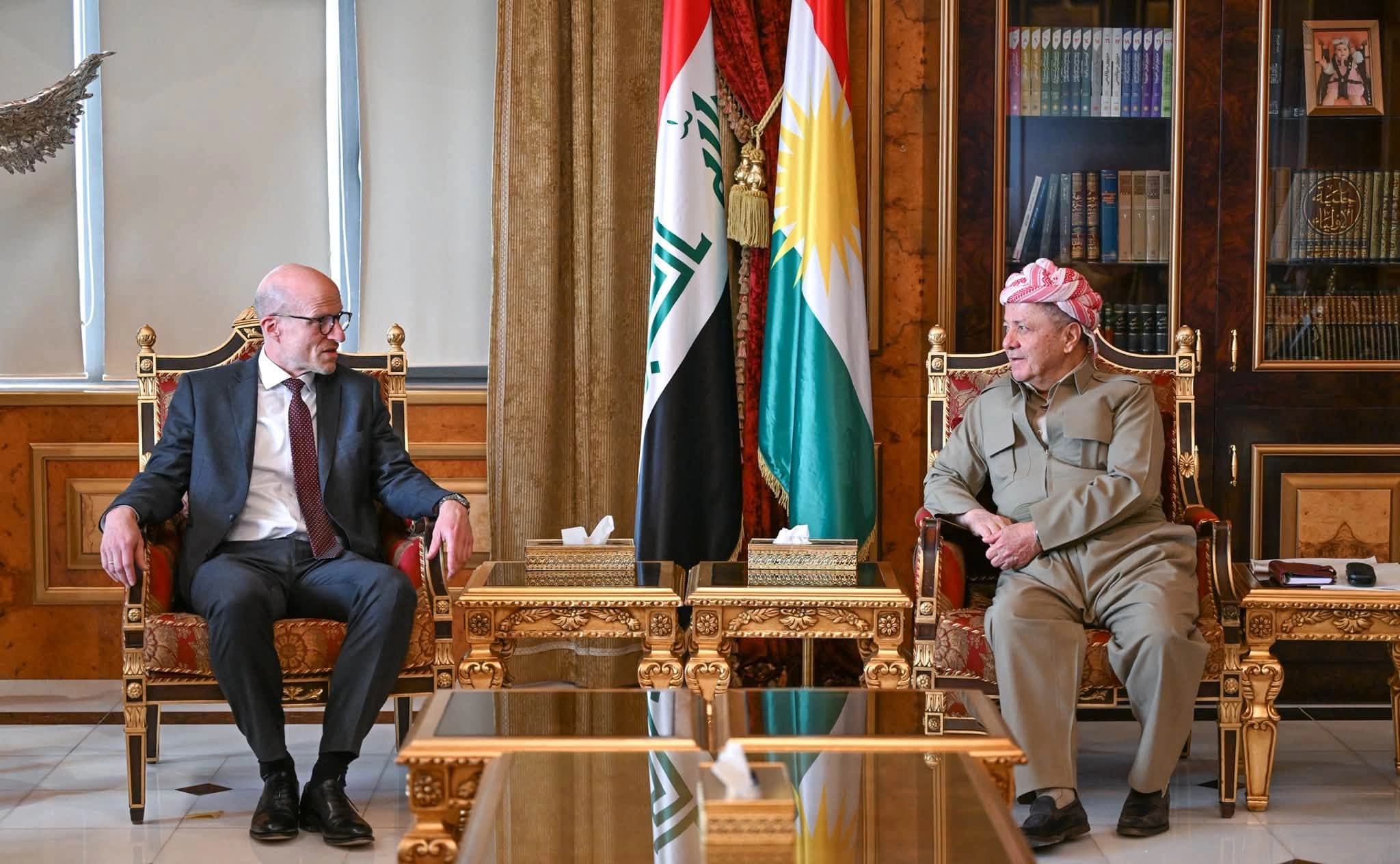
President Masoud Barzani, leader of the Kurdistan Democratic Party (KDP), received German Consul General Christian Ulfke in Erbil on August 29, 2026. Photo: Barzani Headquarters

President Masoud Barzani, leader of the Kurdistan Democratic Party (KDP), received German Consul General Christian Ulfke in Erbil on August 29, 2026. Photo: Barzani Headquarters

Kurdistan

President Barzani, German consul general discuss Iraq, terrorism, political process

RUDAW English

RUDAW English

29-08-2026
Listen
0:00
0:00
Text Size
RUDAW English
RUDAW English29-08-2026

Related Articles

Germany pledges continued support for Kurdistan, Iraq despite troop withdrawal
Kurdistan18-11-2026

Germany pledges continued support for Kurdistan, Iraq despite troop withdrawal

Iran strikes PJAK positions with drone in Sulaimani province
Kurdistan17-11-2026

Iran strikes PJAK positions with drone in Sulaimani province

Sulaimani separate status requires popular vote, not party decisions: Coordination Framework official
Kurdistan17-11-2026

Sulaimani separate status requires popular vote, not party decisions: Coordination Framework official

ERBIL, Kurdistan Region - President Masoud Barzani, leader of the Kurdistan Democratic Party (KDP), received German Consul General Christian Ulfke in Erbil on Saturday, with the two discussing developments in Iraq, terrorism threats and the political process in the Kurdistan Region.

According to a statement from Barzani Headquarters, Ulfke underscored the Kurdistan Region’s “status and special importance” to the stability of Iraq and the wider region during the meeting.

The German diplomat also expressed Berlin’s desire to maintain coordination with the Kurdistan Region across various fields, according to the statement.

The meeting, also addressed the latest political and security developments in Iraq, including “the threats and dangers of terrorism” and the situation expected to face the country in the coming phase.

The political process in the Kurdistan Region was also discussed, the statement said, without providing further details.

Germany and the Kurdistan Region have maintained close ties for more than a decade, particularly in security, humanitarian assistance and diplomatic engagement.

Berlin became directly involved in supporting the Kurdistan Region’s fight against the Islamic State (ISIS) in 2014, providing the Peshmerga with military equipment, including anti-tank weapons and assault rifles. German troops were subsequently deployed to Erbil to train Peshmerga forces.

Germany has also contributed to the NATO Mission Iraq, which provides non-combat advisory and capacity-building support to Iraq’s security institutions, including efforts to counter terrorism and prevent the resurgence of ISIS.

The relationship has also been reinforced by Germany’s sizable Kurdish diaspora and its humanitarian support for displaced people from the Kurdistan Region and elsewhere in Iraq.
Related Articles

Germany pledges continued support for Kurdistan, Iraq despite troop withdrawal
Kurdistan18-11-2026

Germany pledges continued support for Kurdistan, Iraq despite troop withdrawal

Iran strikes PJAK positions with drone in Sulaimani province
Kurdistan17-11-2026

Iran strikes PJAK positions with drone in Sulaimani province

Sulaimani separate status requires popular vote, not party decisions: Coordination Framework official
Kurdistan17-11-2026

Sulaimani separate status requires popular vote, not party decisions: Coordination Framework official

Questions