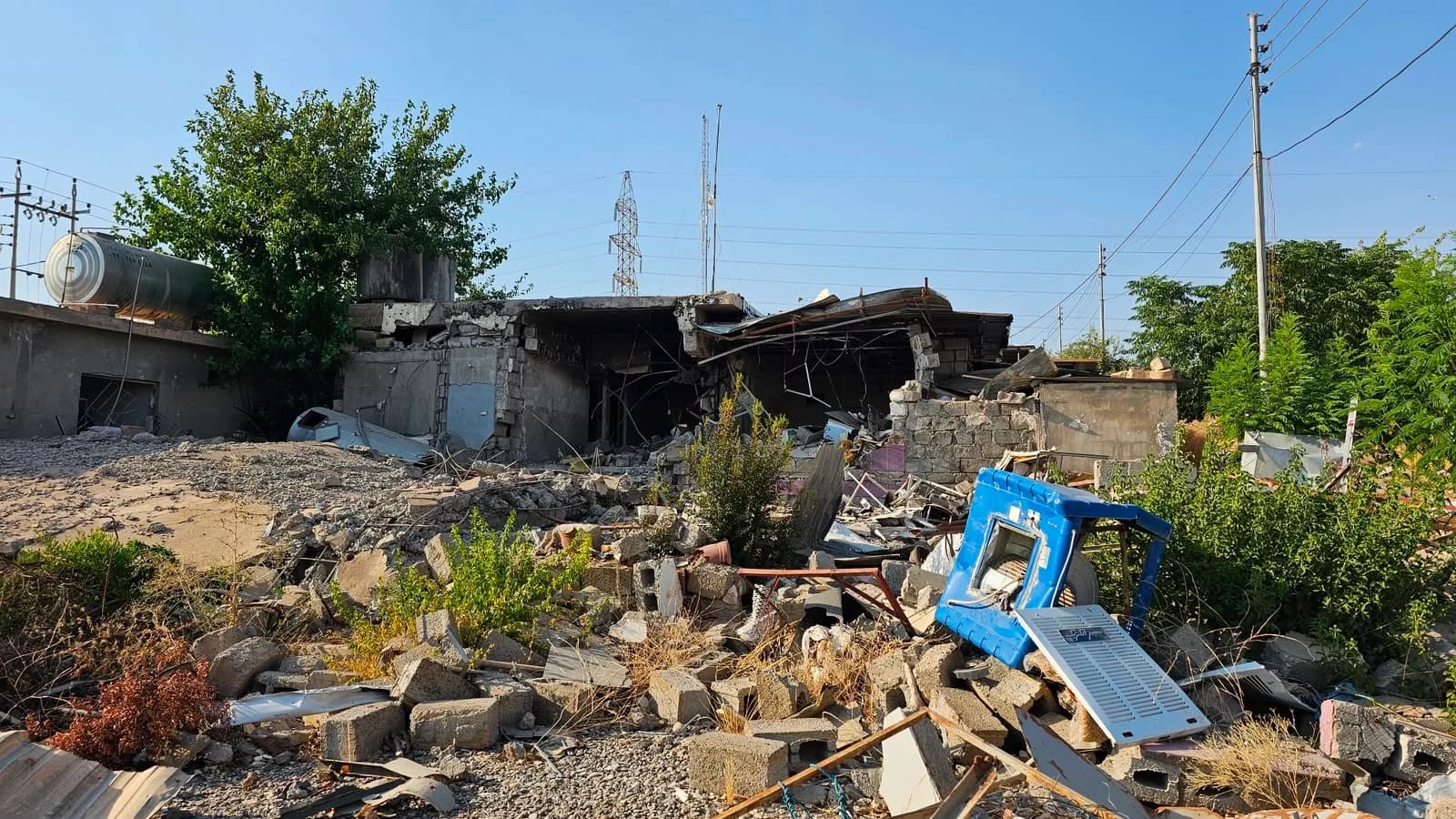
ERBIL, Kurdistan Region - The Kurdistan Region’s Ministry of Peshmerga Affairs (MoPA) on Monday warned that the planned withdrawal of US-led coalition forces from Iraq on September 30 comes at a “sensitive time,” as Baghdad and Washington proceed with a joint agreement to end the military mission in the country, including operations in the Kurdistan Region. The ministry said in a statement on Monday, that while the drawdown follows a “mutual understanding between the Iraqi federal government and the US,” the “continuation of instability in the region poses a threat to the entire area,” urging political decisions that prioritize security and stability. In the statement, the ministry said leaving the Kurdistan Region without a defense system in place is “a cause for concern,” while stressing that the federal government carries the “primary” responsibility for protecting Iraqi airspace. The US withdrawal is scheduled for September 30 under an agreement between Washington and Baghdad in 2022. A brief ceremony marking the end of the coalition mission is expected as part of the transition, according to a statement from the General Secretariat for the Council of Ministers, following years of US-led operations in Iraq against the Islamic State (ISIS). The recent reunification of the Peshmerga marks the first phase of a longer process aimed at creating a nonpartisan, “unified Kurdistani force,” Kurdistan Region Vice President Mustafa Sayid Qadir told Rudaw in an interview that aired on Thursday, following the reorganization of forces previously known as Units 70 and 80 under the framework of the MoPA. The Peshmerga ministry said the “final phase of the unification process was completed on September 10,” adding that forces had been reorganized under a “unified command-and-control structure” with two regional military area commands. Meanwhile, Kurdistan Region Prime Minister Masrour Barzani warned that the US troop withdrawal could leave the Region more exposed to external threats, particularly Iranian attacks. In remarks published by the Financial Times on Sunday, he described the situation as “shameful,” saying, “We are being attacked, and we are vulnerable.” His office later said the FT report did not fully reflect his remarks verbatim, releasing a separate summary in which he said the Kurdistan Region had been targeted more than 1,000 times by missiles and drones and warned that the absence of air defense systems remained a “serious concern.” Barzani also cautioned that continued instability and the presence of Iran-aligned armed groups could threaten Iraq’s federal system, while reaffirming that the Kurdistan Region “is not part of any war or conflict.” The Region has repeatedly faced drone and missile attacks in recent years, including strikes attributed to Iran or Iran-aligned groups, while officials say there has been no adequate air defense response capability. Since February alone, the Kurdistan Region has been subject to upwards of 1,000 attacks resulting in 32 deaths and around 154 injuries as of mid-September, according to Rudaw tracking, in addition to attacks on the residences of Kurdistan Region leaders and Kurdish opposition groups based on the outskirts of the Region’s capital. The ministry said on Monday the Peshmerga, as part of Iraq’s defense system, has a constitutional and security relationship with the Iraqi army and will continue joint coordination. It also said the force is prepared for “any new developments” and can adapt to unwanted situations and confront threats.