
ERBIL, Kurdistan Region - The Kurdistan Democratic Party of Iran (KDPI) on Friday rejected accusations by Iran’s consul general in Erbil that the party and its Kurdish allies were cooperating with foreign powers, defending their newly formed alliance as a legitimate political initiative aimed at securing Kurdish rights in Iran.
In a statement responding to a recent interview Iranian Consul General Faramarz Asadi gave to Rudaw, the KDPI said the Alliance of Political Forces of Iranian Kurdistan was a "political decision aimed at cooperation and coordination to achieve the legitimate aspirations of the Kurdish nation in its own homeland. It is not evidence supporting the accusations Tehran has leveled against them."
The alliance, announced in February, brings together several Iranian Kurdish opposition parties.
The KDPI accused Tehran of pursuing a hostile policy toward Kurdish opposition groups, saying its approach was rooted in denying Kurdish rights, treating the Kurdish issue as a security threat and threatening the use of force rather than recognizing Kurdish political and national demands.
Asadi, speaking to Rudaw in an interview aired Thursday, accused foreign powers of pressuring five Iranian Kurdish opposition parties into forming an alliance shortly before the outbreak of the war.
“They formed an alliance from within [the Kurdistan Region's] territory and issued a statement declaring that they would stand alongside and cooperate with anyone who attacks the Islamic Republic,” said Asadi.
He described the groups as "terrorists" and called for their members to be handed over to Iran through Interpol.
“It is clear who the terrorists are and who the victims of terrorism are,” said the KDPI in its statement.
The party argued that using international mechanisms to return political opposition figures to Iran would violate international protections for refugees and the principle prohibiting their forced return.
The KDPI also challenged Tehran’s justification for attacks on the Kurdistan Region, saying Iran had carried out more than 1,200 attacks against the Region since the outbreak of the war.
Asadi did not rule out further Iranian strikes during the interview, saying Tehran continued to consider US interests and Iranian Kurdish opposition groups potential targets.
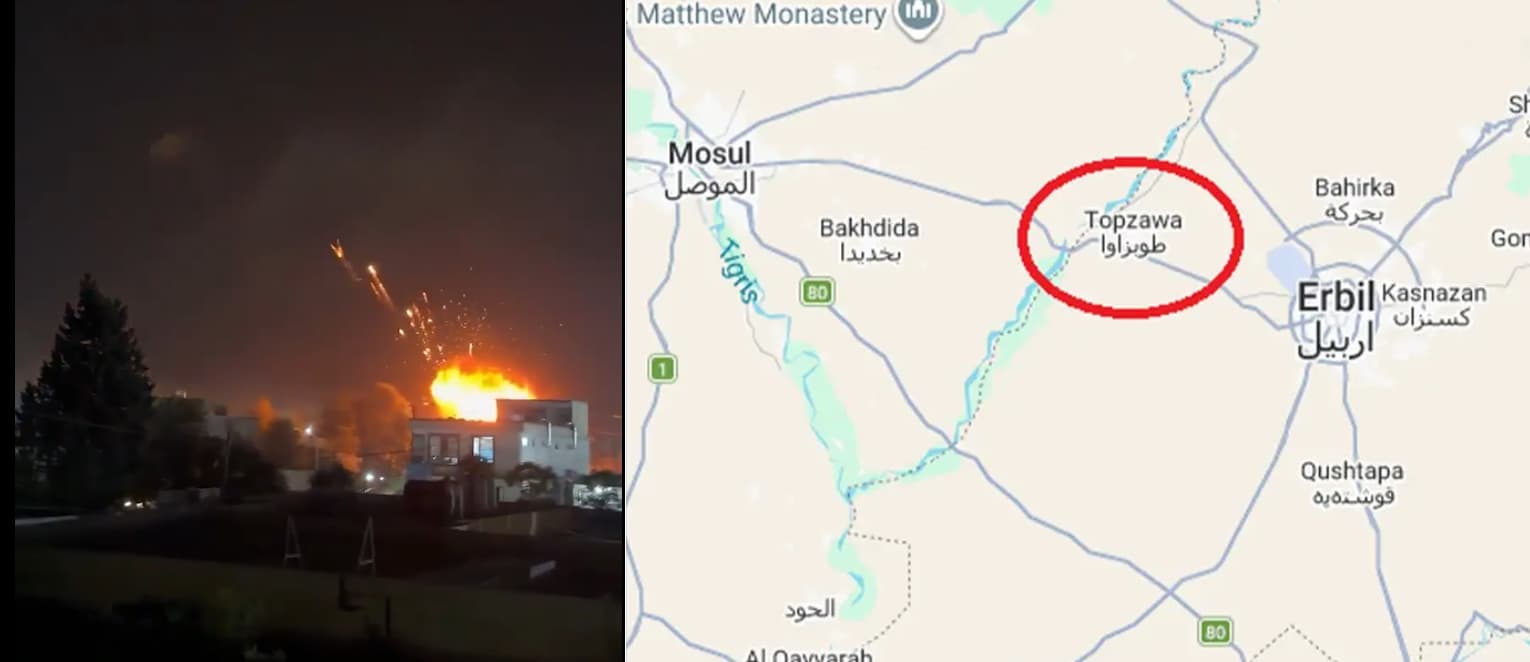
Hours after the interview aired, two explosive-laden drones targeted a base belonging to an Iranian Kurdish opposition group near Erbil.
Kurdistan Region authorities have repeatedly called on Iran to halt its attacks, with official figures released by Erbil showing that the Region has been targeted more than 1,000 times by drones and missiles launched by Iran and Iran-aligned Iraqi armed groups.