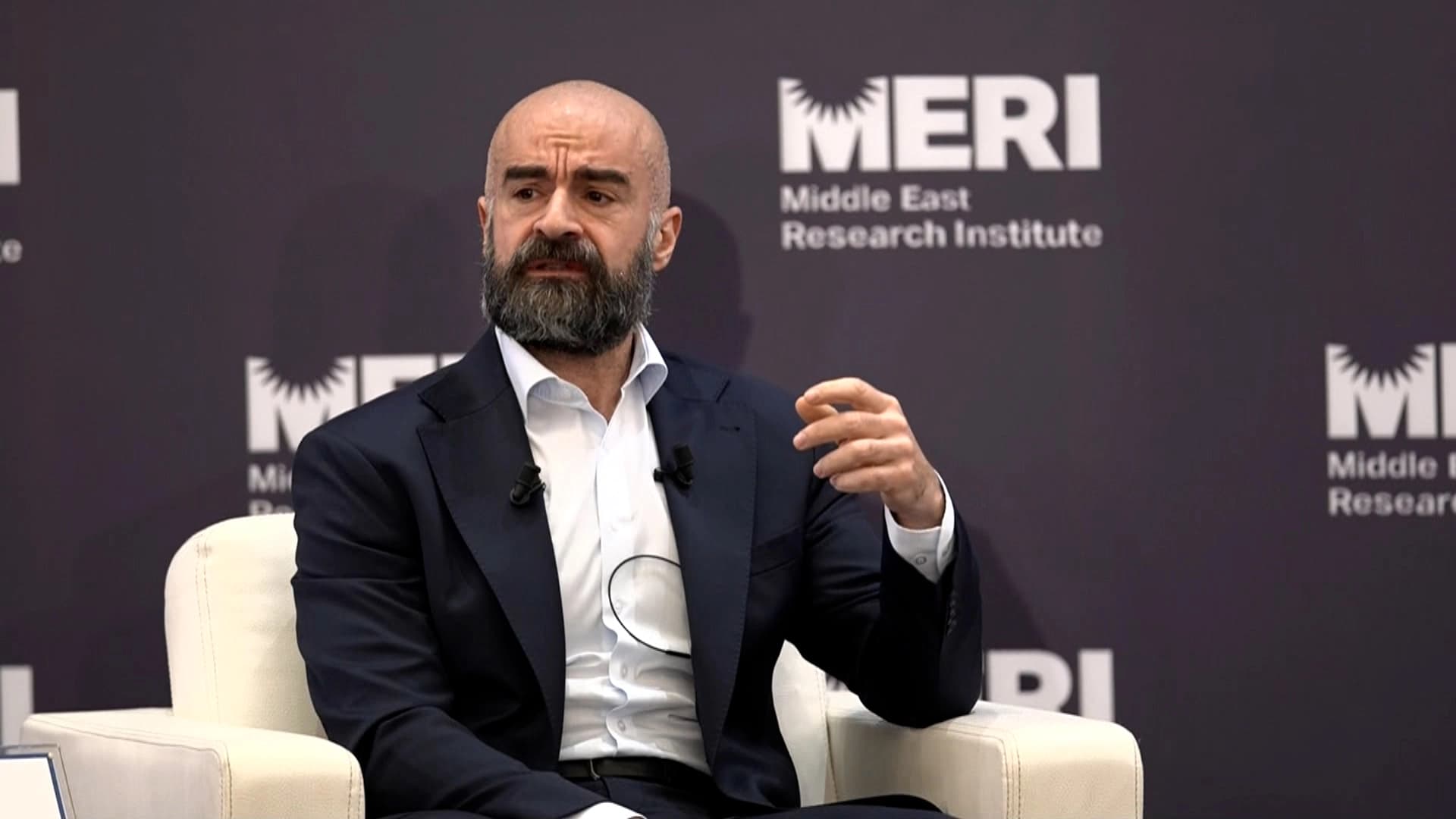

ERBIL, Kurdistan Region - Patriotic Union of Kurdistan (PUK) leader Bafel Talabani said Monday that his party was prepared to compromise on its demands to break the nearly two-year deadlock over the formation of the Kurdistan Regional Government (KRG), but stressed that the rights of the Kurdish people were not negotiable.
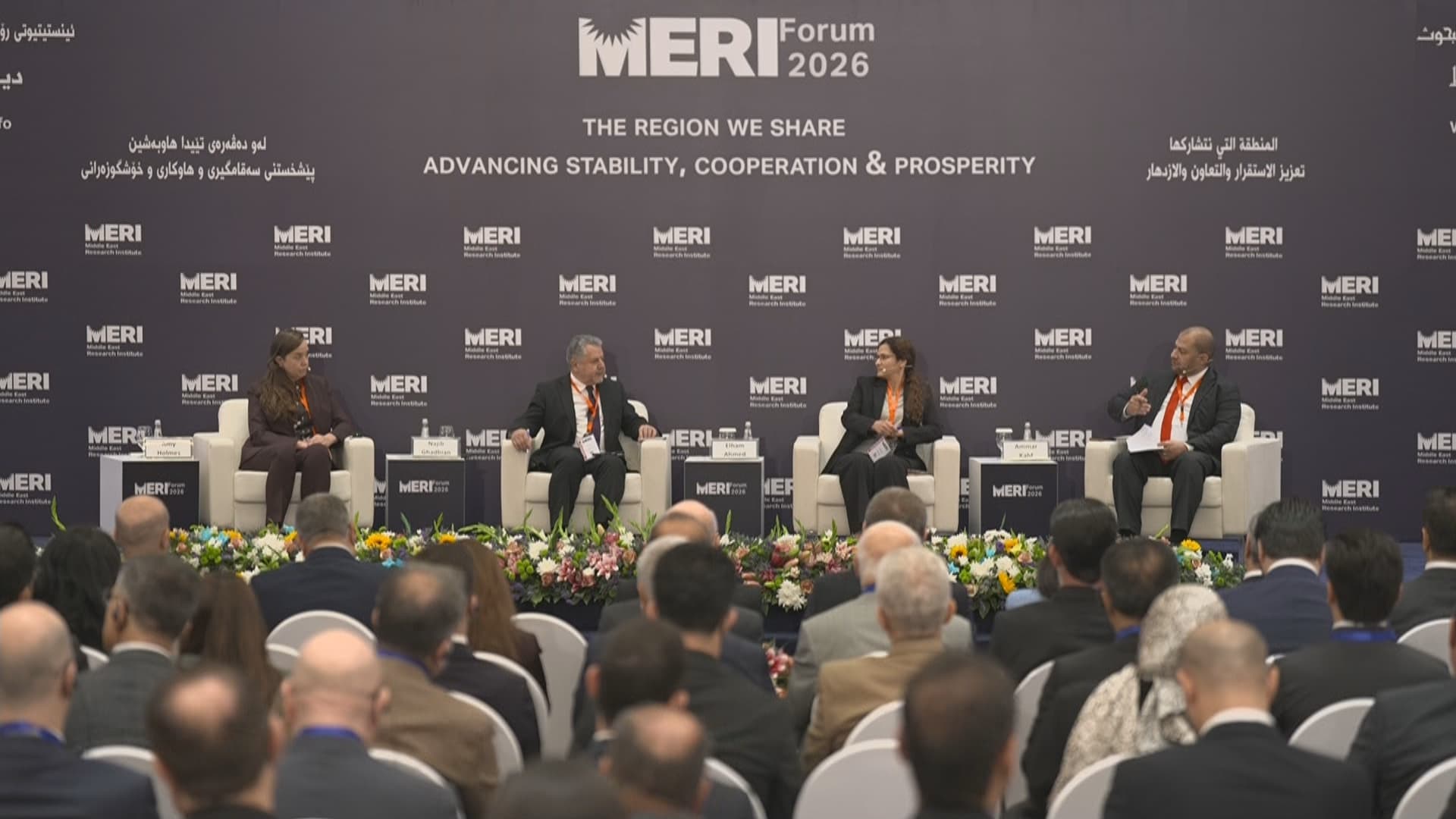
Speaking at the annual Middle East Research Institute (MERI) Forum in Erbil, Talabani said the PUK had never closed the door to dialogue with the Kurdistan Democratic Party (KDP), insisting that disagreements between the two ruling parties were not too difficult to overcome.
"I reiterate: the Patriotic Union of Kurdistan has never closed the door to dialogue. It is ready for any kind of agreement - a fair agreement," he said.
His remarks came as the Kurdistan Region approached the second anniversary of its October 2024 parliamentary elections without a new government or a functioning parliament. Recent contacts between the KDP and PUK have raised hopes of a breakthrough, although disagreements over senior positions and the structure of the next cabinet remain unresolved.
Talabani said he had visited Erbil 16 times for talks with the KDP leadership, arguing that the two parties had no major differences over policy or strategy and describing their remaining disagreements as "small things."
He stressed that the PUK was prepared to compromise on its own political entitlements, but not on the rights of the Kurdish people.
"Does it make sense that we can reach an agreement with Baghdad, agree with Turkey, agree with Iran, agree with America, yet fail to agree with our brothers and sisters in the Kurdistan Democratic Party? That is impossible," he said.
Talabani said the two parties were halfway toward forming a government, suggesting that an agreement could be reached within 24 hours if both sides were willing to compromise.
The KDP won 39 seats in the Region's 100-seat parliament in the 2024 elections, followed by the PUK with 23 and the opposition New Generation Movement (NGM) with 15. No party secured an outright majority.
In July, the PUK and NGM formed an alliance aimed at establishing the next government. Together, the two parties hold 38 seats, one fewer than the KDP.
The alliance has further complicated negotiations, with the KDP rejecting the PUK's attempt to negotiate on behalf of both parties as a single bloc and insisting on dealing with them separately.
Talabani defended the alliance, arguing that NGM's participation in the government could contribute to political stability.
"The fewer stones thrown at that government, the clearer and nicer its windows will remain. Why don't you understand this?" he said, suggesting that bringing the opposition into government could reduce political confrontation.
He also rejected the KDP's objections to the PUK's cooperation with NGM, maintaining that his party had the right to choose its political partners.
Last week, KRG Prime Minister Masrour Barzani, who is also a deputy president of the KDP, renewed calls for the formation of a new cabinet, accusing the PUK of delaying the process and warning that the KDP's "patience is not without limit."
Barzani said the KDP had already made concessions to facilitate the formation of a government but insisted that the outcome of the 2024 elections must be respected.
Talabani said Monday that communication between the two parties had continued behind the scenes, including during periods of heightened regional tensions.
He pointed to coordination with KRG Deputy Prime Minister Qubad Talabani, Kurdistan Region President Nechirvan Barzani and other KDP figures at the beginning of the war involving Iran, saying their cooperation had helped prevent the Kurdistan Region from being drawn into a wider crisis.
Turning to relations with Baghdad, Talabani described the government of Iraqi Prime Minister Ali al-Zaidi as a "golden opportunity" for the Kurdistan Region, urging Kurdish leaders to adopt a more constructive approach toward the federal government.
He argued that Zaidi did not hold the "chauvinistic" or hostile views toward the Kurdistan Region that he said some previous Iraqi politicians had held.
"If we slightly adapt our policy and our rhetoric, I believe we will be very successful in Baghdad," Talabani said.
He also challenged the long-standing perception that a weaker federal government would strengthen the Kurdistan Region, arguing that the stability and prosperity of Iraq and the Kurdistan Region were increasingly intertwined.
"I urge you all to understand this: today, it is the exact opposite. Today, a stable Iraq means a stable Kurdistan. A prosperous Iraq means a prosperous Kurdistan," he said.
Talabani said the PUK maintained positive relations with political parties in Baghdad, including informal understandings with groups outside its formal alliances.
"Fortunately, even our opponents in Baghdad nowadays are of the view that the PUK, at the very least, whether they like what we say or not, stands by its word and does not play games with them," he said.
Rudaw is the media sponsor of the MERI Forum.