ERBIL, Kurdistan Region - On a hot summer day in 2018, wildlife photographer Saber Dri spotted an animal he initially mistook for a rat near the Kurdistan Region’s border with Turkey. Eight years later, researchers believe his photographs may represent the first documented sighting in Iraq of a ground squirrel species classified as Near Threatened.
On July 7, 2018, Dri was walking through Dre village in the Barzan area, about 145 kilometers north of Erbil, to document the biodiversity of the village where his parents and ancestors once lived. The journey was fraught with danger, as the area had long been evacuated and considered a restricted zone due to decades of conflict between Turkey and the Kurdistan Workers’ Party (PKK).
He was “seeking to record some birds and wild mammals that live near the border. The area was also dangerous for pedestrians due to the fighting and airstrikes," Dri told Rudaw English. "Because there were no roads, I had to walk.”
“I had visited it several times, and I was sure that many unrecorded wild mammals and birds could be found and documented there and elsewhere in Kurdistan,” he said.
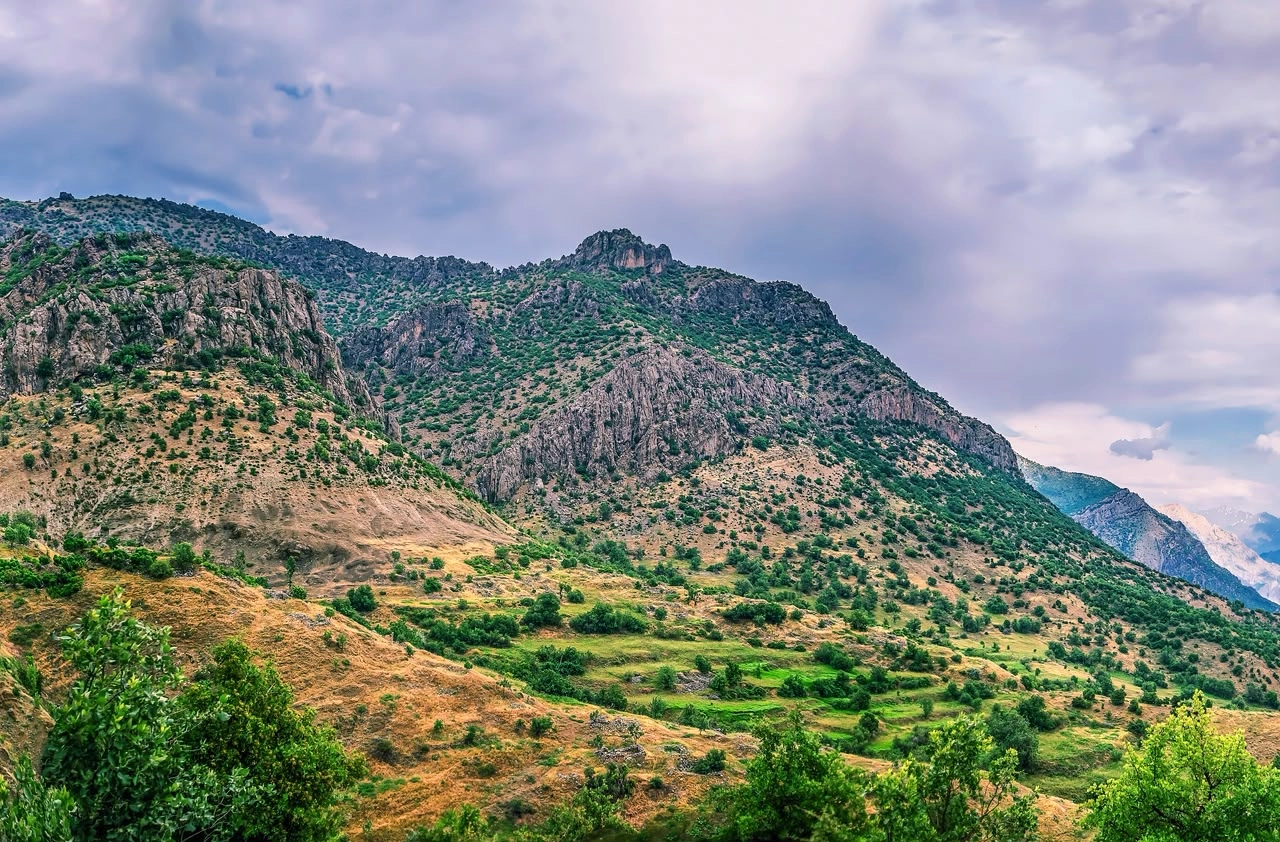
A view of Dre village on July 7, 2018. Photo: Saber Dri
After spending the morning and afternoon searching for wildlife, Dri grew tired and stopped to rest.
“I saw something making larger movements than a large mouse and quickly disappearing into a large hole in the ground,” he said.
He watched the animal for a while before taking several photographs, believing he was simply observing the daily life of a rodent in the rugged terrain, without paying much attention to its distinctive features.
Dri added the images to his archive of more than 28,000 photographs of birds and other wildlife taken during his numerous camping trips in the mountains of the Kurdistan Region.
The photographs resurfaced while Soran H. Ahmed, a wildlife researcher and conservationist at the University of Sulaimani, and his colleagues were drafting a book on the mammals of the Kurdistan Region.
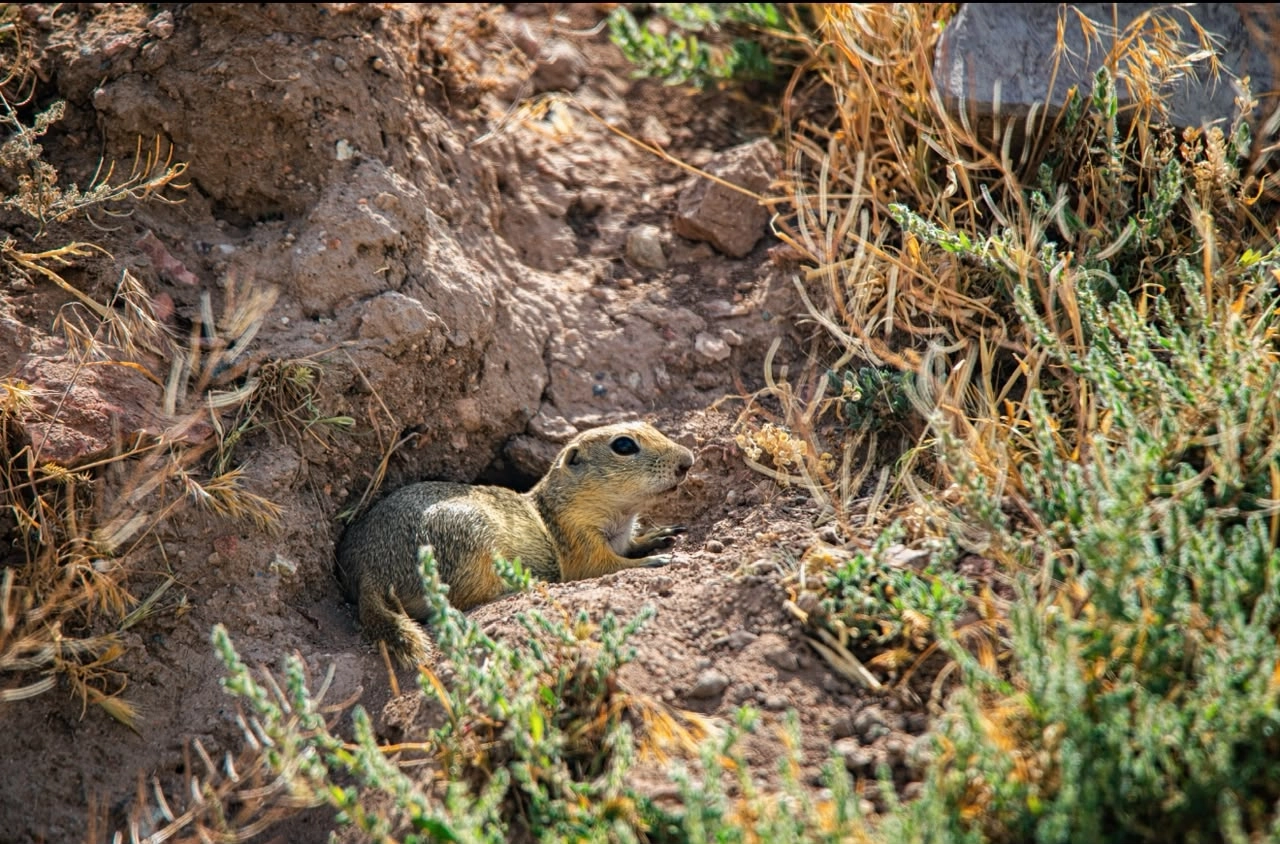 A wild animal photographed by Saber Dri in Dre village of Kurdistan Region on July 7, 2018, which he and a researcher say is an Asia Minor ground squirrel
Ahmed said they had asked Dri to share photographs of rodents and bats for the book. After examining the images, he identified the animal as an Asia Minor ground squirrel (Spermophilus xanthoprymnus), also known as the Anatolian ground squirrel.
“This is a good example of how new records can emerge when we bring together field observations, photographs, and existing scientific knowledge,” Ahmed told Rudaw English.
The species is found mainly in Turkey, with its recognized range extending into Armenia and northwestern Iran. The American Society of Mammalogists’ Mammal Diversity Database lists those three countries, but not Iraq, in its distribution records. Confirmation of the Barzan sighting could therefore extend its known range.
Unlike tree squirrels, the animal inhabits open grasslands, steppes and mountain meadows, digging underground burrows for shelter and hibernation.
Ahmed said its distinguishing features include uniformly grayish to dark brown upperparts without spots, small ears and large eyes surrounded by whitish rings. Its throat and chin are whitish, its abdomen yellowish, and its short tail lacks stripes or spots and has a black tip.
He said the sighting would represent the first record of the genus Spermophilus in Iraq and the country’s only known ground squirrel record. The previously documented member of the squirrel family in Iraq is the Caucasian squirrel (Sciurus anomalus), which inhabits oak forests across much of the Kurdistan Region, he added.
Despite its potential significance, Ahmed said the animal’s presence near the Turkish border was not unexpected, given records in Turkey’s Van province and Iran’s West Azerbaijan province.
He pointed to Brandt’s hamster, a species found across Anatolia and the Iranian Plateau, as another example. It was recently recorded for the first time in Iraq on Sarka Mountain in the Kurdistan Region, he said.
Researchers are now working to submit the squirrel record for scientific scrutiny.
“We are beginning the official documentation of this record by preparing a publication in an international peer-reviewed journal in collaboration with local and international experts,” Ahmed said.
“When an animal is recorded for the first time in a country, sharing photographs or making claims is not sufficient for official documentation.”
Ahmed said the team had followed the publication and peer-review process for previous records of Blanford’s fox, Brandt’s hedgehog and Brandt’s hamster.
Documenting the sighting involves verifying the animal’s identity, establishing where and when the photographs were taken, and checking for earlier records in Iraq. A published account could support its inclusion in international biodiversity databases, while further fieldwork would be needed to determine whether an established population lives in the area.
The International Union for Conservation of Nature lists the Asia Minor ground squirrel as Near Threatened and its population as declining. The species narrowly misses the criteria for Vulnerable, Endangered, or Critically Endangered status, often due to declining population numbers, shrinking geographic ranges, or fragmented habitats.
Its long periods underground may help explain why animals can escape notice during wildlife surveys, particularly in areas that are difficult to access.
Ahmed said gaps in available reference material had also complicated identification.
“This is quite understandable, as we have not previously had a dedicated field guide or a systematic database covering the mammals of the Kurdistan Region,” he said.
Ahmed hopes the planned mammal book and the Kurdistan Biodiversity website, which features species information and photographs of the region’s wildlife, will make it easier for people to identify unfamiliar animals and determine whether they have already been documented.
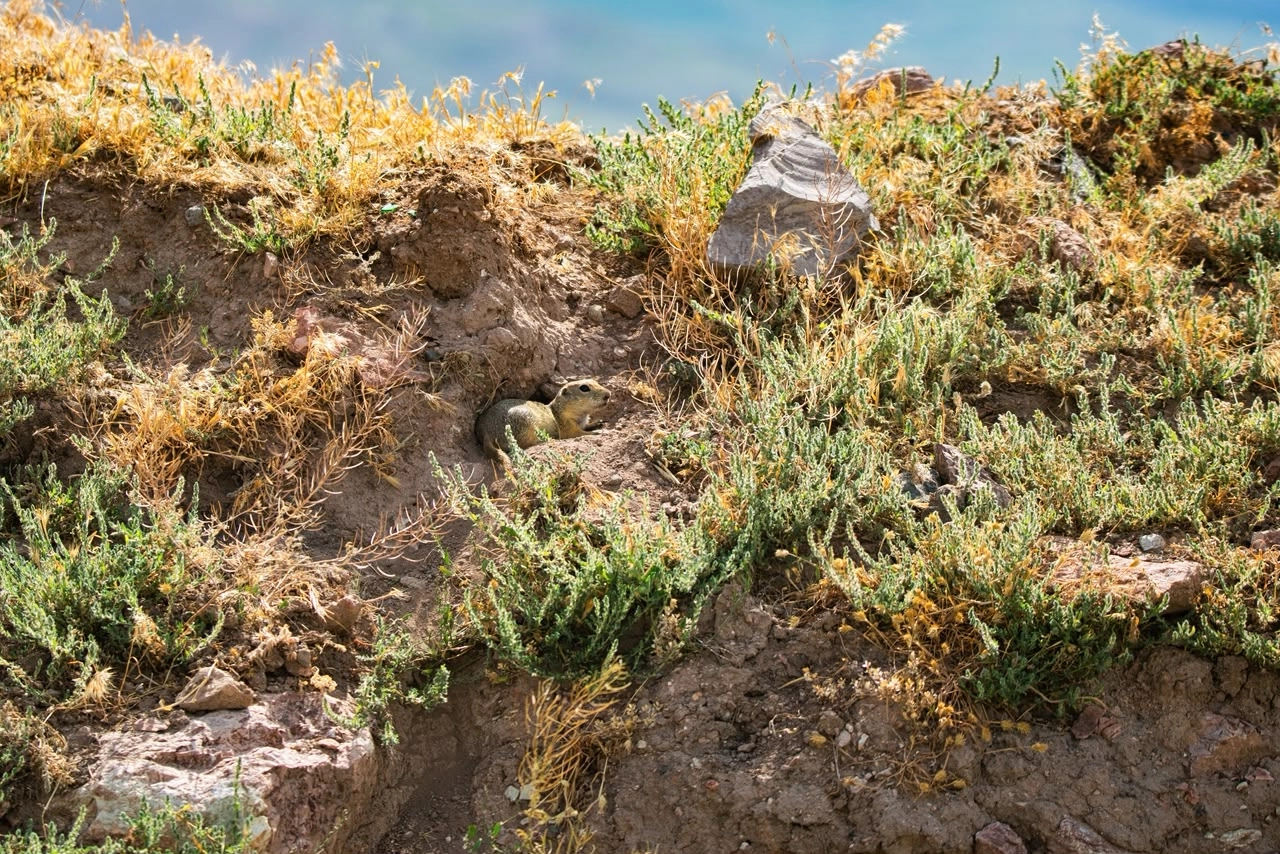 A wild animal believed to be an Asia Minor ground squirrel photographed in Dre village of Kurdistan Region on July 7, 2018. Photo: Saber Dri
The photographs may be one indication of how much remains unrecorded in the region’s mountains, particularly along the borders with Turkey and Iran.
Ahmed said several other known rodent and bat species from neighboring areas could also make an appearance in the Kurdistan Region. Systematic surveys and genetic analyses would be needed to confirm their presence and better understand the region’s mammalian diversity.
The possibilities extend beyond mammals. While preparing their book Snakes of the Kurdistan Region of Iraq, Ahmed and his colleagues identified around 10 additional snake species they believe could be found in the region but whose presence remains unconfirmed.
“We are also confident that further fieldwork will reveal more mammal species, particularly bats and rodents, as several species are known from areas close to the borders with Turkey and Iran,” he said.