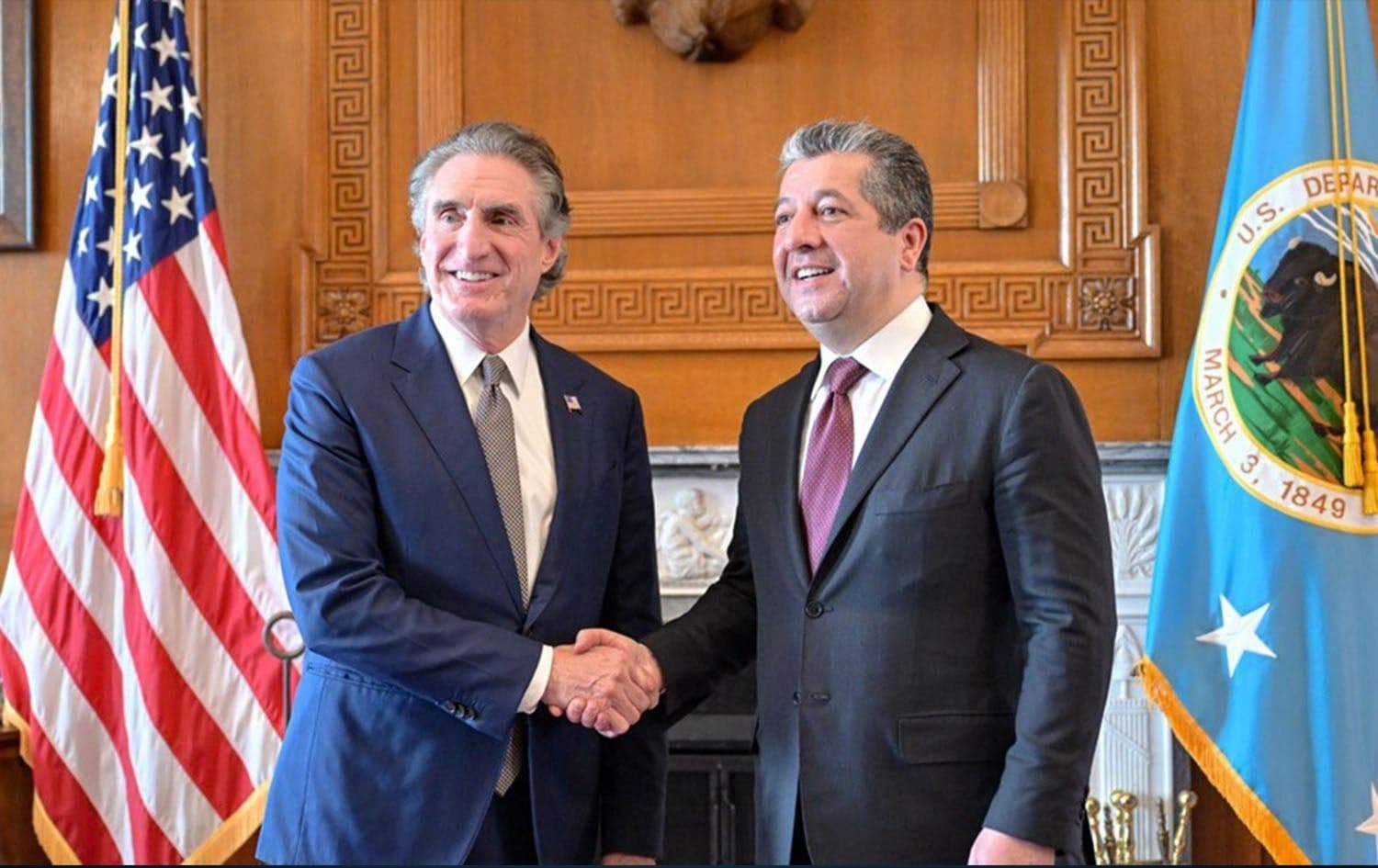

ERBIL, Kurdistan Region - Kurdistan Region Prime Minister Masrour Barzani discussed the “great potential for collaboration” between the Kurdistan Region and the United States in a call with US Secretary of the Interior Doug Burgum on Friday, emphasizing the need to protect the Region’s energy infrastructure from “terrorist attacks.”
In a post on X, Prime Minister Barzani said he spoke with Burgum - who also chairs the White House’s National Energy Dominance Council - about the Region’s “energy outlook and the role of US companies in the industry,” adding that “there is great potential for collaboration.”
According to a statement from the KRG, Barzani reiterated the Kurdistan Region’s “gratitude for the United States' continued support” and stressed the need for further assistance in protecting energy infrastructure and oil companies operating in the Region from “terrorist attacks.”
The call comes after the Kurdistan Region was hit by hundreds of drone and missile attacks launched by Iran and its allied Iraqi armed groups following the US and Israel’s military campaign against Iran on February 28, targeting US interests, Peshmerga bases, opposition group positions, hotels, civilian homes, and energy infrastructure.
In early March, the Sarsang oil field in Duhok province, operated by US-based HKN Energy, was targeted by two drones, halting production. The strategic Khor Mor gas field in Sulaimani province - which has been targeted multiple times by pro-Iran Iraqi armed groups over the years - also halted production, slashing power supply in the Region by more than two-thirds.
In total, the Kurdistan Region was targeted by 703 drones and missiles, killing 17 people and wounding 92 others until a two-week ceasefire between Washington and Tehran was announced last week.
In late March, State Department Principal Deputy Spokesperson Tommy Pigott cited Secretary of State Marco Rubio as “strongly condemning the continued attacks by Iran and Iran-aligned Iraqi terrorist militias against U.S. citizens and energy infrastructure across Iraq.”
The United States currently ranks sixth among countries with the highest number of companies operating in the Kurdistan Region, according to data obtained by Rudaw from relevant authorities in Erbil.
“Secretary Burgum expressed his appreciation for the Prime Minister’s leadership and collaboration on energy matters,” the KRG’s Friday added.
In May, during a visit to Washington, Barzani oversaw the signing of two major energy agreements with US-based WesternZagros and HKN Energy, valued at a combined $110 billion over their lifespan.
Washington and Erbil maintain close ties. The US has been a key supporter of the Kurdistan Region since it gained autonomy in the 1990s, backing the development of the Kurdish Peshmerga, leading the global coalition against the Islamic State, and supporting ongoing reform efforts. In December, the US opened a new consulate compound in Erbil, considered to be the largest in the world.