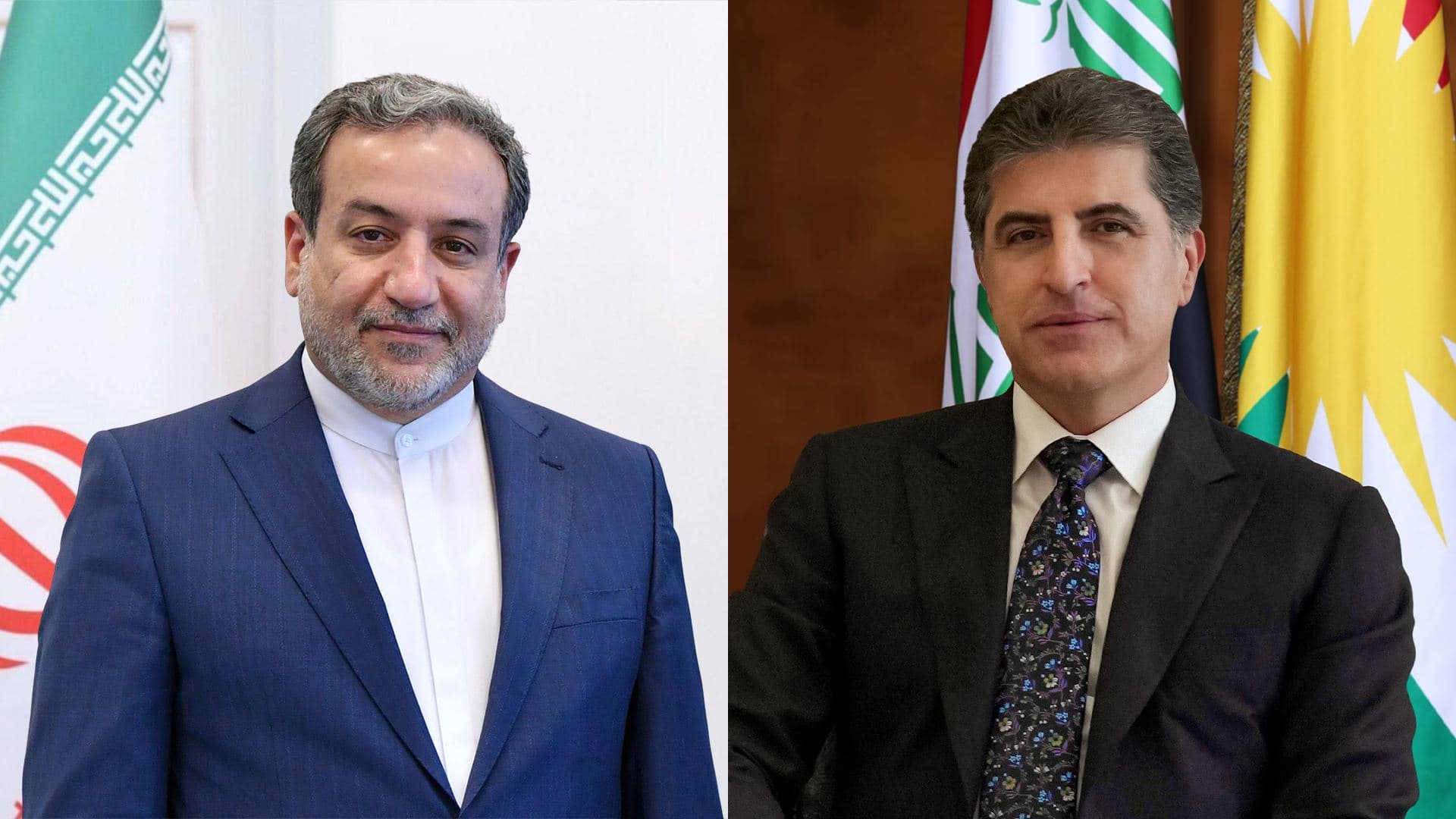

ERBIL, Kurdistan Region - Kurdistan Region President Nechirvan Barzani and Iranian Foreign Minister Abbas Araghchi held a phone call on Friday to discuss the latest regional developments, emphasizing the importance of preserving stability, amid regional tentions.
“The two sides exchanged views on recent developments and stressed the need to maintain peace and stability,” the Kurdistan Region Presidency said in a statement.
They also reviewed bilateral relations between Iran, Iraq, and the Kurdistan Region.
The call marked their second conversation since tensions escalated into open conflict involving Iran, the United States, and Israel.
The call also came days after US President Donald Trump extended a ceasefire with Iran, allowing additional time for Tehran to present "a unified proposal" for a potential agreement.
The United States and Israel launched a preemptive air campaign against Iran on February 28, targeting thousands of sites over six weeks before a Pakistan-mediated ceasefire was reached on April 8. The truce paused hostilities and opened the door for negotiations.
An initial round of talks concluded on April 11 without a final agreement. Pakistan has since intensified efforts to host further negotiations, though no breakthrough has been achieved so far.
Despite the ceasefire, the Kurdistan Region continues to face drone and missile attacks. Since late February, over 730 such strikes have been recorded, resulting in 21 deaths and 99 injuries.
Responsibility for the attacks has been claimed by Iranian forces, particularly the Islamic Revolutionary Guard Corps (IRGC), as well as Iraqi armed groups aligned with the Tehran-led “Axis of Resistance,” which say they are targeting US interests and Iranian Kurdish opposition groups in the Region.
The call also followed a statement by the Kurdistan Region’s Department of Foreign Relations (DFR) rejecting allegations circulated by certain Iranian judicial bodies and media outlets, which claimed that individuals sentenced in Iran had received foreign intelligence training inside the Kurdistan Region.