ERBIL, Kurdistan Region - Kurdistan Region President Nechirvan Barzani on Monday welcomed the agreement between Tehran and Washington, following months of conflict that began in late February.
“I welcome the announcement of the deal between the United States and Iran,” President Barzani said in a post on X, hoping that “all parties will work in good faith toward the full implementation of the agreement, aiming to strengthen regional stability, security, and prosperity.”
He extended his appreciation “to all those who played a role in facilitating and supporting this achievement.”
President Barzani's endorsement followsTrump’s announcement that a US-Iran peace deal has been finalized, potentially bringing an end to months of hostilities in the Middle East.
“This Great Deal will bring Peace and Security to the whole Region,” US President Donald Trump wrote early Monday, confirming “the opening of the Strait upon the signing of the Deal on Friday” on his Truth Social account.
Iran’s Supreme National Security Council, who also confirmed on Monday that the text of the memorandum of understanding (MoU) negotiations were “finalized on the evening” Sunday, elaborated on its conditions, affirming that “the war and military operations on all fronts, including Lebanon, will end immediately and permanently as of tonight,” and that the “naval blockade against Iran will be terminated immediately and completely.”
While Trump’s congratulatory remarks were hailed as a “critical step” by United Nations Secretary-General Antonio Guterres, others expressed hesitation over the victory as premature and possibly a sign of betrayal.
While both the US and Iran claimed victory following the agreement, it drew immediate backlash from opponents who view the deal as erasing “immense military achievements.”
Israeli politician Yair Golan said the deal was “made over Israel's head,” describing it as “an agreement that funnels billions to the Ayatollahs' regime, leaves the nuclear infrastructure intact, preserves the ballistic threat as is, and throws a lifeline to the murderous regime in Tehran.”
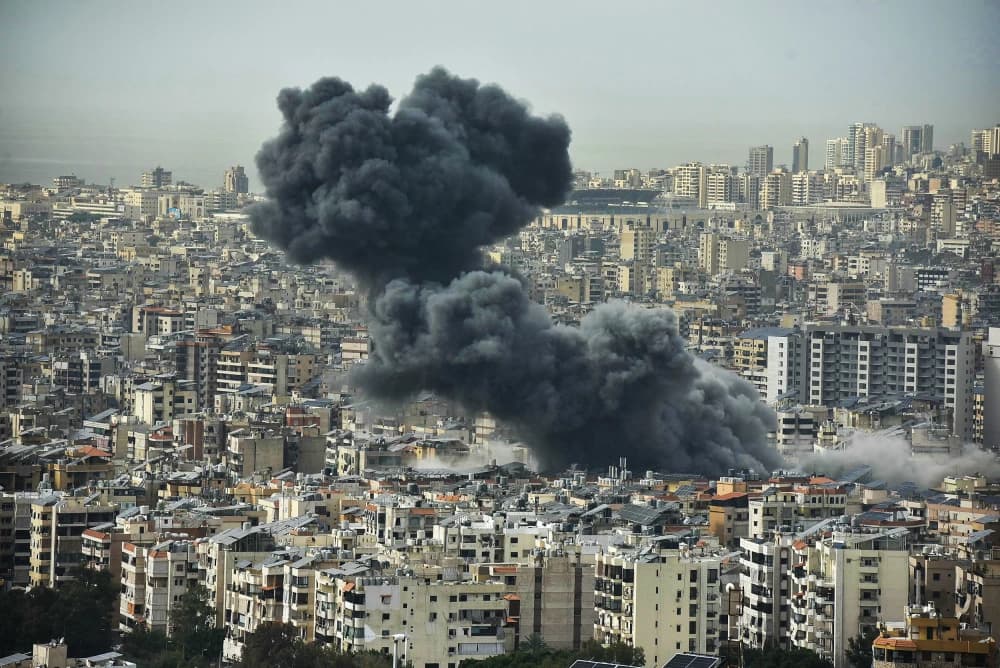
The conflict began on February 28 following US-Israeli military strikes on Iran. Tehran responded with attacks against Israel and US assets in the region while effectively disrupting shipping through the Strait of Hormuz.
The US and Israel targeted more than 17,000 sites across Iran over six weeks of hostilities before the warring sides agreed to a Pakistan-mediated April 8 ceasefire to halt fighting for two weeks to pursue talks.
While the first round of discussions ended without a final agreement on April 11, the situation was further complicated amid the apparent tit-for-tat maritime restrictions imposed by the US and Iran in the strategic Strait of Hormuz, particularly since the ceasefire took effect.
The Iranian government, primarily through the apparatus of the Islamic Revolutionary Guard Corps (IRGC), has on several occasions declared the closure of the Strait, citing defensive measures against what it terms as ‘Western aggression’ and targeting vessels linked to the US, Israel, or their regional partners.
Washington has also imposed maritime restrictions aimed at pressuring Iran’s economy, with the Central Command and US naval assets intercepting Iranian-flagged vessels and “shadow fleet” tankers suspected of transporting Iranian petroleum products.
These reciprocal measures have sharply reduced maritime traffic - dropping from well over 100 vessels per day to just a handful - amid heightened concerns that the fragile ceasefire could collapse under mounting tensions at sea.
The disruption triggered global economic pressure as oil-dependent nations were forced to tap into strategic reserves to offset the suspension of imports through the strait.
Meanwhile, the Kurdistan Region faced increased one-way drone and missile attacks since the start of the war, which continued even after the Islamabad-brokered ceasefire agreement.
Notably, in late March, an attack on President Barzani’s Duhok residence drew wide international condemnation.
According to the Kurdistan Regional Government (KRG), more than 800 attacks were recorded across the Region between the start of the conflict and April 20, leaving at least 20 people dead and 123 others injured.
Most of the attacks were carried out by Tehran-backed armed groups in Iraq.
The latest attack was carried out on Thursday, when two bomb-laden drones struck a grain storage facility southwest of Erbil.