
ERBIL, Kurdistan Region - The memorandum of understanding between the United States and Iran was signed by the presidents of both countries on Thursday, the White House and Iran’s foreign ministry confirmed, as the official signing ceremony previously scheduled to take place in Switzerland on Friday will no longer be held.
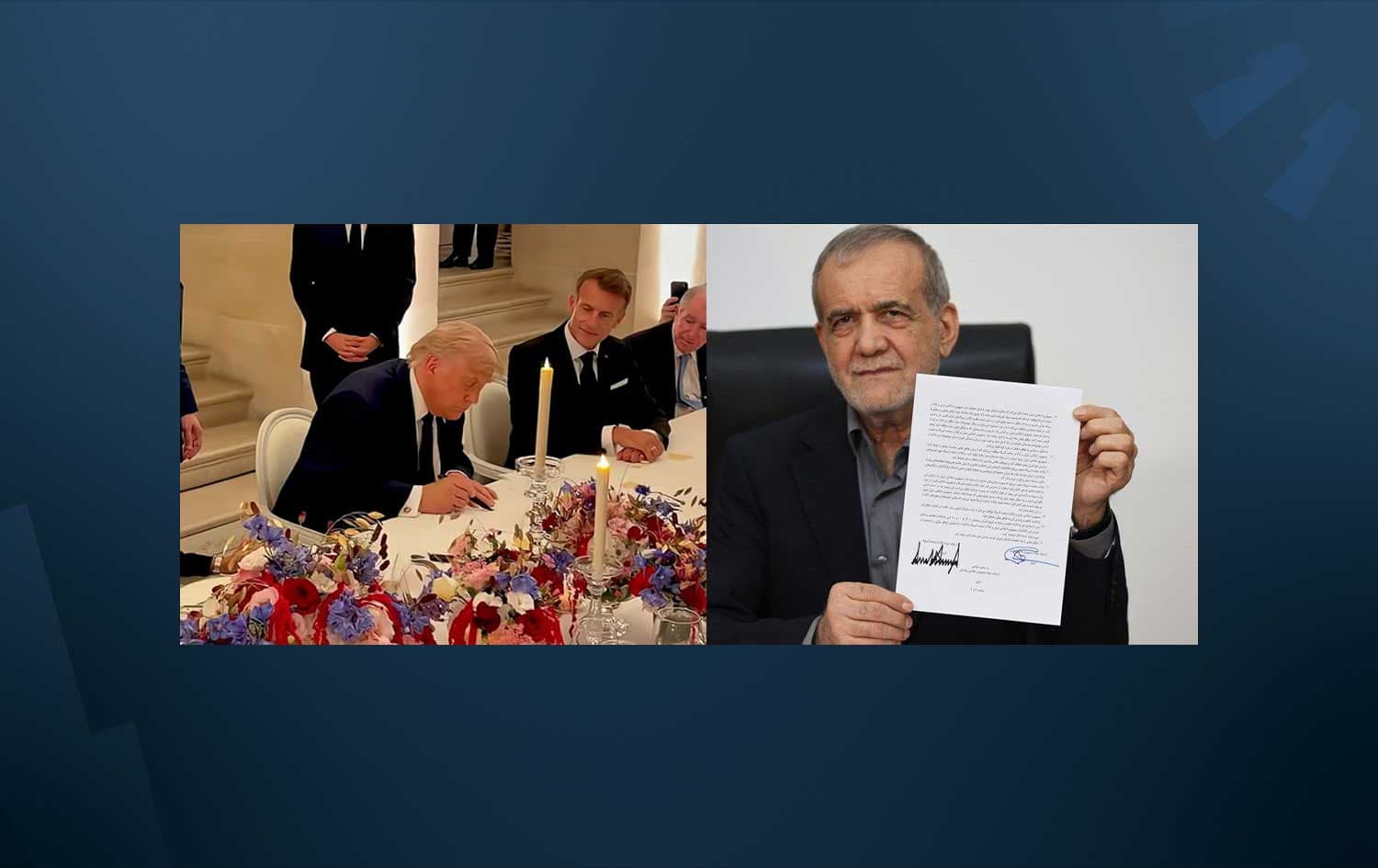
“President Donald J. Trump has SIGNED the Iran Memorandum of Understanding [with Iran] at Versailles in France,” the White House announced in a statement posted on X, alongside a video of the landmark moment.
The US president signed the preliminary agreement on the sidelines of a dinner at the Palace of Versailles hosted by French President Emmanuel Macron, following the G7 summit in France.
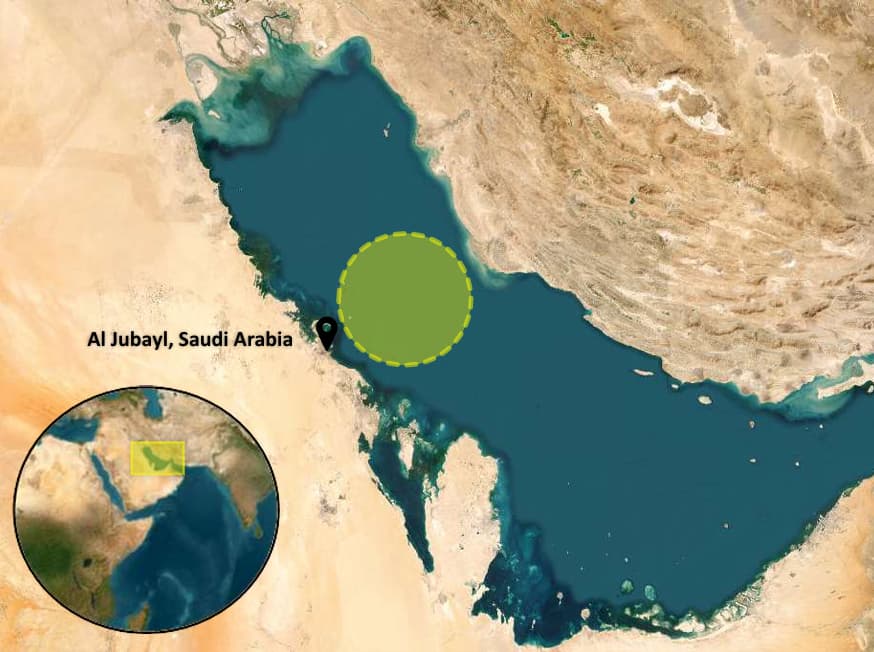
“President Trump signed the agreement between Iran and the United States tonight in Versailles,” Macron confirmed in a statement on X, noting that “this agreement opens the way to lasting peace and allows for the reopening of the Strait of Hormuz.”
He added that “this is an important step in the right direction for our fellow citizens, which will soon make it possible to lower energy prices.”
For its part, the state-run Islamic Republic News Agency (IRNA) reported that Iranian President Masoud Pezeshkian signed the memorandum of understanding “digitally and remotely” in the early hours of Thursday, in parallel with Trump.
The 14-point framework document has officially been named “The Islamabad Memorandum of Understanding between the United States of America and the Islamic Republic of Iran.”
“Given Pakistan's role as a mediator in the diplomatic process,” Pakistani Prime Minister Shehbaz Sharif will also sign the text of the agreement, IRNA added.
In a statement on X, Sharif remarked that the signing of the agreement “at the highest level of the respective governments” is indicative of “the commitment of both sides to a diplomatic resolution of the conflict.”
He added that the understanding “shall enter into force with immediate effect and, as a first step, the Islamic Republic of Iran will instantly reopen the Strait of Hormuz and the United States of America will immediately lift the naval blockade [on Iranian ports].”
The signing comes months after the US and Israel launched a widescale aerial campaign against Iran on February 28, striking thousands of targets across the country during six weeks of hostilities.
In response, Tehran carried out thousands of drone and missile strikes across the Middle East targeting alleged US assets - particularly in Gulf Arab states - as well as launching retaliatory attacks against Israel.
The warring sides agreed to a Pakistan-mediated ceasefire on April 8, bringing an end to hostilities and paving the way for weeks of diplomatic negotiations.
Alongside these diplomatic efforts, Tehran and Washington undertook reciprocal maritime measures that saw Iran tighten its control over shipping through the Strait of Hormuz and the US impose a naval blockade on Iranian ports.
For his part, Iranian foreign ministry spokesperson Esmaeil Baghaei said on Thursday that “the memorandum of understanding between Iran and the United States was agreed to be signed digitally,” confirming that “no signing ceremony will be held in Switzerland.”
In remarks to the state-run Islamic Republic of Iran Broadcasting (IRIB), Baghaei added that “when the text is signed by the highest authorities of both countries, violating it will naturally carry greater costs,” and that “given our past experiences, we preferred things be done this way.”
He further noted that “implementing international agreements is always much more difficult than drafting them,” stating that if the US “falls short in upholding its commitments, we will falter too.”
Notably, the understanding between the US, Iran, and their allies establishes a cessation of military operations on all fronts, “including Lebanon,” according to the final draft of the accord shared with Rudaw by a senior US official, as a comprehensive, binding agreement is also set to be reached within 60 days.
On Tehran’s nuclear program, “Iran reaffirms that it shall not procure or develop nuclear weapons,” the document notes, clearly stating that Tehran and Washington “have agreed to resolve the disposition of stockpiled enriched material” pursuant to a mutually agreed mechanism within the same 60-day schedule, with “the minimum methodology” being “downblending on site.”
The two sides also agreed to “discuss the issue of [uranium] enrichment and other mutually agreed matters related to the Islamic Republic of Iran’s nuclear needs, based on a satisfactory framework agreed upon in the final deal [set to be reached],” with both sides acknowledging “the critical importance of the nuclear issues” and expressing “their intention to immediately address these issues in negotiations in order to reach mutual agreement on them.”
Moreover, Iran consented to maintain “the current status quo of its nuclear program,” while the US assented that it “will not impose any new sanctions and will not deploy additional forces in the region.”
Baghaei explained on Thursday that “from the moment the MoU comes into effect, which is now, we will have 60 days to negotiate on the nuclear issue and sanctions. If talks reach a conclusion earlier, that is better. But given the complexity of the issue, the 60-day timeframe is reasonable, and if necessary, it can be extended.”