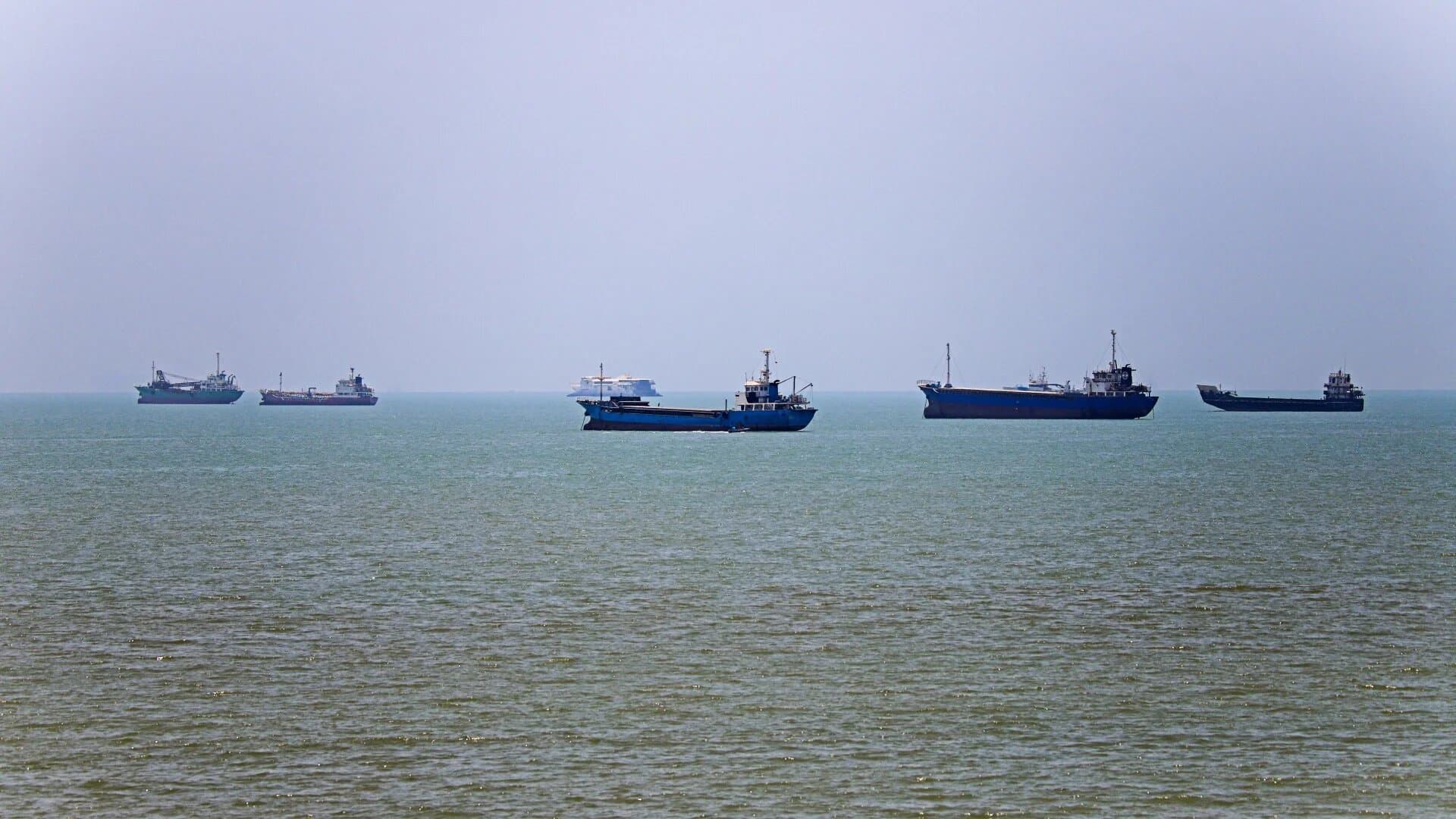
ERBIL, Kurdistan Region - Doha on Tuesday condemned an attack that targeted a Qatari energy vessel in the Strait of Hormuz, holding Tehran “fully responsible” and urging Iran to refrain from undermining regional security. This comes as Britain's navy monitor reported three incidents in regional waters the same day, demanding that vessels transit the area with caution.
"The targeting of the Qatari vessel 'al-Rekayyat' while transiting near the Strait of Hormuz constitutes an unacceptable attack on the security and safety of international maritime navigation, as well as the security of global energy supplies," said Qatar's foreign ministry spokesperson Majed al-Ansari in a statement posted on X.
"It is also a grave and explicit violation of international law, particularly the rules guaranteeing freedom of navigation and safe passage through international waterways," he added.
The senior Qatari diplomat and advisor to Doha's premier further demanded that Iran "immediately cease all practices that undermine regional security or threaten the safety of international maritime navigation."
"We hold it fully legally responsible for this attack and for any resulting damages and consequences," he warned.
The remarks coincided with a report from the United Kingdom's Maritime Trade Operations (UKMTO), which said Tuesday it "received a report of an incident 8NM [nautical miles] east of Limah," a coastal region in Oman's northernmost exclave of Musandam.
The British navy monitor said "a tanker has reported being hit [on Monday] by an unknown projectile on the port side causing a fire, whilst travelling southbound," noting the incident caused no casualties or environmental impact. It added that "authorities are investigating" and advised vessels to "transit with caution and report any suspicious activity."
Later in the day, UKMTO reported two other incidents recorded Tuesday. The first involved a tanker transiting Hormuz that was "struck by an unidentified projectile and is believed to have structural damage," with no casualties or environmental impact reported.
The second involved a third tanker, also transiting the key waterway, that "was struck by an unknown Uncrewed Aerial Vehicle (UAV) and sustained minor structural damage." It too reported no casualties or environmental impact, UKMTO said, adding that the vessel is continuing to its next port of call.
Talks ahead
The surge in attacks in regional waters comes as Iran on Thursday affirmed its mandate over the Strait of Hormuz, through which roughly one-fifth of the world's crude oil and liquefied natural gas exports pass.
“[The Strait of] Hormuz is defined under Iran's command,” insisted Kazem Gharibabadi, deputy for legal and international affairs at Tehran's foreign ministry, in a Thursday statement posted on X, adding that Iran’s “sovereignty” over the Strait of Hormuz is “definite and unquestionable.”
The remarks came in response to a high-profile security meeting hosted by the Bahrain Defense Force, with Central Command (CENTCOM) Chief Admiral Brad Cooper and defense leaders from 12 nations - Bahrain, Egypt, Jordan, Kuwait, Lebanon, Oman, Qatar, Saudi Arabia, Syria, the United Arab Emirates and Yemen - in attendance.
The meeting "discussed the current regional security environment and opportunities for enhancing defense collaboration across the region," a statement from the Command relayed, adding that "leaders underscored their shared commitment to the free flow of commerce through the Strait of Hormuz" and "to regional security and stability."
In mid-June, Iran and the United States had signed the Islamabad Memorandum, which establishes a cessation of military operations on all fronts and provides for talks aimed at reaching a comprehensive, binding settlement for the regional war within 60 days of its signing, with the possibility of extension by mutual consent.
However, the preliminary understanding was severely tested in late June after it briefly collapsed into high-intensity military exchanges across the region before backchannel diplomacy led to an emergency stand-down.
US Vice President JD Vance and Trump Special Envoy Steve Witkoff met directly with Iranian chief negotiator and Speaker Mohammad Bagher Ghalibaf and Foreign Minister Abbas Araghchi on June 21 at the Lake Lucerne Summit, held at the Burgenstock resort overlooking the lake in Switzerland, to discuss the implementation of the Islamabad MoU.
However, following the last June escalation, talks have significantly slowed down with American and Iranian negotiators opting for indirect engagement.
Nonetheless, Doha's foreign ministry Spokesperson, Ansari, said Wednesday that the negotiating parties “agreed to continue discussions over the coming period, with the next meeting to be scheduled at the earliest possible time following the funeral processions of the former Iranian Supreme Leader [Ali Khamenei].”
Khamenei's (1939-2026) funeral processions began Friday across multiple Iranian cities. His body is set to arrive in Iraq on Tuesday evening, where rites are scheduled in the southern shrine cities on Wednesday, before he is buried in Iran's northern shrine city of Mashhad on Thursday.