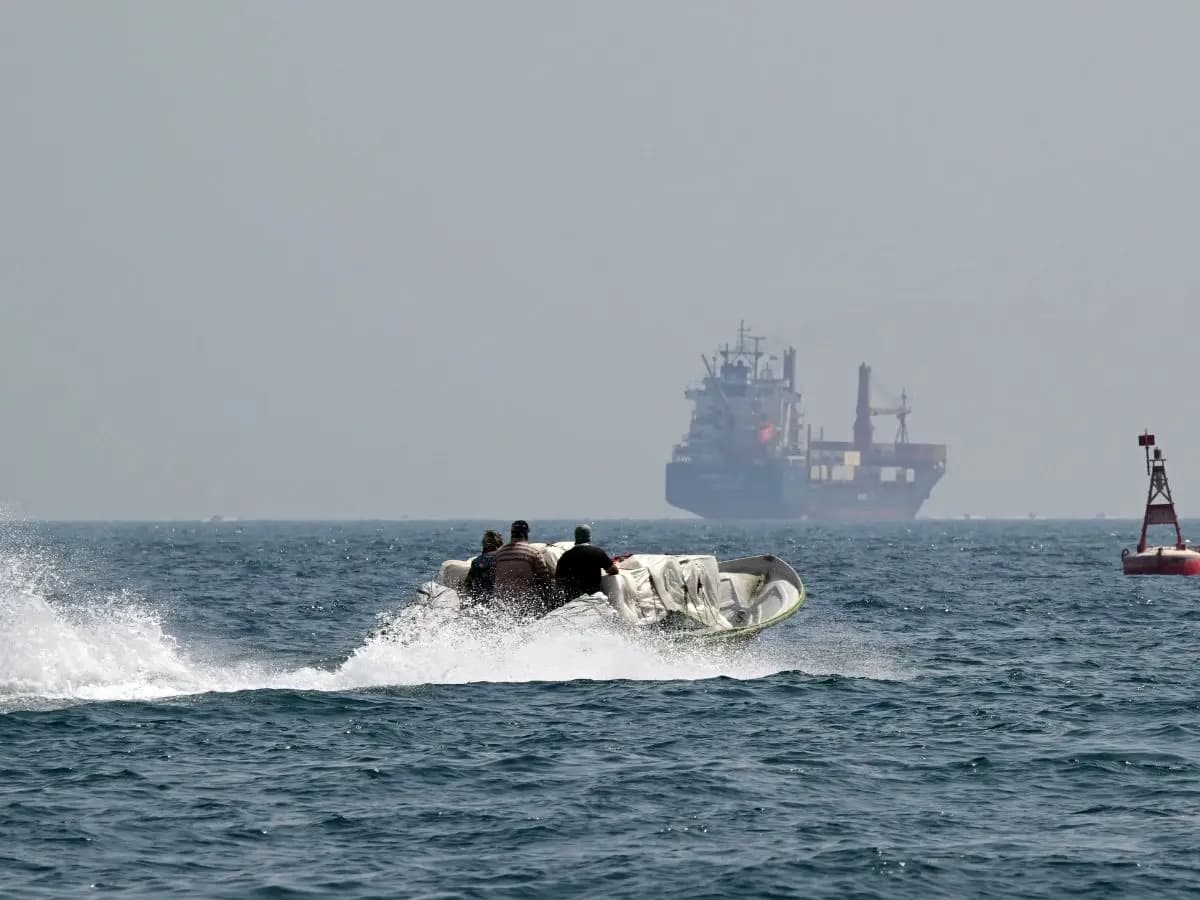
ERBIL, Kurdistan Region - Iranian Foreign Minister Abbas Araghchi on Thursday warned that Washington is risking an “even bigger miscalculation” over the Strait of Hormuz, shortly after US President Donald Trump said his country's forces have total control over the strategic waterway.
“The U.S. has long miscalculated due to intelligence failures. Case in point: The war on Iran. Now, an even bigger miscalculation on the Strait of Hormuz,” Araghchi said in a post on X.
“Worse than fake news is fake intelligence. Be careful,” he added.
The remarks came hours after Trump on Wednesday stated that "The U.S.A. has total control over the Strait of Hormuz. I THINK WE WILL KEEP IT! Our Naval Blockade is being called, by everyone, 'A WALL OF STEEL,' and there is nothing Iran can do about it.”
In a post on his Truth Social platform, the US president added that Iran is "all talk and no action, the Bully of the Middle East No Longer."
Trump’s remarks coincided with a statement from the US Central Command (CENTCOM) that as of Wednesday, its forces have “redirected 59 commercial vessels, disabled three and boarded two” ships en route to Iranian ports, “to ensure full compliance with the blockade.”
Trump's remarks coincided with a statement from the US Central Command (CENTCOM) declaring that, as of Wednesday, its forces had “redirected 59 commercial vessels, disabled three and boarded two” ships en route to Iranian ports, to “ensure full compliance with the blockade.”
The Strait of Hormuz, a vital waterway through which around one-fifth of global oil supplies pass, has been a flashpoint between the US and Iran since the outbreak of the six-week war, when Washington and Tel Aviv launched a joint aerial campaign on February 28, striking thousands of targets across Iran.
In response, Tehran carried out thousands of drone and missile strikes across the Middle East, targeting alleged US assets - particularly in Gulf Arab states - while also launching retaliatory attacks against Israel.
The warring sides reached a preliminary ceasefire in early April, followed by a Pakistan-mediated Memorandum of Understanding, signed by Tehran and Washington in mid-June, establishing a ceasefire on all fronts.
Following the truce, however, the two sides engaged in several rounds of strikes and counterstrikes that escalated on July 8 and ended later the same month.
A fragile de-escalation has since taken hold, though a US naval blockade on Iranian ports remains in place, as Iran continues to claim sovereignty over Hormuz, disrupting commercial shipping and requiring vessels to obtain authorization for passage.
The Persian Gulf Strait Authority (PGSA), an newly-formed Iranian government agency tasked with regulating maritime transit through Hormuz, said in a post on X on Tuesday that the Strait “remains blocked and will not be reopened until Iran's conditions are accepted.”
.jpeg&w=3840&q=75)